
By – Aarushi Ghosh Choudhury
Abstract
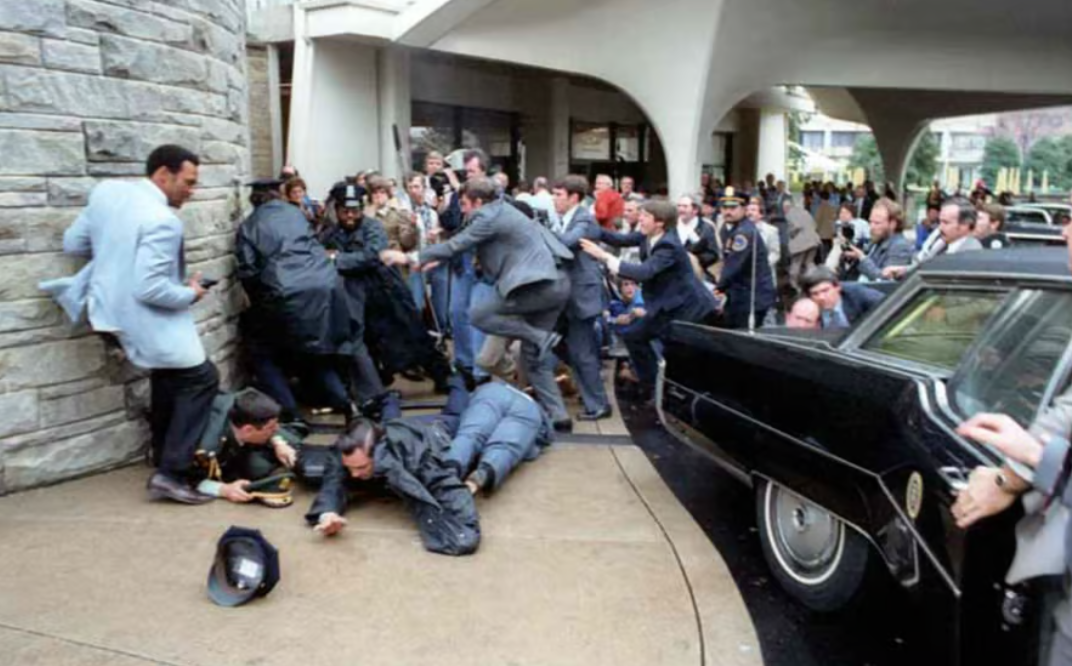
The acquittal of John W. Hinckley Jr. due to insanity charges for his attempted assassination of President Ronald Reagan in 1982 caused a political uproar far greater than the infrequency of insanity plea warrants. This article explores the degree to which this reaction changed the treatment of mentally ill offenders in law, from being focused on criminal responsibility to prevention.
Introduction
On June 21, 1982, a Washington D.C. jury acquitted John W. Hinckley Jr. of attempting to murder President Ronald Reagan by reason of insanity. Instead of solving the question of Hinckley’s criminal liability, this verdict caused one of the most protracted public and legislative responses to a particular criminal case in recent American history. According to polls conducted just a day after the verdict, most Americans thought that justice was not done.
For most of the twentieth century, the basic principle on which the insanity defense was based was quite simple and moralistic: a person who, due to mental disease, is unable to comprehend the immorality of actions committed by him/her or who cannot control his/her behavior according to the law is unfit for criminal punishment. The case of Hinckley put this principle under extreme test, thus transforming the way the legal system dealt with offenders suffering from mental illness. This paper suggests that the reaction to the verdict in the Hinckley case did not reduce the scope of the insanity defense. It changed the main legal issue from the liability for the crime committed into the danger posed by the offender.It leads to a system that combines the notions of acquittal on the grounds of mental insanity, which now functions as a pathway into the state’s control through the concept of danger rather than an escape from its apparatus.
Public Rejection of Responsibility Framework
The poll of residents of Delaware done one week after the ruling revealed the nuances of their reactions in detail. The majority thought the verdict to be unjust, expressed their willingness to vote in favor of conviction as members of the jury, and were sure that Hinckley was sane when he committed the crime. More than eight out of ten thought that the use of insanity as a plea is a trick through which the guilty get away without being punished.
Most revealing for the issue of legal transformation, on the other hand, is not the antagonistic attitude of the public toward the verdict itself but their ignorance about the implications of such a decision. In fact, the majority of the respondents correctly recognized that NGRI (not guilty by reason of insanity) verdict would mean committing Hinckley to a mental institution rather than releasing him from prison immediately. Although at the same time, there was a clear misunderstanding regarding how long the period of his detention in the institution would last since most people expected that he would be freed in no more than two years while experts predicted a much longer stay. This difference between public expectations and realities of institutions is important since it reveals that the public was always concerned not about the fact of imprisonment but about its duration.
Psychiatric Uncertainty and Erosion of Culpability Model
However, the Hinckley trial revealed the tenuous nature of the categorical demarcation of the responsible from the irresponsible offender. According to the observations of Jonathan Sallet of Lincoln Caplan’s narrative of the trial, when there is a defense of insanity raised, a lay jury is required to assess the extent of the illness of the defendant, and not merely whether he is ill or healthy, an assessment which psychiatry is incapable of making. In the Hinckley case, the conflicting expert opinions of the government and the defense regarding the diagnosis of the accused, and the latter’s attempt at producing a CAT scan as proof of schizophrenia became a focal point for questioning the value of scientific evidence in a process which relies on moral evaluation of misconduct.
This uncertainty had further doctrinal implications, aside from those pertaining specifically to Hinckley himself. In the wake of his trial, the Supreme Court’s decision in Ake v. Oklahoma (1985) made it clear that the Constitution demanded a defendant’s access to psychiatric assistance, based on the idea that the potential for an inaccurate outcome on the issue of sanity in the absence of such assistance was too great. Considered together, Ake and the Hinckley case demonstrate a process whereby the legal system found itself becoming increasingly dependent on psychiatry to determine the issue of responsibility, even as it became less confident in its ability to do so.
Legislative Reconstruction: From Culpability to Dangerousness
The reaction of Congress came fast in response to the ruling. According to Sallet, the Insanity Defense Reform Act of 1984 abolished the “volitional” component of the test for insanity, made it necessary for the defendant to demonstrate a “severe” mental disease. This placed the burden of proof on the defendant and not the prosecution, and precluded the testimony of experts on the ultimate issue of sanity. Sallet contended that abolishing the volitional component of the insanity defense was based on a particular and well-founded assessment: the fact that there is no scientific basis for differentiating between an irresistible impulse and an impulse that is not resisted, an assessment even acknowledged by the American Psychiatric Association.
Both the states and the trend itself proceeded hand in hand, often even further along the same line. As early as within three years of the ruling, two-thirds of the states had shifted the burden of establishing mental defectiveness to the accused, eight of them have enacted an entirely new verdict of “guilty but mentally ill,” .This leaves intact the criminal guilt of the person while allowing for the possibility of psychiatric care, and Utah has done away with the concept of mental defectiveness as an excuse altogether.
Confinement as the New Locus of Legal Meaning
Yet the most profound shift did not take place with respect to the meaning of insanity but rather with regard to the legal ramifications of what follows an NGRI finding. Hinckley was ordered to be confined to St. Elizabeths Hospital in Washington, D.C., where the legal standard for his eventual release was not whether he was guilty of the crime in 1981 but rather if his mental illness made him a current threat to himself or others. It was only in December 2003, almost two decades after the verdict, that a federal court determined Hinckley not to pose any significant threats anymore and gave him some liberties.
The disposition-stage change is easily missed simply because the formal insanity test remained intact under Hinckley: the defendant can still be found not criminally responsible. However, the significance of such a finding has been fundamentally transformed. While the insanity acquittee was viewed as somebody who has nothing more to do with the state after being properly treated before Hinckley, in the post-Hinckley world, the acquitted person is viewed as somebody whose liberty is forever dependent upon his or her continued non-dangerousness, which is an indefinite and open-ended criterion that has nothing whatsoever to do with the length or severity of any related criminal sentence. It is in this sense that the insanity acquittee became more of a civilly-committed patient than a criminal defendant whose acquittal resulted from the assertion of a successful affirmative defense.
Conclusion
Such transformation should not be exaggerated. Sallet’s timely review challenged the claim made by Caplan that post-Hinckley reforms were a total departure from a civilized attitude toward free will as the prerequisite of culpability since Congress kept intact the affirmative insanity defense based on the lack of capacity of the defendant to realize the wrongful character of his conduct.
However, the narrowing down of the front-end procedure and the extension of the back-end detention was precisely what this article set out to reconstruct. The Hinckley case has not turned mentally ill offenders into subjects whose status is entirely divorced from responsibility language, but the continuous and clinical determination of dangerousness without any definite release date has become the operational currency for the legal status of such offenders. And the public of 1982 had such desire since the legislative and institutional response, however flawed it might have been, created such a system. The insanity defense endured the controversy surrounding Hinckley, but the insanity acquittee, who was previously known primarily for his lack of blameworthiness, became known subsequently for his potential dangerousness or lack thereof.
About the Author
Aarushi Ghosh Choudhury is a third year student at Jindal Global Law School, O.P. Jindal Global University, Sonipat. She is currently pursuing a Bachelor of Arts and Bachelor of Legislative Law. She is exploring the diverse field of law while simultaneously developing the skills required to thrive in the legal profession.
Image Source : https://edition.cnn.com/2013/07/17/us/gallery/crimes-of-the-century-reagan