
By – Akshara Gupta
Abstract
India has about 953 million internet users, but the country fails to capture any economic benefits from its vast behavioural data which it generates. Google, Meta, and Amazon platforms collect this data without any expenses while they use it to generate revenue through targeted advertising and AI model training which they record as profits in remote locations. This article argues that the global digital economy’s current structure functions as a modern colonial system- “Data Colonialism 2.0 which enables data extraction through platform systems that operate like historical resource extraction methods. The article investigates data extraction systems which create economic disadvantages for India by using Digital Personal Data Protection Act 2023 and actual revenue information as evidence.
Introduction: The New Resource Curse
In the early twentieth century, economists identified the concept of “resource curse” which describes a situation where countries with abundant natural resources experience economic decline because foreign companies control resource extraction while local communities fail to receive any profit from it. In the present day, a century later India experiences the same paradox in the digital economy. India holds the position of being one of the most data-rich countries in the world because it has more than one billion internet users who produce 36 GB of mobile data each month until 2025. The country receives minimal economic benefits from its abundant resources according to most measurement standards.
In the early twentieth century, economists identified what they called the “resource curse” — the paradox by which countries richly endowed with natural resources often end up poorer than those without them, because extraction is controlled by foreign capital and local populations receive little of the surplus. A century later, a structurally identical paradox emerged in the digital economy. India, with over one billion internet users as of 2025, generating an average of 36GB of mobile data per person per month, is one of the world’s most data-abundant nations. It is also, by most measures, one of the least compensated for that abundance.
The comparison between data and oil — was first popularized by The Economist in 2017 — has become a cliché. But it remains analytically useful, provided we understand its limitations. Oil is a finite, depletable resource extracted from a fixed location. Data is inexhaustible, self-regenerating, and multiply monetisable: the same behavioural trace can be used to train an AI model, target an advertisement, build a credit score, and power a recommendation engine — often simultaneously, and repeatedly. In this sense, data is not merely “the new oil”; it is a resource far more valuable and far more difficult for its source communities to protect, price, or reclaim.
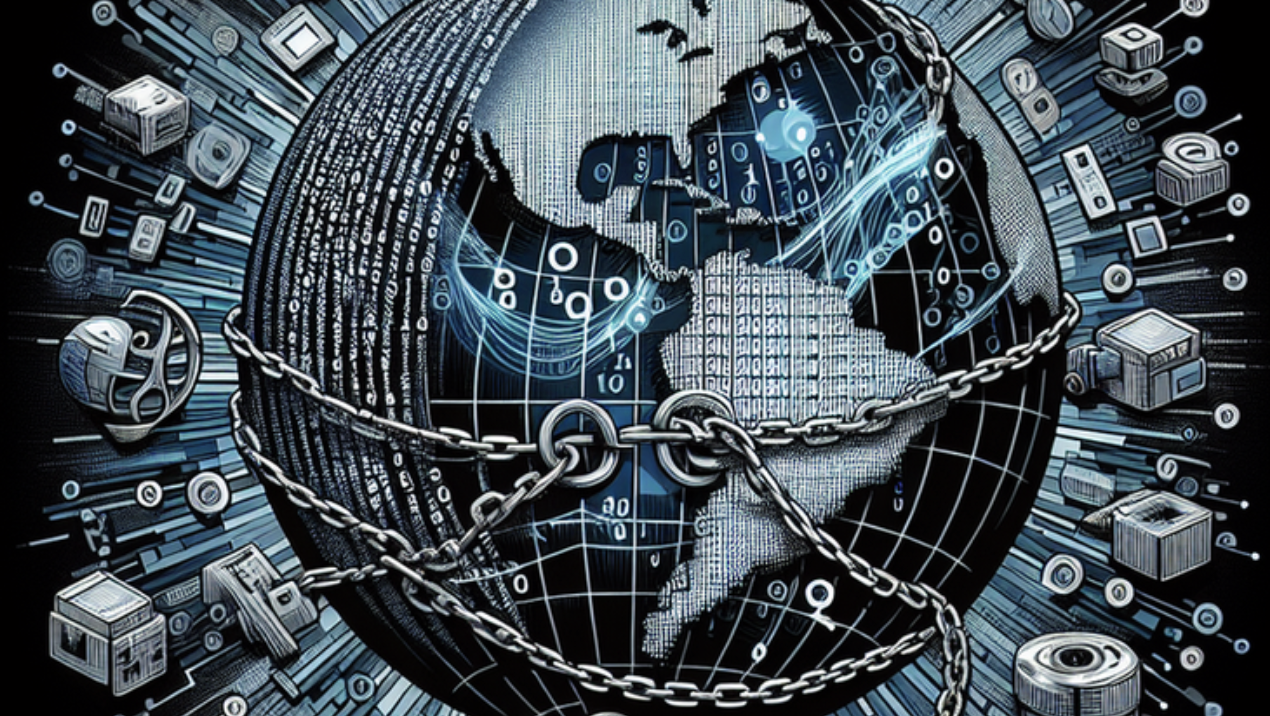
This article argues that the extractive relationship between Silicon Valley platforms and Indian users constitutes what scholars Nick Couldry and Ulises Mejias have called “data colonialism” — a structural condition in which the daily life of populations in the Global South is converted, without meaningful consent or compensation, into raw material for capitalist accumulation in the Global North.
The Empirical Evidence: India as a Data Colony
Scale of Data Generation
The raw numbers are staggering. India had approximately 751.5 million internet users in early 2024 and then crossed the one billion mark in 2025.Indian mobile users spend more than 36 GB of data monthly which makes them one of the highest mobile data users worldwide because of their ability to access the cheapest mobile data rates which resulted from Reliance Jio’s market entry in 2016. The fastest-growing segment of internet users now exists in rural India because 55% of rural residents use the internet. Google Chrome is used by 9 out of 10 Indian internet users. Instagram has 362 million users in India which represents more than double its US user base. WhatsApp, owned by Meta, enables almost all online users to connect with others.
The AI Dimension: Training Data and the New Dispossession
The development of extensive AI systems has created a new major threat for the existing issue of data extraction. AI models which include large language models, image recognition systems, recommendation engines and behavioural prediction tools require extensive datasets for their training which contains content generated by Indian users through their Hindi Tamil Telugu and other Indian language text and social platform images and virtual assistant voice recordings and e-commerce platform purchasing behaviours.
The AI systems use this training data which enterprises and governments and individual consumers purchase through premium products that generate revenues not linked to the geographical location of the training data. An Indian user who contributed language data to train a generative AI model receives no royalty, no acknowledgement, and no share of the commercial value that model subsequently generates. The current data theft occurs together with permanent theft of Indian linguistic and cultural data which AI systems will use indefinitely to increase their value throughout future decades.
Platform Capitalism and the Architecture of Extraction
Nick Srnicek, in Platform Capitalism (2017), argues that platforms function as economic systems because they operate as intermediary technologies which link different markets while collecting user data from all user interactions. The digital ecosystem operates according to foreign-owned platforms which have made Google the dominant search engine, Meta the reigning social network force and Amazon the leading e-commerce site and international companies the operators of cloud services. Indian users participate in their own economy because they use systems which collect their data and sell it to outside parties for profit. The process operates as digital extraction because India supplies users who use the global platforms which deliver their infrastructure and produce economic value which transfers to other nations.
The “free services” model further obscures this imbalance. Users access search and social networking services at no cost, but platforms obtain permanent access to user behavioral information which they utilize for AI development and targeted marketing and marketplace control. The exchange operates with unequal terms because platforms achieve lasting financial benefits while users receive only temporary service advantages.
India’s Regulatory Response: The DPDP Act and Its Limitations
The Digital Personal Data Protection Act 2023 and its implementation through the DPDP Rules 2025 establish India’s main legal framework for controlling data extraction which organizations must fully execute by May 2027. The Act establishes a framework for regulating personal data, granting users rights such as access, correction, erasure, and grievance redress.
The Act contains essential restrictions. The law only governs personal data and does not apply to non-personal data or aggregated data, which organizations use for artificial intelligence and analytics purposes. The broad governmental exemptions which Section 18 provides create fears about government surveillance together with excessive executive control.
The DPDP Act protects citizens’ privacy rights, but it does not protect citizens’ economic sovereignty rights. The law defines regulations for data collection processes while it omits regulations for capturing economic value. Through legal means, platforms can obtain Indian user data to extract, process and sell it worldwide without sharing any profits with Indian users or the country’s economy.
Towards Data Sovereignty: Bringing Genuine Reform
Data colonialism needs more than privacy regulation to achieve its solution. India needs a data sovereignty framework that operates throughout three dimensions which include economic, structural and governance elements.
India must establish data value sharing systems which require large platforms to donate part of their Indian revenue to a Digital Commons Fund. The system would treat data as an economic asset through its royalty system which establishes rights for data ownership while funding domestic AI development and digital infrastructure projects.
India requires an independent data regulator who will control all data governance functions. The Data Protection Board currently lacks independence because it operates under executive control and permits government agencies to access sensitive information. India should participate in global data equity rulemaking by partnering with other Global South nations to establish new standards for data movement and value distribution.
Conclusion
Data colonialism 2.0 exists as a real economic system which operates through India’s one billion internet users who create extensive behavioral data which foreign companies use to generate advertising income and develop AI systems that they transfer back to their corporate offices in California. The financial systems operate through economic mechanisms which show historical colonial practices because they use different methods which do not require military force or treaties of domination yet produce identical economic results that develop through market extraction of unprocessed materials and subsequent delivery of refined products to the extraction entity.
Data sovereignty centres on determining who controls the essential economic assets that drive economic growth in the twenty-first century. For most of the twentieth century India answered that question through nationalising essential economic sectors which produced results that varied between success and failure. The digital age presents a challenge which requires an advanced solution that combines market efficiency with business flexibility yet mandates that Indian citizens maintain substantial ownership of the value which they create through their digital activities. That is not protectionism. It is justice.
About the Author:
Akshara, is a fourth-year law Student at the Jindal Global Law School. She poses an avid interest in financial law, Social Justice, and emerging technology. Passionate about researching and diving into untold stories.
Image source – https://datafort.com/exploring-the-rise-of-data-colonialism-the-impact-of-ai-on-society-and-the-growing-resistance/