
By – Raewa Bharat Parab
Abstract
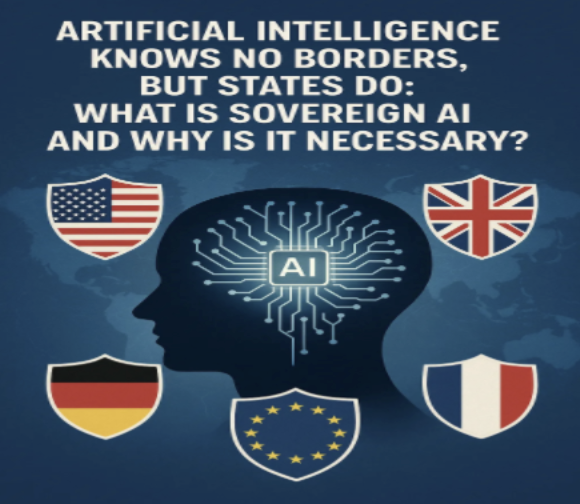
Sovereignty, traditionally defined by borders and boundaries of a state, is being disrupted in the present age due to significant use of AI, which predates any conception of an actor that is simultaneously present across every national boundary. This article explores the doctrine of territoriality and whether such a concept, defined years ago, is still suitable in modern times and discusses whether existing laws can regulate AI’s sovereignty or if there’s a need to establish a separate jurisdiction to control it to maintain social order. It further examines the consequences of India’s legislative silence to address AI-specific accountability and the effects of this gap on India’s capacity to govern AI systems whose consumer base spans every jurisdiction on Earth.
The article adopts a doctrinal comparative methodology along with critically engaging with case laws and judicial decisions to grasp how other jurisdictions are grappling with this obstacle. Secondary sources such as scholarly articles, blogs, and commentaries have been used to substantiate arguments and offer a critical view.
Introduction
A year ago, Shamblin, a 23-year-old graduate in the USA, suffering from depression, committed suicide. Why? Because of his confidant, the world’s most famous AI chatbot, ChatGPT, repeatedly encouraged him to do so up until his last breath. The truth is that no legal remedy or monetary compensation can ever replace the loss of a being, especially the loss of a parent losing their own child. But at the same time, this incident raises a profound uneasy feeling since AI’s consumer base and adaptability are so vast that the aspiration of “containing” within the existing legal jurisdiction becomes futile. In a world where everyone is excessively dependent on AI, its sovereignty is constantly contested, posing an unprecedented challenge in the field of law.
A Brief Overview of Why the Present Definition of Sovereignty Brief Overview of Why The Present Definition Of Sovereignty is Ineffective
The Peace of Westphalia bases state sovereignty on four core legal components: territorial sovereignty, jurisdiction, non-intervention, and political independence. Territorial sovereignty is defined as having exclusive authority over a geographical domain encompassing land, water, and airspace. This concept is closely interconnected with jurisdiction, which refers to the state’s power to regulate and enforce laws. Non-intervention and political independence are self-explanatory and go hand in hand with the other two components. AI models, which are trained globally along with their users from across the globe, are not confined to a specific territory or border. AI systems have no such locations demarcated by physical boundaries. Their algorithms can be developed in one country and be used simultaneously by millions of users across multiple continents which practically renders the question of which jurisdiction holds authority without having other jurisdictions to interfere. Political independence is similarly undermined as the affected population is affected by systems that lie outside their democratic process. Therefore, they challenge all these components, creating a “sovereignty-control paradox”. These components additionally hold an internal contradiction, which adds to the legal ambiguity surrounding the internet.
When a company deploys such a model in one state but ends up causing harm in another, the real question that arises is which jurisdiction law should be applied? Or does AI need a jurisdiction of its own that is independent of the others? The territoriality principle, which relied on rigid “mechanical binary proxies” defined in the Harvard Research Draft Convention on Jurisdiction with Respect to Crime (1935), is outdated for today’s societies because of their fluid and transnational nature. Initially, the focus was on identifying the location of online activities. Gradually, it has shifted towards the difficulty in identifying a substantial relation between the state and the activity when there isn’t one. The Harvard Draft Principles were not actually core jurisprudential values but proxy principles working as temporary measuring sticks for all jurisdictional claims, causing the state to inadvertently set strict boundaries, denying itself the opportunity to explore subjects that stray away from territory. This is exactly why extra heed was paid to policies related to AI, as it acknowledged the primacy of the public interest, the finality of law, and the necessity of state-level planning and expertise.
Comparative Analysis
States such as the US, UK and Australia apply the “presumption against extraterritoriality”, meaning that laws are assumed not to be applied beyond their jurisdiction unless stated explicitly, whereas states such as Canada and the European Union follow the doctrine of territorial nexus, a pluralist approach to conflict of laws which argues for a shift away from territorial formalism. It comprises three central requirements which need to be met to exercise jurisdiction in the absence of territory. The first one is establishing a ‘substantial connection’ between the subject matter and the state seeking jurisdiction. Second, the state must have a legitimate interest in the matter. And lastly, the exercise of jurisdiction by the relevant state must be reasonable by basing it on the balance of legitimate interests of not just the state and the affected parties, but also the competing parties and the broader international community. The very famous EU AI Act bases its jurisdictional reach on the “destination principle”, which applies to any system that affects persons within the EU, regardless of the location where the system originates.
A classic example of this is the King v OVH case in 2025 by the Ontario Court of Justice, which serves as a landmark judgment concerning the expansion of extraterritorial jurisdiction. This was a national security investigation where the Canadian jurisdiction was asserted by the court over data which was held by servers in France, the UK and Australia. The court reasoned that the Canadian affiliate, i.e., OVH, was in “possession or control” of the data as it was a part of a single corporate group with technological access to the parent company’s servers. They also stated that there was a “substantial connection” between Canada and the parent company’s Canadian operations and that there were no limitations that effectively barred the order. The doctrinal shift is worth dwelling on. The court did not assert jurisdiction because Canada had a territorial claim. It was because of corporate relationship between Canadian subsidiary and its French parent which created a functional connection sufficient to frame legal obligation. An AI system has no subsidiary, no employees, and no data centres that can be identified as belonging to a single corporate group subject to a single jurisdiction’s production order. The case shows us how far the territorial nexus doctrine can be pushed. This approach is tailored to fit the present society, where technology is evolving rapidly.
The inadequacy of existing jurisdictional frameworks becomes consequential when examined from the lens of a jurisdiction that is one of the world’s largest AI consumer markets with a significant voice in global AI governance forums. Yes, I am talking about India. At present, there are no specific codified laws or statutes in India that directly regulate AI. What exists instead are instruments designed for adjustment problems, which were drafted without keeping the AIS’s capacity for autonomous, transnational harm-generating conduct in mind. The consequences of this are not merely administrative but jurisdictional, constitutional, and deeply structural. The IT Act 2000 is the immediate point of failure. It does not regulate autonomous decision systems, thereby, leaving algorithmic buyers and automatic damage largely unaddressed. The DPDP Act in 2023 was perceived to be a corrective step, which was enacted in lieu of the Supreme Court recognising the Right to Privacy as a fundamental right in K.S Puttaswamy versus Union of India. Yet it was inadequate for governing an AI as its scope is triggered only when personal data is involved. It says nothing about cross-border AI accountability. And a jurisdiction with no AI-specific laws, a non-operationalized data protection statute and an IT Act that is built for a pre-algorithmic world is quite concerning.
Conclusion
The question this article posed at the outset can only be answered if we broaden the definition of sovereignty. Moving away from strict territoriality for determining AI’s sovereignty is critical as AI systems operate through transnational networks, cloud infrastructures and data flows that frequently transcend national boundaries. It would promote accountability and provide for a realistic foundation for governing emerging technologies. And adopting this universally will help resolve several major conflicts and assist in drafting regulations.
Author’s Bio
Raewa Bharat Parab is a third-year law student currently pursuing B.A. L.L.B. (Hons) from Jindal Global Law School, Sonipat. Her interest lies in exploring the intersectionality in AI models and codified laws in India.