-

Sidelined States: The Rising Importance of Ethiopia
Read more: Sidelined States: The Rising Importance of EthiopiaIn this article, Akanksha Mishra explores the rise of Ethiopia in the realm of regional security in Africa and in the larger economic sphere of the world after the coming of Prime Minister Abiy Ahmed.
-
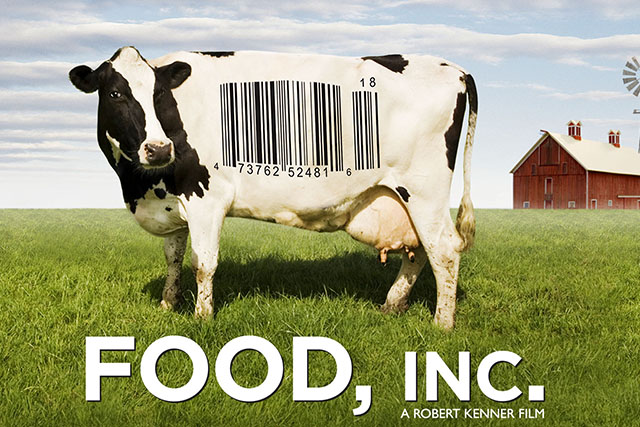
A GLOBAL FOOD STORE THROUGH THE DOCUMENTARY – FOOD, INC.
Read more: A GLOBAL FOOD STORE THROUGH THE DOCUMENTARY – FOOD, INC.Vanshika Mittal talks about America’s controlled food industry through its portrayal in the documentary Food, Inc. This article brings forth the focus on the integrated capitalism and the hidden consequences of a globalized food chain.
-

India-Taiwan trade relations: Benefits for India in implementing a trade agreement with Taiwan
Read more: India-Taiwan trade relations: Benefits for India in implementing a trade agreement with TaiwanIn this article, the author intends to highlight the economic benefits of India-Taiwan FTA while taking into consideration the “One China Policy”.
-
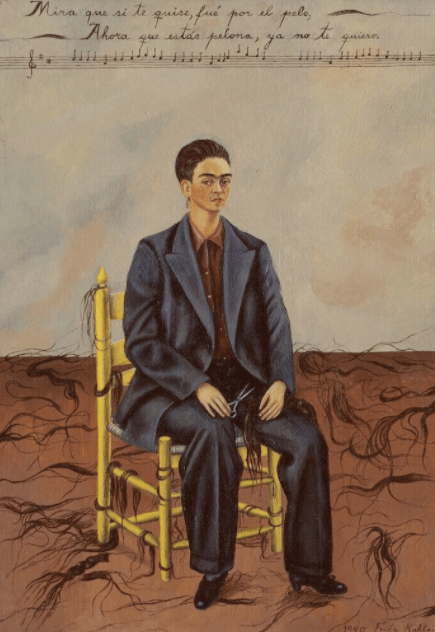
Frida Kahlo’s ‘Self-Portrait with Cropped Hair’
Read more: Frida Kahlo’s ‘Self-Portrait with Cropped Hair’This piece interprets the nuances and implications in Frida Kahlo’s art, specifically, her self-portraits; analysing its symbolism from a gendered perspective and raising questions that challenge existing gender and cultural norms. It is the first part in the series of Identities Through Art.
-

Erasure of Religious Minorities in India: Demolishment of Monuments and the Renaming of Cities.
Read more: Erasure of Religious Minorities in India: Demolishment of Monuments and the Renaming of Cities.In this podcast, Mr. Pathak takes us on a tour of India’s history and sheds light on those aspects of history that have been ignored over the past decades. Mr. Vikas Pathak is a former journalist at the Hindu, Hindustan Times, Asiaville, etc, and the author of the book Contesting Nationalisms. His deep understanding of…
-
1947 & 1984 – Anecdotes from India’s Darkest Moments in History
Read more: 1947 & 1984 – Anecdotes from India’s Darkest Moments in HistoryTalkpoint captures real-life narratives, haunting anecdotes from survivors of the Partition of 1947, and the 1984 Sikh pogrom. These tales act as lessons from history that form a basis for further introspection for the present. Mr. Surinder Nath Malhotra narrates his experience of the Partition. At the time when we had to move across the…
-
Nazariya
Read more: NazariyaTHE WOMEN BHAKTAS IN INDIAN HISTORY: SUBVERTING GENDER ROLES? Author bio: Aqsa Agha (Ph.D, JNU) teaches history at Delhi University and is consulting with Partners in Change, New Delhi. She has worked extensively on issues of human trafficking (TISS, Mumbai) and on human rights violation with different organisations. She has previously worked with Centre for…
-

Citizenship : From Civic Agency to Religious Statism.
Read more: Citizenship : From Civic Agency to Religious Statism.In conversation with Dr. Laurence Gautier. Q1) How did the concept of citizenship emerge? If you look at global history, not just Indian history, you will see that we often trace the idea of citizenship back to Ancient Greece, that’s the 5th or the 6th century BC. Of course when you hear the word citizenship,…
-

SAMVAAD
Read more: SAMVAADCaste in Christianity; Conversions and Problems Faced by Dalit Christians. In this month’s Samvaad discussion, Dr. Sanal Mohan, author of Modernity of Slavery: Struggles Against Caste Inequality in Colonial Kerala, talks about the discrimination meted out the Dalit Christians from a historical and socio- anthropological . He begins with explaining the social fabric in colonial…
-
PAIGAM E AWAAZ
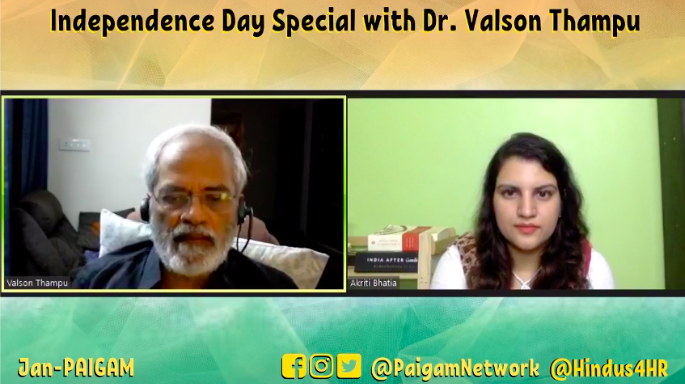
Read more: PAIGAM E AWAAZThe Politicisation of Organised Religion and Freedom. This session of JanPaigam explored the link between faith and freedom within India. The discussion was conducted by Ms. Akriti Bhatia, Founder and Director of PAIGAM, and Dr. Valson Thampu, an author, scholar, and the former Principal of St. Stephen’s College, University of Delhi. Throughout the discussion, discourses…
-

Revisiting the Contours of Constitutional Protection: The Debate of Free Speech v. Hate Speech – II
Read more: Revisiting the Contours of Constitutional Protection: The Debate of Free Speech v. Hate Speech – IIThis article deals with the recent controversy surrounding the book withdrawal by Bloomsbury; and analyses the issues at hand and proposes a better paradigm.
-
Revisiting the Contours of Constitutional Protection: The Debate of Free Speech v. Hate Speech – I
Read more: Revisiting the Contours of Constitutional Protection: The Debate of Free Speech v. Hate Speech – IThis article analyses the existing understanding of the constitutional protections offered to free speech and how it is strictly limited by precedents and provisions alike.

Nickeled & Dimed
Penny for your thoughts?
We are accepting articles on our new email: cnes.ju@gmail.com
 NICKELED AND DIMED