
By – Siddarth Poola
Abstract
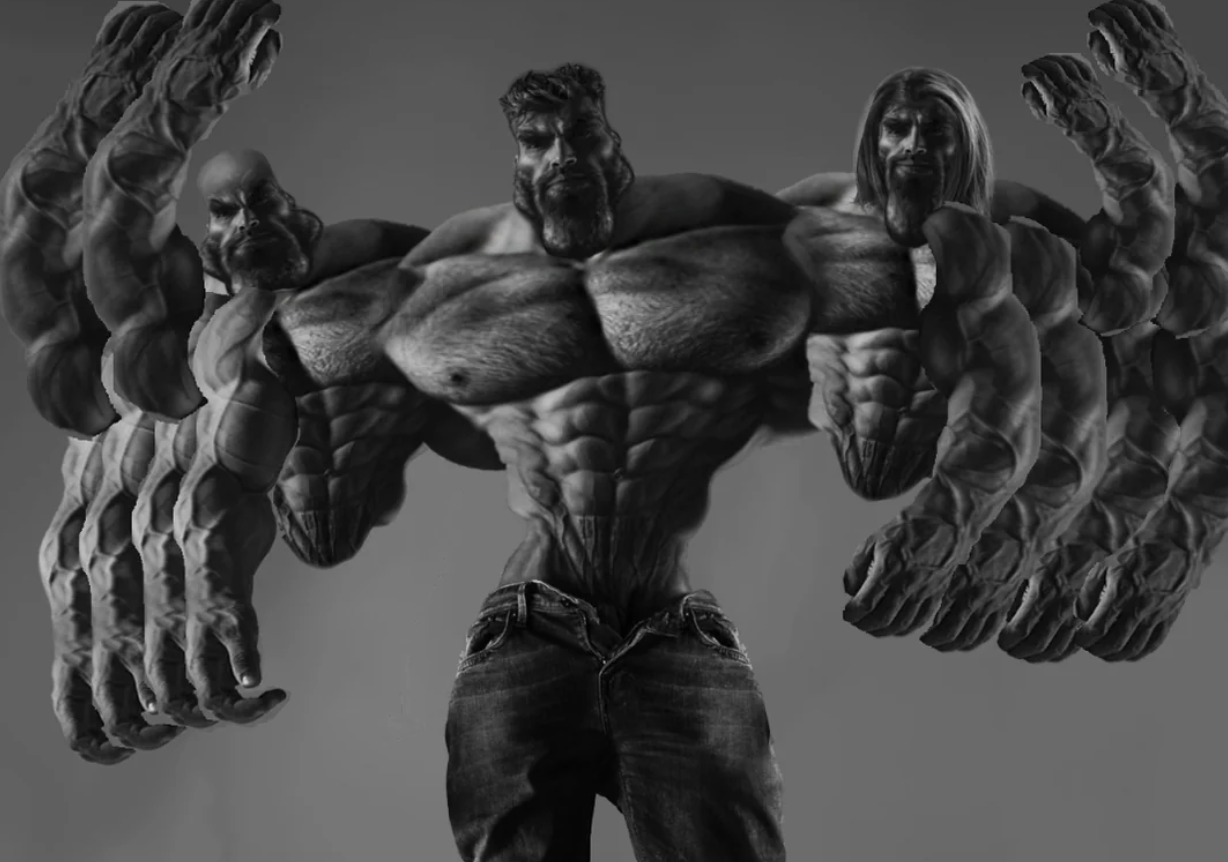
Recently, the idea of “masculinity ” has caused a lot of division. One camp insists masculinity is under existential attack, that boys are being failed by schools, that men are being culturally sidelined and left to figure it out on their own. The other responds that men still run most things and any talk of crisis is either bad faith or deliberate confusion. Both camps are too busy being right at each other to notice that neither is being useful. This essay argues that men’s difficulties are real, shaped by specific historical norms, and being actively exploited by political movements that would prefer you not look too closely at their proposed solutions.
Introduction
The masculinity crisis is one of those topics where the loudest voices in the room are usually the worst guides to what’s actually happening. Between manosphere podcasters who have built profitable businesses explaining why men are victims of progressive overreach, and critics who respond to every statistic about male suicide rates with a reminder about institutional power, the actual human beings in question tend to disappear from the conversation entirely.
Both sides keep landing on the same dead end. Men are either embattled heroes of a fading civilisation or the authors of their own suffering, depending on what the almighty algorithm decides to show you. Netiher of those sides tell you why men are dying by suicide at four times the rate of women, why boys are falling behind in school across most developed countries, or why a substantial portion of young men have found community in online spaces that run on resentment as a business model. Those are questions worth sitting with rather than flattening into a talking point.
What’s actually going on involves three things that keep getting muddled. First, the genuine damage that traditional masculinity norms have done to men’s health and identity. Second, how that damage is being politically weaponised by movements with no real interest in fixing anything. Third, the obvious but apparently contentious idea that men might benefit from a broader understanding of what being a man is actually allowed to mean. Related problems, different causes, different responses.
The Norm That Never Asked Permission
Traditional masculinity was not built around the question of whether it was good for men. Historically, the dominant model of manhood tried to be functional and productive without interior life permitted. The man who expressed distress was the man who was failing at being a man, which meant that generations of men learned to understand their own suffering as personal inadequacy rather than a structural problem. That is an extremely effective way to ensure a structural problem never gets addressed, because the people most affected by it spend their energy blaming themselves.
The health consequences are well documented. Men who most strongly endorse traditional masculinity norms seek medical and psychological help less frequently, underreport symptoms, and are considerably more likely to manage distress through substance use or risk-taking than through anything that requires admitting they’re struggling. The suicide gap is the most cited number: roughly three to four male deaths for every female one across most countries. But it sits inside a broader pattern that includes worse cardiovascular outcomes, higher rates of occupational injury, and near-total underrepresentation of men in mental health services relative to their share of the problems those services exist to address.
In professional life, the picture is just as contradictory. The same norms that positioned men as providers also built male identity almost entirely around occupational status, which is a fragile place to put your sense of self. Redundancy, retirement, career collapse: these hit differently when your worth as a person has been indexed to your productivity since adolescence. This is not destiny. It is what happens when you train people to measure themselves through one variable that can disappear at any point without warning.
Research on identity formation in men has found that the anxiety isn’t always about failing to be masculine enough. It’s often about whether the version of masculinity on offer is worth the cost of performing it. That’s a more interesting crisis than the one usually described, because it suggests the problem isn’t that men have lost something valuable. It’s that they were handed something expensive to maintain and never given much say in whether they wanted it.
The Mental Health Gap Nobody Is Actually Fixing
Knowing why men refuse help is incredibly important. Researchers have argued for years that traditional masculinity actively discourages the behaviours most associated with psychological recovery: identifying emotions, talking about them, seeking support, tolerating vulnerability in front of other people. These are not uniquely female capacities. They are human ones that men have been systematically trained away from.
Men who do seek support often describe the central barrier as less practical than ideological. Not that therapy is unavailable, but that using it feels like a form of self-betrayal. The man who goes to therapy is still, is the man who couldn’t handle it. Changing that requires changing what handling it means, which is a bigger project than most mental health campaigns are funded to take on, and it requires admitting that the norm causing the problem is the same one being celebrated as a solution.
Boys’ educational underperformance is worth taking seriously even when the conversation tends to attract people who aren’t primarily interested in boys. Across most developed education systems, boys are trailing girls at nearly every academic level. One consistent thread in the explanations is that boys who understand masculinity as requiring the performance of indifference find it harder to engage in environments that reward sustained effort, emotional regulation, and cooperation. These are learnable skills. They’re also skills that a specific version of masculinity has spent decades marking as unmanly. The boys who absorb that message most completely are exactly the ones who end up most exposed to movements that will later recruit them using that narrative as the hook.
The Political Opportunity
The genuine suffering of many men has been useful to political movements with no intention of addressing it. What the manosphere offers is an emotionally coherent diagnosis and a practically worthless one. Men are struggling because of feminism, because of progressive cultural shifts, because they’ve been tricked into surrendering authority that was rightfully theirs. The solution, apparently, is a return to traditional masculine dominance, which is, on examination, the same framework that produced the suppression and rigidity currently being mourned.
Research on masculine identity in conditions of social change finds that men experiencing the most acute identity threat are most drawn to ideological systems that restore a clear hierarchy and identify a villain responsible for the disruption. This is not stupidity. It is a comprehensible response to disorientation when the alternatives being offered seem hostile or incoherent. Jordan Peterson tells young men to clean their rooms and take responsibility for themselves. Andrew Tate tells them women and weakness are the enemy. Both offer clarity in a space where it is scarce. That neither is diagnosing the problem correctly is a secondary concern when the primary feeling being addressed is purposelessness.
The frustrating thing is that the underlying observations are not fabricated. The concern that men’s mental health is systematically underaddressed is legitimate. The observation that male distress often gets dismissed or redirected into a lecture about privilege rather than met with actual support has something to it. The masculinity crisis is real in the sense that something has fractured, that old scripts don’t hold, and that the replacements on offer are either inadequate or actively harmful. Where the diagnosis breaks down is in treating the fracture as the problem rather than recognising that the thing which fractured was never serving men particularly well to begin with. You cannot solve a problem caused by rigid, costly norms by insisting harder on those norms.
Conclusion
The question of what masculinity should look like is not rooted in the past that most men didn’t actually benefit from, or by movements that have repackaged male suffering into content. Men do better when they’re allowed to express difficulty, build identity from something more stable than professional status, and access support without it counting against them culturally. That is not a radical project. It is just extending to men the same basic latitude that other people have always had.
Telling men to be strong while defining strength as the inability to ask for help is not a solution. It is the original problem in a different shirt.
About the Author:
Siddarth Poola is an undergraduate student studying law at Jindal Global Law School, with a deep interest in Water Sports and a Compunctious regard for Sports Law.
