By — Sarthak Katewa
Abstract
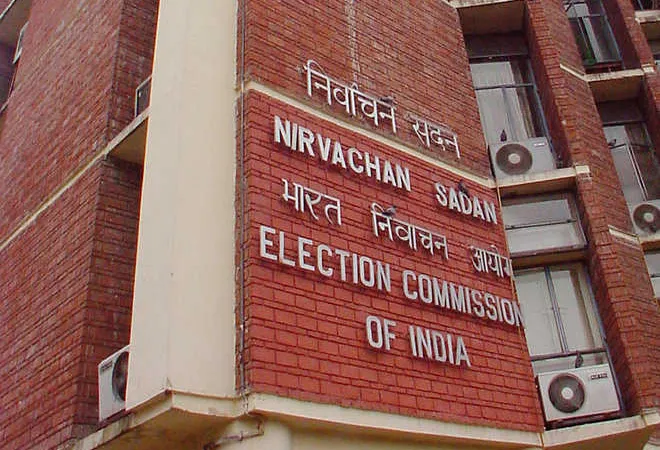
The Special Intensive Revision of Electoral rolls in India is a public policy issue which is situated at the intersection of electoral integrity, administrative discretion and democratic inclusion, which recently risks being democratic exclusion. This article seeks to examine the manner in which the Election Commission of India has defended the SIR, calling it a lawful exercise as under Article 324 of the Indian Constitution (which establishes the Election Commission of India to conduct free & fair elections) as simply governing voters registration, and how its critics argue that its implementation risks shifting the burden of proving eligibility upon the citizens, the majority of whom will be marginalized groups and poor migrants. Through an analysis of the legal reasoning for the SIR, along with its concerns over documentation, deletion procedures and most vitally citizenship-linked exclusion, this article seeks to examine how the state defines legitimacy in access to franchise, not only in who is removed from the electoral rolls.
Introduction
In a democracy such as India, there are few questions more important and of consequence than who gets included & who gets excluded. Speaking in terms of political participation, the Special Intensive Revision (SIR) has brought this important question to the very heart of the tension between electoral integrity and democratic inclusion. In practice, SIR requires Booth Level Officers to visit every household to verify and update voter details, distributing enumeration forms that must be filled out and returned within a fixed window. While no documents are required during the initial enumeration stage, electors are encouraged to submit supporting proof of identity, date of birth, or residence from a list of ECI-approved documents, including birth certificates, passports, educational certificates, and family registers, in order to avoid complications during the verification stage. Once the draft roll is published, citizens are given a window, typically around 30 days, to file claims for inclusion or raise objections to entries, after which local election officials review and dispose of these claims before the final electoral roll is published. The SIR is defended by the Election Commission of India as a constitutionally valid exercise that is allowed under principles of free and fair elections enshrined in Article 324 along with the Representation of the People Act. It is presented as an administrative vehicle to plainly exclude ineligible participants and improve the accuracy of voter rolls. Yet their implementation has generated significant fear about the in-depth demands of documentary requirements, deletion procedures, and the possibility that electoral verification will result in a backdoor test of citizenship for vulnerable groups. A characterization that stems from the fact that several of the accepted documents, such as birth certificates and family registers, are precisely the kind of records disproportionately difficult for the poor, migrants, and undocumented rural residents to produce on demand . This article seeks to examine how the inherent political nature of SIR goes far beyond just revising voter lists but actually raises questions about how far the state can go in demanding proof of citizenship before the right to vote becomes conditional.
The Administration’s Reasoning
Presented by the Election Commission of India as a simple electoral housekeeping or headcount to ensure that no eligible voter is left behind, a tool to verify existing rolls and remove ineligible entries, a way of framing it as not a political intervention so much as a routine democratic safeguard which is justified under the powers granted by Article 324 of the Constitution. The process of the SIR involves door-to-door enumeration, booth-level officers, and a structured timetable for draft rolls, including claims and objections, before its final publication, giving it the appearance of procedural neutrality. On paper, that is what makes the SIR persuasive because it is on paper orderly and legally anchored. But what makes this exercise contentious is the very manner in which this procedure will be carried out: the first step is producing documentation, then comes enumeration forms and ending with verification by state agents. So the problem arises with the first step because by pushing onto voters the vast majority of whom must navigate their paperwork and meeting strict deadlines the process goes from inclusion into the electoral roll to the demand for active proof, and even after you have submitted all the required evidence which is not as simple as it seems on first glance you must then be scrutinized by officials to preserve a right they already possess. Officials who will carry out this process have significant discretion, but as we know with any process, bias may be a concern if the criteria aren’t applied consistently or are influenced by ulterior motives or views; this is where the process has attracted the most sustained criticism.
The Cost of Exclusion
The critics of SIR do not claim that voter rolls should not be corrected but about how such corrections risk exclusions if the state demands too much from the citizen. The SIR also overestimates India’s efficiency in paperwork, time and administrative legibility, straining an already overburdened system. In principle, such a process may improve accuracy, but in practice, it threatens to punish people who don’t have fixed addresses, lack documents or fail to respond to notices and deadlines and one is then forced to ask what shall be the consequences for failing to meet these rigorous standards: will the roll disqualify an individual from citizenship that he earlier validly held? The vulnerability here is also in recognizing that electoral disenfranchisement does not always look dramatic but often appears as a missing form or a mismatch in the state’s records or simply names left out due to honest human fault. A group of petitioners from Biharwarn that marginalized voters, as per the procedure, will be left out if they fail to submit forms on time. Another concern for many is how the SIR creates a chain of uncertainty around what citizenship itself is: is it either meeting or failing to meet deadlines or submitting the correct forms, or is it actually locating the documents that are demanded of you. Such tensions are very familiar in public policy because while everything may seem neutral and perfect from a surface level, it fails to address the uneven effects produced beneath it. Documentation and the production of it becomes a necessity for participation, resembling a conditional privilege more than a democratic right.
Electoral Trust
Any worthy policy question must ask whether it strengthens or weakens public trust in the system and in democracy. This question is one raised by the very nature of the SIR, but how does it seem to answer it? One must not confine oneself to thinking that electoral systems derive legitimacy only from legal authority; they derive legitimacy also from the perception of people it seeks to manage, their trust and faith in the institution. Why the SIR matters so much more than mere technical details is because when voters suspect that the revisions can quietly alter their access to their franchise, the confidence in the neutrality of the electoral administration starts to erode. The Supreme Court upheld the Election Commission’s wide constitutional powers and upheld the SIR as a proportionate exercise aimed at “purifying” the rolls in the pursuit of fair & free elections. But even that validation leaves open a deeper democratic tension, which is the citizens’ feeling secure about the credibility of these processes, and that they will lose their power to opaque standards or rushed timelines. Democratic legitimacy must not forget that it has to reassure the citizens of its integrity, and this does not come from mere promises but from actionable steps. In many ways, the SIR is to the citizens a test of their institutional trust, if the state insists on revision without equally robust safeguards against wrongful exclusions, they risk protecting the electoral roll while damaging confidence in the electoral process itself. And in a world that is increasingly suspicious of their leaders & institutions, an electoral roll that is lacking in trust & transparency undermines the very foundational principles upon which both democracy and the nation itself depend. The consequences of this revision must not fall on those least equipped to deal with, navigate and interact with the state.
Conclusion
The Special Intensive Revision reveals that the politics of elections begin long before a ballot is cast. What is framed as an administrative effort to clean voter rolls is, in practice, a contest over inclusion, proof, and the meaning of democratic belonging. Legal validation from the Supreme Court settles the question of constitutionality, but not the question of fairness, particularly for those least equipped to navigate documentation and deadlines. Ultimately, how a democracy chooses to verify its voters says as much about its values as who ends up on the final list.
About the Author
Sarthak Katewa is a 5th-year B.A. LL.B student at O.P. Jindal Global University and a columnist of the Centre of New Economic Studies with a focus on Public Policy & Governance.
https://www.orfonline.org/public/uploads/posts/image/Election-Commission.jpg