
By — Dhuha
Abstract
India is emerging as a global hub for artificial intelligence which has resulted in investments in data centres. However, this has brought attention to the environmental cost of this development. Even though AI is a symbol of economic growth and technological advancement, the data centres in order to function require huge amounts of water and energy which is a concern in India as we already face water scarcity in various places in the country. This article examines whether India’s already existing environmental law is equipped with dealing with the challenges emerging as a result of establishment of data centres. The paper argues that the laws designed for the industries don’t fully deal with the environmental impact of AI infrastructure. The article states that AI development in India should be supported by a modern framework of environmental laws that balance AI development with sustainable resource management and environmental justice.
Introduction
India is standing at the forefront of the global AI revolution. Many initiatives such as IndiaAI Mission as well as increasing private investment have made India a preferred destination for hyperscale data centres. The AIMission was approved in 2024 and its aim is to build a domestic and inclusive AI ecosystem which expands access to computing infrastructure, developing datasets and AI models, supporting startups and promoting safe and responsible AI. Various states such as Maharashtra, Tamil Nadu, Telangana and Andhra Pradesh are all competing in order to attract these investments and in turn are promising land, infrastructure and policy incentives. However in the age of this development a big question arises as to who bears the environmental cost of building and maintaining the infrastructure necessary for AI?
This question becomes really important in a country like India which already faces water scarcity. In the monsoon of 2026, there was a decline in the reservoir levels in Mumbai which once again showed the fragile condition of urban water security before the onset of monsoon. Several other cities in India also depict this crisis. Even though AI is viewed as an intangible technology which only exists digitally, the physical infrastructure necessary for sustaining it relies on huge amounts of electricity and freshwater in order to prevent the servers from overheating. Thus in order to pursue this technological advancement, there is an unintentional competition over one of India’s most scarce natural resources that is water.
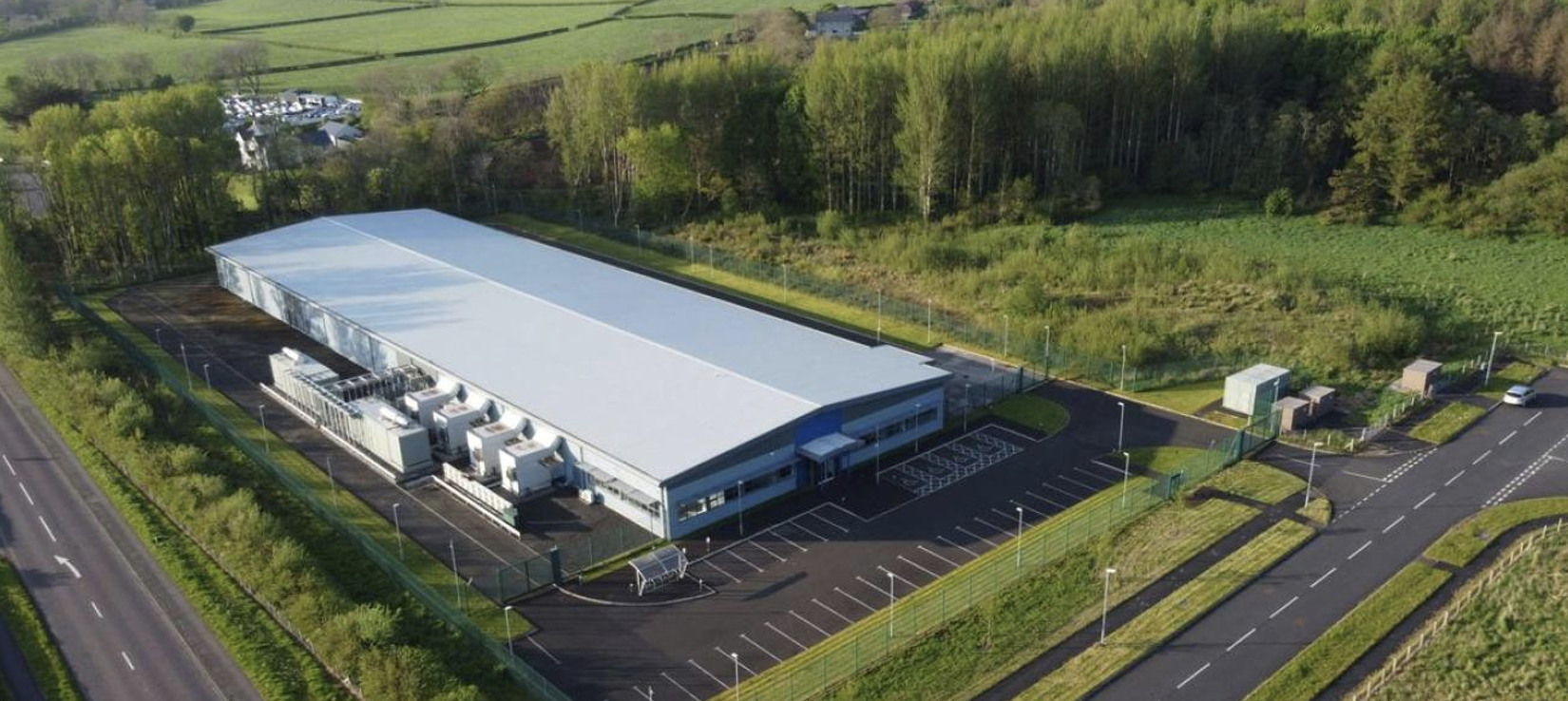
The modern data centres run continuously and generate huge amounts of heat, which requires sophisticated cooling systems and these systems depend on water-based cooling technologies which consume a significant amount of freshwater everyday. Environmental organisations and policy experts have therefore questioned whether India’s environmental framework can adequately deal with the environmental implications of AI infrastructure.
The Emerging Water Crisis
The issue is not merely environmental conservation. In 2026, Council on Energy, Environment and Water (CEEW) did a study in which they estimated that Indian data centres consume nearly 150 billion litres of water annually and this might double by 2030. Thus, it leads the policy makers to confront a difficult question that when water becomes scarce how will the law balance economic development against essential human needs?
The Supreme Court of India has always interpreted Article 21 of the Indian Constitution which guarantees right to life which also includes the right to a clean and healthy environment. The supreme court has reinstated this in various judgements such as Shubhash Kumar v State of Bihar, in which the topic of environmental protection has evolved from being just a policy objective to a constitutional obligation. Indian environmental law has also embraced various international principles of environmental law such as sustainable development, the precautionary principle and the public trust doctrine. According to these principles the natural resources should be managed in a way that serves the present generation without rendering the future generation of their use. As held in the case of Vellore Citizens’ Welfare Forum v Union of India the supreme court recognised the precautionary principle and the polluter pays principle as essential features of sustainable development.
The Regulatory Gap
The emergence of AI infrastructure exposes an important regulatory gap. India’s environmental laws were enacted in order to regulate industries which have been historically associated with pollution such as mining, manufacturing and large scale infrastructure projects. However, the environmental issues which arise due to AI data centres are not a result of toxic emissions but due to the consumption of electricity, freshwater and land, which the current framework is not equipped to deal with. This irregularity is a huge concern because AI infrastructure is expanding at an unprecedented paceand much of this growth is happening in metropolitan cities that are at the same time experiencing increasing water scarcity.
This questions the adequacy of India’s Environmental Impact Assessment (EIA) framework. While large infrastructure projects generally require prior environmental appraisal based on their anticipated impacts, there is no dedicated assessment mechanism specifically made for hyperscale AI data centres. The existing environmental approvals often focus on projects individually, without considering their cumulative regional impact. A single data centre may not significantly affect local water availability. However, when several centres are established within the same metropolitan region, alongside growing residential and industrial demand, the cumulative extraction of freshwater may place substantial pressure on already fragile ecosystems. Environmental law has recognised that cumulative impacts deserve regulatory attention, yet this principle has not been incorporated into India’s digital infrastructure policy.
The Public Trust Doctrine
The Supreme Court in M.C. Mehta v. Kamal Nath, establishes the public trust doctrine which held that certain natural resources, including water, are held by the State in trust for the benefit of the public and cannot be managed only according to commercial interests. This doctrine becomes particularly relevant when governments are competing to attract private investment in digital infrastructure. The establishment of data centres undoubtedly leads to economic growth, employment and technological advancement and is protected by the freedom to practise a profession or carry on an occupation, trade, business under Article 19(1)(g). However, when water scarcity is already a huge issue, the State’s obligation is not merely making way for investment. It must also ensure that access to essential natural resources is not compromised in favour of private commercial activity. Article 21 provides the right to life and environmental protection. Article 48A places a duty upon the State to protect and improve the environment and Article 51A(g) places a fundamental duty upon the citizens to protect the natural environment. Thus, economic policy cannot displace constitutional responsibility.
The Way Forward
India does not need to wait for a crisis before responding. Instead of discouraging AI investment, environmental law should evolve to ensure that innovation is done responsibly. First, environmental approvals for large data centres should include water-specific impact assessments, particularly in regions which already face water scarcity. Such assessments must calculate the individual project’s water requirements as well as the cumulative effects of multiple centres operating within the same watershed.
Secondly, there is a need for greater transparency. The companies should be made to disclose publicly the annual water consumption, recycling rates and cooling technologies.
Thirdly, the policymakers should encourage technological innovation that reduces the environmental impact of AI centres. There should be incentives for closed-loop cooling systems, wastewater reuse and alternative cooling technologies. This would allow India to expand its digital economy and at the same time reduce dependence on freshwater resources.
Finally, environmental governance itself must evolve to reflect the realities of the digital economy. The regulations which were developed during the twentieth century were designed for factories, mines and heavy manufacturing. However now the industries of the twenty-first century are data-driven rather than smoke-driven, yet their environmental consequences are no less significant. Recognising AI infrastructure as an environmentally relevant sector is an essential first step towards modernising India’s legal framework.
Conclusion
India’s aspiration to become a global AI leader is both legitimate and economically important. However, technological leadership must be measured by whether innovation occurs within ecological limits and constitutional values. Environmental law should evolve in such a way that it is not seen as an obstacle to technological progress rather as a framework that ensures progress is equitable, sustainable and accountable.
Whether the future of AI will be shaped by responsible environmental governance depends upon the legal choices India makes today. In a country where water scarcity is already an everyday reality for millions, the question is no longer whether AI can transform society, it is whether the law can ensure that this transformation does not come at the cost of one of our most indispensable natural resources.
About the Author
Dhuha Mir is a third year B.A. LL.B student studying at OP Jindal Global University and she is interested in women’s rights, contract law, sports and international law.
Image Source: https://india.un.org/sites/default/files/styles/hero_header_2xl_1x/public/2026-06/1_2.jpg?itok=ONTEnDFz
