
By — Shreya Vakkaleri
Abstract
Transboundary and interstate river-sharing agreements governing the Indus, Cauvery and Mekong Rivers have traditionally relied on formulae built around fixed volumes, percentages or minimum-flow thresholds set against a historical hydrological baseline. However, the impact of climate change has led to erratic flows, specifically in the Mekong Delta and Cauvery Basin, thereby exposing the limits of static figures that fuel compliance disputes between parties. Accordingly, this article proposes an alternative modelled along the consumption-based cuts adopted under the Colorado River Compact, offering a more durable substitute for the antiquated fixed-allocation formula.
Introduction
Transboundary river-sharing agreements are typically built for stability, not change. Treaties such as the Indus Water Treaty of 1960, the 1995 Mekong Agreement and the 2007 Cauvery Tribunal award were drafted with the presumption of a seasonal minimum flow and percentage based on the recurring rainfall pattern in the area. The drafters mistakenly assumed that the hydrological baselines they assigned said quantities of water would remain static; however, climate change has dismantled that assumption. Each year, varied monsoon patterns feeding the Cauvery basin become less predictable, 2025 was a wet year, yet 2026 is witnessing record low water flow. Similarly, the Mekong’s prolonged and unprecedented dry seasons, worsened by a cascade of upstream dams, have destroyed 18% of northeastern Cambodia’snatural ecosystems.
Therefore, the main problem facing transboundary water law today is not an absence of agreements, but its structural rigidity. Fixed-percentage and fixed-quota allocation formulas were calculated on the basis of outdated hydrological baselines; most existing treaties have no built-in mechanism to adjust when that baseline shifts. This article examines the Mekong Agreement’s dry-season flow provisions and the Cauvery Tribunal’s allocation formula, with the Colorado River Compact’s shift to consumption-based cuts as a comparator. It asks whether these treaties can be adapted through retrofitted clauses, or whether climate variability demands flow-indexed allocation instead.
The Baseline Problem
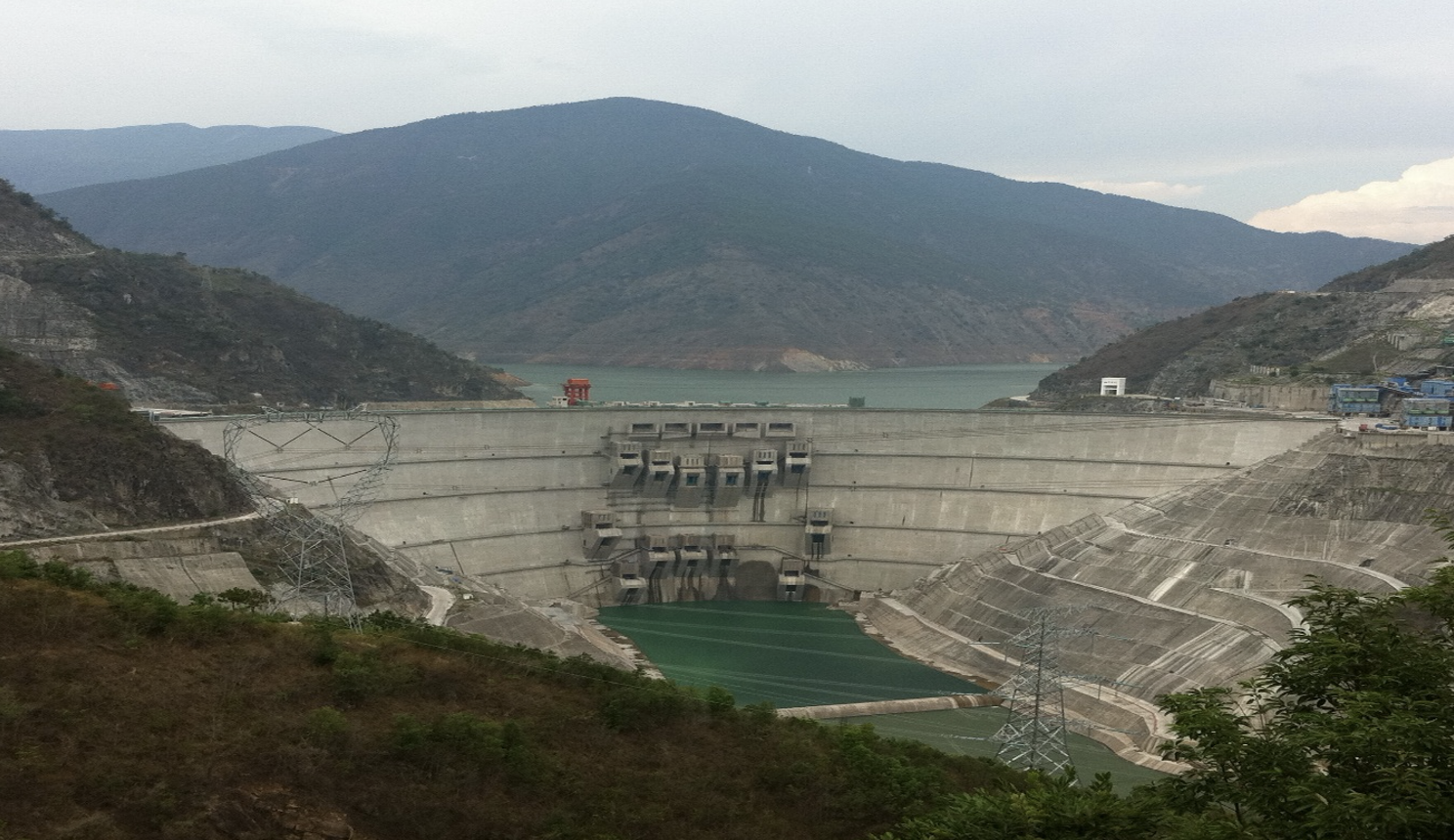
To understand why rigidity is the real issue, it would be helpful to look at the promises of the Mekong Agreement and the Cauvery award. In contrast to the Indus Treaty’s water-sharing agreement between India and Pakistan, the Mekong Agreement commits member states (Thailand, Laos, Cambodia, and Vietnam, with China and Myanmar as non-binding dialogue partners) to “reasonable and equitable” use and to maintaining minimum monthly flows during the dry season. The dry-season flow provisions were designed around historically observed low-flow patterns. But two forces have converged to break that design: erratic rainfall reducing the river’s natural dry-season volume, and Chinese-constructed dams on the Lancang (upstream) that have blocked water access in the river’s lower basin. When both hydrology and hydropower operations shift simultaneously, a flow provision calibrated to 1990s conditions has very little relationship to the river as it exists in 2026.
The Cauvery dispute illustrates a parallel failure, playing out domestically rather than internationally. The Cauvery Tribunal’s 2007 award (later modified by the Supreme Court in 2018) allocates water between Karnataka, Tamil Nadu, Kerala, and Puducherry using fixed percentage shares, calculated against an assumed “normal” year of rainfall. This creates a dilemma during drought years for Karnataka and Tamil Nadu, both of which are heavily dependent on Cauvery water for irrigating crops. The former is asked to release water it may not actually have, while the latter receives an allocation insufficient for its agricultural needs regardless of what the formula says. Disputes over Cauvery water allocation occur every other year; not because the tribunal’s math was wrong in 2007, but because a fixed percentage cannot account for a river whose annual volume is no longer predictable.
What Rigidity Actually Costs
The term “rigidity” means three things. First, allocation formulas expressed as absolute quantities or fixed percentages have no internal trigger for revision; they remain legally binding even after the underlying hydrological assumption has visibly failed. Second, most of these treaties lack real-time data-sharing obligations robust enough to let parties even recognise when conditions have shifted meaningfully, as opposed to normal year-to-year variation. Third, dispute resolution mechanisms in these treaties (where they exist at all) are typically designed to adjudicate compliance with the existing formula, not to renegotiate the formula itself. The Mekong River Commission, for instance, can request prior consultation on new hydropower projects, but has no binding authority to alter allocation in response to changed conditions. The result, across all three treaties, is the same: a legal instrument holding perfectly still while the physical system it governs moves.
This distinction between the absence of law and the presence of law that no longer fits matters for how the problem gets diagnosed. Diplomats and commentators tend to describe these disputes in the language of non-compliance; for instance, Tamil Nadu accused Karnataka of “violating” the Cauvery Water Dispute Tribunal final order in 2024. However, if the basin’s water availability has genuinely shifted, “non-compliance” may be the wrong frame entirely. A state cannot release water that its portion of the basin does not currently hold, no matter what a tribunal award says it should. Treating this as a compliance failure invites punitive or adversarial responses when the more accurate diagnosis is a design failure: the treaty asked a question the current climate can no longer answer in the way it once did.
Comparison: the Colorado River Compact
The Colorado River Compact, outside South and Southeast Asia, offers a live experiment in what happens when a rigid, century-old formula meets sustained climate stress. The 1922 Colorado River Compact divided the river’s flow between an Upper and Lower Basin across seven U.S. states. It used fixed acre-foot allocations based on measurements from an unusually wet period that overestimated the river’s long-term average flow. Decades of drought and reservoir depletion at Lakes Mead and Powell eventually forced something the original Compact never anticipated: basin states reluctantly agreeing to consumption-based cuts tied directly to reservoir levels, rather than sticking to the original fixed allocations regardless of actual water availability. This is not a clean success story, as negotiations have been contentious, prone to impasses and arguably too slow relative to the pace of decline. Nevertheless, it demonstrates that flow-indexed or reservoir-indexed adjustment is legally and politically achievable even within a near-century-old treaty framework, especially when the alternative is a formula that has become disconnected from reality.
Retrofit or Replace?
Considering the aforementioned agreement, two paths present themselves for the Mekong and Cauvery frameworks. The first is retrofitting: adding periodic review clauses, variable allocation bands, or ecological flow requirements onto existing agreements without disturbing the core allocation mechanism. This is politically easier since it does not require renegotiating the fundamental bargain each party has already accepted. For example, a Mekong dry-season clause could be revised to trigger renegotiation if flows fall below a minimum threshold for two consecutive years, rather than leaving the original fixed minimum untouched indefinitely.
The second path is more structural: replacing fixed-percentage or fixed-quota allocation with dynamic, flow-indexed formulas. Allocations expressed as a share of actual measured flow at a given monitoring point, updated on a rolling basis, rather than a fixed number decided once and left static. This is the model the Colorado River’s recent reforms gesture toward, however imperfectly. Applied to the Cauvery, it would mean shifting away from the current system of fixed percentage shares calculated against a “normal” year, toward a formula that recalculates each party’s share as a proportion of that year’s actual flow, measured close to real time.
Retrofitting is more achievable in the short term, particularly in the Mekong context, where getting all parties to agree on any binding change is already a significant diplomatic task. But retrofitting alone is likely to delay the same reckoning the Colorado River basin faced after decades of drought, i.e., a moment where the gap between the treaty’s numbers and the river’s actual behaviour becomes too large to paper over. Flow-indexed allocation is harder to negotiate, since it introduces genuine uncertainty into how much water each party will receive in any given year. But it is also the only approach that remains accurate by design, rather than requiring periodic renegotiation each time the climate shifts again.
Conclusion
Transboundary water disputes are often framed as failures of cooperation. More often, they are failures of design: the Mekong Agreement and the Cauvery Tribunal award are not breaking down because parties refuse to cooperate, but because their formulas were built for a hydrological baseline displaced by climate change. The more durable fix, as the Colorado River experience shows, is allocation that moves with the river rather than around it. More broadly, this signals a shift in environmental law treaties, from fixed settlements to living instruments, built to revise their own terms as the systems they govern change.
Author’s bio
Shreya Vakkaleri is a third-year law student currently pursuing B.A. LL. B (Hons.) from Jindal Global Law School, Sonipat. Her areas of interest include banking & securities law, aviation law, constitutional law and commercial international arbitration.
Image Source: https://www.stimson.org/2020/new-evidence-how-china-turned-off-the-mekong-tap/