
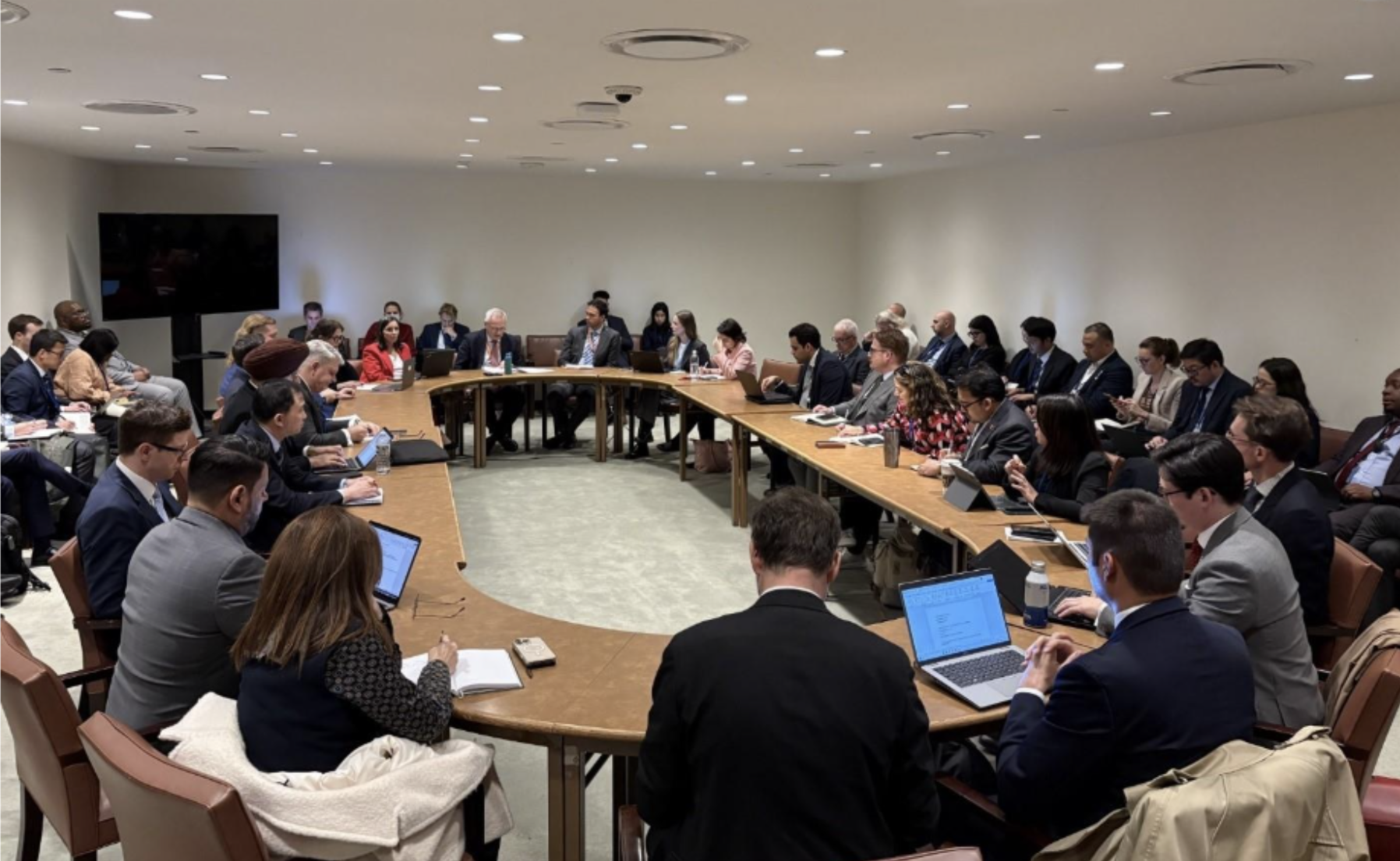
By — Saahil Ayyaril Ali
Abstract
This article observes how the procedural anomalies of the Convention on Certain Conventional Weapons (CCW) have triggered decade-long delays in negotiations, resulting in the absence of a binding legal framework which regulates the use of Lethal Autonomous Weapons Systems (LAWS). This article argues that diplomatic understanding and mutual agreements have been reached between states the applicability of international humanitarian law and the need for accountability; however, the consensus-based functionality of the CCW forum allows for certain states to politicize the process, blocking any efforts for progress. Mutual cooperation can be achieved, but the procedure allows for a small minority to block change. This piece assesses the diplomatic gridlock and its future implications on autonomous arms control as we approach the 2030s, where a new age of military applications will take centre stage.
Introduction
Globally, funding for the development of lethal autonomous weapons systems and military applications of artificial intelligence has exponentially surged, with the global autonomous weapons market reaching a valuation of over $14 billion in 2024, with an expected rise to over $30 billion in 2032. The importance of oversight and in-depth monitoring of applications and developments in autonomous weapons technology has been reiterated multilaterally, with numerous UN resolutions, such as Resolution 78/241, repeatedly emphasizing on the importance of effective supervision and the need for human-intervention-based protocols when using LAWS. In a joint statement at the CCW in September, 2025, states had called for the advancement of a legally binding framework on LAWS. Despite reiterating this commitment, the Group of Governmental Experts (GGE) that falls under the CCW are still yet to produce any binding text which regulates and ensures ethical approaches to LAWS. Whilst states have attempted to use diplomatic means to ensure lawful and just processes, the lack of procedural backing, along with the reported increases in autonomous weapons manufacturing, indicates a lack of accountability.
How the Function of Consensus Operates
The fundamental working of the GGE mechanism is built on a foundation of consensus-based decision-making. Within this process, regardless of how many states sponsor a particular proposal, the adoption or passing of said proposal can be halted by the block or veto of a single state. This guideline was incorporated with the intention of ensuring participation from militarily advanced powers, such as the United States and China, in regulating LAWS- signifying the true intentions of the CCW. The promise of allowing states to determine which protocols they would like to abide by without having to constrain themselves with every guideline or legal text held a grand appeal.
Today, this system quintessentially acts as de facto veto power. In 2016, upon the formation of the GGE, discussions revolving around the applicability of international humanitarian law (IHL) on LAWS took place, eventually leading to the adoption of eleven guiding principles which reaffirmed that the development of AWS falls under the provisions of IHL in 2019. By 2023, the GGE had expanded its mandate even further, which resulted in the drafting of legally ambiguous language as a result of geopolitical clashes and differing demands of states that called for a legally binding treaty and states that preferred negotiable, non-binding documentation. However, despite attempts to resolve geopolitical differences and advance the mandate, there seems to be no quantifiable progress in the development of a legally binding text which regulates the use of AWS.
Signs of Agreement and Consensus
While precedents stemming from the UNSC and recent attempts at consensus make us perceive all diplomatic efforts inherently ending in disagreement, the reality of the situation occasionally suggests otherwise. One major policy position lies within IHL’s applicability to the use of LAWS, with states of great military presence and states with greater vulnerability agreeing that legal principles such as proportionality and distinction must be implemented in governing the use of AWS in modern warfare.
Another area of political agreement is the legal need for accountability. According to an ICRC position paper, it argues that machines may not be assigned legal or ethical responsibility for how they use force. It states that there’s always going to be a need for some level of human judgment and oversight when it comes to the use of force by machines. This principle has been included in the draft negotiated documents for autonomous weapon systems as “context-appropriate human judgment” rather than “meaningful human control,” and has been included in the evolving set of drafts without major political disagreement over what is meant but with variation on how states want to define it.
Thirdly, almost all delegations generally agree that there are numerous insufficiencies in international law in its addressing of AWS; while existing laws certainly apply to autonomous weapons, there are significant limitations to how these weapons may be regulated, including issues such as unpredictability of use, diffusion of accountability between humans and machines and unintended escalation of conflict. Because all delegations share this view that additional controls must be imposed on autonomous weapons, they all continue to meet at the negotiating table. Thus far, the GGE has not yet solved the question of whether or not anything else needs to be done; however, they also will have to determine what form this regulation should take and to what degree it will restrict autonomous weapons from being made and carried into war.
Where the Process Precludes any Real Progress
Despite progress being observable under the consensus mechanism, quandaries begin to appear once efforts begin to chart discussions to actionable text. Such is the case with the legal definition of AWS. One major point of contention regarding this definition lies in determining whether AWS are capable of only identifying targets or are also capable of selecting and automatically engaging with said targets, all separate from human input. The need to distinguish these two viewpoints gains significant weight, as it would have lasting implications on the scope of which military instruments can legally be identified as LAWS. Because militarily-advanced states are aware of such a definitional anomaly, as the second definition would have a broader range of weapons categorized as LAWS compared to the first definition, protracted disputes over the treaty text become more frequent.
Another major debate centres around the building blocks of the legally binding instrument itself, concerned about whether these exhibits need total bans on content types, especially weapons against individuals that gain no direct authority from humans, or if there should be regulations initially for all other systems with no bans on other types. With over forty states endorsing a multi-tiered restriction coupled with tight-knit regulations, alternative legal texts which include broader and more vague interpretations have been rejected, citing reasons of danger if relevant instruments operate as exploitable guidelines rather than substantial constraints to LAWS.
Finally, the geopolitical structure among various states acts as another obstacle to meaningful progress. While technologically advanced states have not been entirely resilient to negotiations over proposed drafts, they still evidently prefer a non-binding set of guidelines which merely revolve around principles over a binding document. This stems from existing views regarding IHL’s role in overseeing AWS, with states deeming its regulations sufficient enough to govern the usage of LAWS and any additional oversight would deter any additional developments in military technology. Such stances permit those states to positively contribute toward the wording of the new version of the rolling text and to reduce or limit its ultimate application; furthermore, those states may also maintain their ability to develop weapons without any obligations resulting from the adoption of a new version of the rolling text by other states.
Conclusion
The CCW process has come to a halt for reasons unrelated to the fundamental disagreement between states regarding the dangers of lethal autonomous weapons systems and the principles that should govern them. Instead, the CCW process, which relies on consensus to make decisions, is being blocked by a small number of technologically advanced states that can prevent binding, global agreements regarding the use of lethal autonomous weapons systems, despite the existence of substantial normative convergence around this issue within the international community. The 2019 guiding principles for LAWS, the general belief that international humanitarian law applies to LAWS, and the common insistence that human beings be accountable for the use of lethal autonomous weapons systems are all indicative of substantive agreement between states on the issue of LAWS. A decade of negotiation, however, has not resulted in even a single binding international legal instrument regulating the use of LAWS. This is a result of how the CCW is structured and operates as opposed to a fundamental disagreement between states on the subject.
About The Author
Saahil Ali is a 2nd year Economics student at the Jindal School of Government and Public Policy with a minor in International Relations. His primary research interests lie in political economy, geoeconomics and trade policy, international law, and democratic governance. His goal is to continue his pursuit in policy research under these domains.
Image Source: United Nations Office of Disarmament Affairs