
By – Apoorva Lakshmi Kaipa
Abstract
This article examines the role of media in sustaining social power structures through Gramsci’s concept of cultural hegemony. Media platforms, films, pop culture and advertising reproduce dominant ideologies instead of operating as neutral channels of communication. The article will: explore how social media algorithms shape visibility and reinforce already present hierarchies by privileging commercial and mainstream narratives; analyse cinematic representations where the persistence of stereotypes in both Bollywood and Hollywood normalise unequal power relations; investigates pop culture as a vehicle of soft power and finally critiques the way advertising is used as a ideological tool and packages the perfect “natural” aspirational lifestyles. This article demonstrates that the media is not merely entertainment but a terrain where power is negotiated, reproduced and contested.
Introduction
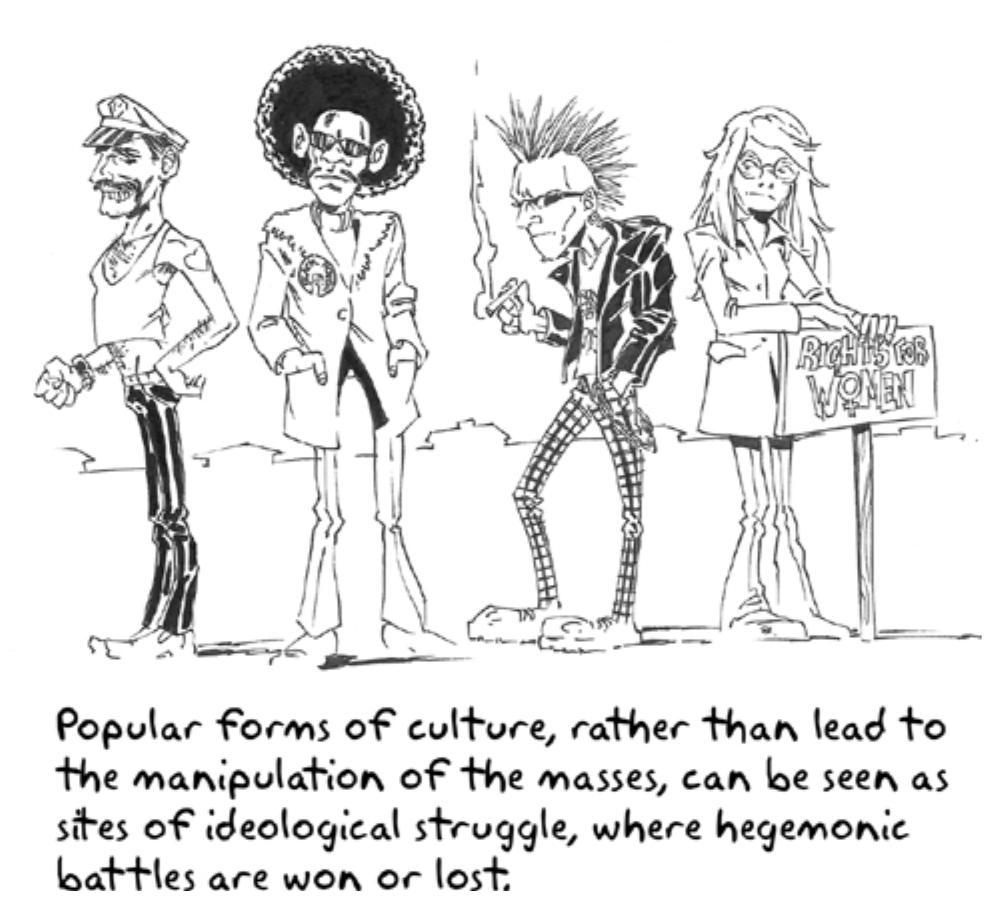
Every time we scroll, watch media, or shop online, we participate in creating and maintaining power structures we rarely see. Social power structures operate not only through coercion but through the production of meaning. Antonio Gramsci described this phenomenon as cultural hegemony, where ruling groups secure consent by shaping what is seen as “common sense”. This hegemony is not imposed violently, but rather through everyday cultural norms, the films we watch, the ads we consume, and the algorithms that curate our social media feeds. Foucault also noted that modern power is most effective when it is dispersed, normalised, and internalised. This article will delve deeper into the argument that contemporary media — including algorithms, cinema, pop culture, and advertising — are crucial sites for sustaining cultural hegemonic power. Drawing on critical theorists such as Gramsci, Hall, Baudrillard, and Said, alongside empirical studies, this paper demonstrates that the media is never neutral but is deeply implicated in the reproduction of social hierarchies.
Algorithms as Invisible Power
Algorithms are often perceived as neutral or objective when they increasingly shape what we, as individuals, encounter when viewing content. Safiya Noble, in Algorithms of Oppression, demonstrates how search engines reproduce racial and gender biases, such as associating “black girls” with pornography in Google searches. Tarleton Gillespie emphasises that algorithms are sociotechnical systems designed to privilege engagement and profit, not neutrality. Empirical evidence reveals the silencing effects of such systems. These dynamics become clearer when we look at certain platforms where the reinforcements of power hierarchies can be seen in the algorithmic design choices. For example, TikTok faced criticism in 2020 for suppressing the BLM movement and LGBTQ+ creators. Yet, these same platforms have also enabled counter-hegemonic visibility through activist, independent journalists and marginalised groups. These communities have tried to reclaim narratives even within the restrictive structure they are under.
Similarly, YouTube’s recommendation algorithm has been shown to funnel users towards extremist or sensationalist content, privileging visibility for voices that reinforce dominant or commercially profitable narratives. From a Gramscian perspective, algorithms sustain hegemony by making dominant ideas and values appear natural or inevitable online, so users accept them as common sense. Users tend to believe that they have free choice in picking what they are consuming, but the algorithm subtly directs attention, prioritising consumerism and mainstream ideologies while marginalising dissent. This invisible governance manipulates attention through endless scrolls and curated feeds, conditioning users to internalise platform logics under the illusion of free choice. Foucault’s notion of disciplinary power is also relevant where surveillance and algorithmic sorting govern behaviour without overt coercion, making power both invisible and effective. Thus, algorithmic sorting governs not only what content is viewed but also how long users are on it, what consumer habits they form, and even what forms of social expression appear acceptable or desirable.
Representation in Cinema
Cinema is a powerful cultural apparatus that reflects and constructs social realities. Stuart Hall’s encoding/decoding model demonstrates how films embed dominant codes that audiences may negotiate but rarely escape. For example, Edward Said argued that Western media and cultural texts construct the “Orient” as exotic, backward, or dangerous, legitimising imperial domination. Bollywood is the prime exhibit of hegemonic representation. Muslim characters are disproportionately depicted as terrorists or criminals, as in films like Baby (2015) and Phantom (2015). Dalit characters are often erased or represented through saviour narratives, like in Article 15 (2019), which was heavily criticised for centring an upper-caste protagonist rather than centring the marginalised community the movie intends to talk about.
Women remain hypersexualised or confined to domestic roles. Whether it is through “item songs” or simply portraying married women as damsels in distress who don’t have any other aspect in life. For instance, actresses like Samantha Ruth Prabhu have often been cast in roles that emphasise glamour or victimhood rather than agency, reflecting how mainstream cinema still typecasts women despite their star power. This portrayal reinforces patriarchal gender norms, as Niveditha Menon extensively talks about in her writing.
Hollywood perpetuates hegemonies very similarly. The “magical Negro” trope, where black characters are always in the supporting roles and are present for the moral development of white protagonists. This is seen in movies like The Green Mile (1999) and The Help (2011), as contended by Sydney Cusic in “The Magical Negro Trope in Literature and Film”. Movies like The Blind Side (2009) and The Green Book (2018) also reproduce the racial hierarchies by portraying the white saviour narrative. Through these repetitive narratives, the stereotypes appear to be natural. Cinema, in this sense, normalises inequality, aligning with Gramsci’s view that cultural forms reproduce ruling-class dominance.
Pop Culture as Soft Power
Joseph S. Nye, in “Soft Power”, defined soft power as the ability to shape preferences through attraction rather than coercion. Pop culture is central to this dynamic as it functions both as an entertainment and ideological export. Hollywood again dominates global markets and exemplifies US soft power. Marvel movies often embed American nationalism, portraying US institutions as saviours of the world. Even when consumed abroad, these narratives shape global imaginaries of power and morality. Netflix, despite promoting itself as global, disproportionately features Western storytelling tropes, reinforcing cultural hierarchies.
At the same time, K-pop demonstrates how non-Western industries deploy cultural products strategically. Dal Yong Jin describes K-pop as a transnational cultural force backed by South Korean state policy, enhancing Korea’s global influence. Its global appeal lies in a deliberate hybridity. The blend of the exoticism of the Korean language and physical features of the strategically marketed, highly trained idols, with the familiarity of Western pop music formulas, distinguishes it from Western stars like Justin Bieber. Yet, even here, global distribution is mediated through Western-owned platforms, limiting genuine cultural diversity. In Gramscian terms, pop culture circulates hegemonic values by entertaining audiences into consent. What feels like “choice”, like consuming Marvel or K-pop, is embedded within larger geopolitical struggles over cultural capital.
Advertising and Desire
Advertising functions as one of the most pervasive vehicles of ideologies. Jean Baudrillard argued that commodities signify status and identity beyond their material use, turning consumption into a system of meaning. Sut Jhally similarly argues that advertising fetishises products, embedding social values within them. In India, fairness cream advertising, for example, Fair & Lovely, recently rebranded as Glow & Lovely, has long equated whiteness with beauty, success and marriageability. This reconstructs the colonial legacies of racial hierarchy while commodifying insecurities. Luxury advertising in the West similarly constructs class aspiration, selling not only watches and handbags but also the illusion of prestige and aspirational wealth portrayal. Advertising thus converts inequality into aspiration. By presenting exclusionary ideals as universally desirable, it aligns with Gramsci’s conception by reproducing ruling ideologies in ways that appear consensual when, in fact, they are hegemonic.
Conclusion
Media systems are not neutral mirrors of society but are active participants in the construction of hegemony. Algorithms invisibly structure what is seen and silenced. Cinema encodes stereotypes that normalise hierarchies. Pop culture extends cultural soft power across borders. Advertising embeds ideology into consumer desire. Together, these processes naturalise inequality and make it appear to be common sense. As Gramsci warned, cultural hegemony is most powerful when it goes unnoticed. Yet, sites of contestation exist, like independent cinema, activist media and counter-hegemonic digital practices that challenge dominant narratives. Critical media literacy is, hence, essential not to reject mainstream media but to recognise it as a terrain of struggle where meanings and identities are constantly negotiated.
About the author
Apoorva is a second-year student at JGLS majoring in law and business administration. She is an avid reader and artist, actively trying to incorporate creative fields into her everyday work.
Image Source : https://sk.sagepub.com/book/mono/introducing-cultural-studies/chpt/how-dominate-masses-without-resorting-the-inquisition