-
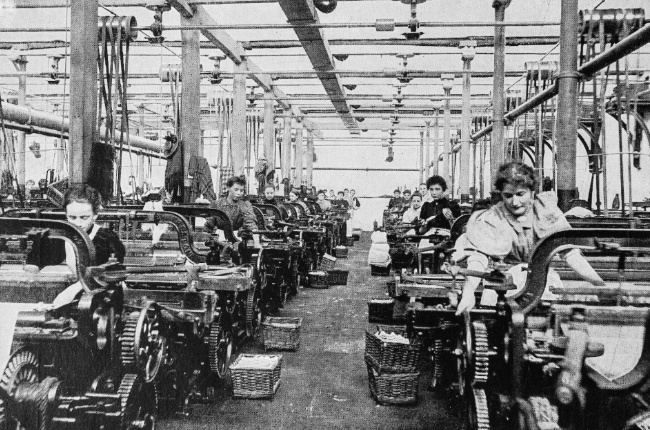
The AI Piece-Rate: Is Platform Work Bringing Back a 19th-Century Labour System?
Read more: The AI Piece-Rate: Is Platform Work Bringing Back a 19th-Century Labour System?By – Anaaya Wahi Abstract Long before an app decided what a delivery costs, garment workers in the nineteenth-century tenements were paid by the piece per shirt, per collar, per finished bundle having no floor beneath a bad week. Platform work has renewed this logic at a scale no sweatshop foreman could have ever imagined,…
-
The Right To Remian Untrained: Can Individuals StopAI From Learning From Their Data?
Read more: The Right To Remian Untrained: Can Individuals StopAI From Learning From Their Data?By — Ishita Jain Abstract Today, artificial intelligence systems are trained on enormous amounts of human-generated data, such as photos, writings, personal data, artworks, social media and other online content. However, this poses the following question: does a person have a right to forbid an AI system from using his/her data for its training purposes?…
-

Why Does Being Scanned Make You a Suspect? The Legal Vacuum at Jantar Mantar.
Read more: Why Does Being Scanned Make You a Suspect? The Legal Vacuum at Jantar Mantar.By — Amritesh Unny Abstract Between 20th June to 25th July 2026, Delhi Police used real-time Facial Recognition Technology (FRT) on thousands of peaceful student protestors at Jantar Mantar. Indian criminal procedure attaches every safeguard, notice, ground, cognizance, and right, to a protestor who has already been labelled an accused, or a named suspect. One-to-many facial scans reverse that sequence. A machine forms suspicion first, tests it against a criminal database, and crosses no legal threshold to do it. The person being scanned…
-

Consent Theatre: What “Data Donation” Actually Means for Gig Workers
Read more: Consent Theatre: What “Data Donation” Actually Means for Gig WorkersBy — Anaaya Wahi Abstract India’s gig economy runs on data as much as on labour, like location pings, face scans, ratings and behavioural logs copied through terms-of-service agreements that workers cannot meaningfully negotiate. This article argues that such extraction is not a privacy footnote to the “real” gig-work debate over social security and wages,…
-

Consent Theatre: What “Data Donation” Actually Means for Gig Workers
Read more: Consent Theatre: What “Data Donation” Actually Means for Gig WorkersBy -Anaaya Wahi Abstract India’s gig economy runs on data as much as on labour, like location pings, face scans, ratings and behavioural logs copied through terms-of-service agreements that workers cannot meaningfully negotiate. This article argues that such extraction is not a privacy footnote to the “real” gig-work debate over social security and wages, but…
-
AI, Labour Rights and the Future of Indian Platform Workers
Read more: AI, Labour Rights and the Future of Indian Platform WorkersBy – Amritesh Unny Abstract On 12 June 2026, the ILO (International Labour Organisation) adopted Convention No. 193, the first binding treaty on platform work. Its articles 13 to 15 do something Indian law has not, they make an algorithm explain itself before it takes away a livelihood. India abstained. Five weeks earlier it notified the Social Security (Central) Rules, 2026, which register gig…
-

Guilty of Writing too Well ?
Read more: Guilty of Writing too Well ?By – Amritesh Unny Abstract A single number can now fail a student, an AI detector returns a percentage, and a committee reads it as a confession. It happened at Lucknow University and at Jindal Global Law School. No court in India has yet said what such a number proves. When does a tool that assists become one that…
-

The Devaluation of Artistic Labour
Read more: The Devaluation of Artistic LabourBy — Utkarsh Suman Abstract Public debates surrounding AI have largely focused on one question- will AI steal jobs of human artists? Honestly this is just a massive distraction. The real shift is happening much closer to home, right in the audience’s brain and not in the capabilities of AI. The attention economy has already…
-

Fragmented Functions: Employer Identification in AI Data Annotation
Read more: Fragmented Functions: Employer Identification in AI Data AnnotationBy- Aashita Sarin Abstract Artificial intelligence systems rely on large volumes of human-annotated data yet this labour is becoming increasingly fragmented. AI developers, outsourcing vendors, and digital platforms often perform different functions within the same production chain, separating the entity that commissions labour from the one that contracts with or oversees the worker. Who, then,…
-
Creative Theft Or Fair use ? AI Training and the Crisis of Intellectual Labour
Read more: Creative Theft Or Fair use ? AI Training and the Crisis of Intellectual LabourBy – Ishita Jain Abstrarct This article analyses the question of whether the training of generative AI on copyrighted content constitutes a violation of intellectual labour rights through expropriation or a legally permitted transformative use, and its implications on the economics of intellectual labour.The article discusses the varied American jurisprudence on AI training, particularly Thomson…
-

The Unpaid Workforce : How AI turned Humanity into its own training ground
Read more: The Unpaid Workforce : How AI turned Humanity into its own training groundBy – Ishita Jain Abstract Artificial Intelligence is powered by vast amounts of human-generated content, yet the creators of this data often receive neither consent, recognition, nor compensation. This article examines how AI training raises concerns relating to digital labour, copyright, privacy, intellectual property, and transparency, while arguing that ethical AI development must be grounded…
-

When Intelligence Becomes Infrastructure
Read more: When Intelligence Becomes InfrastructureBy — Ihina Yadav Abstract 11th March 2026 marks the day when OpenAI CEO Sam Altman casually declared that he envisions “a future whereintelligence is a utility, like electricity or water, and people buy it from us on a meter.” This sparked great controversy and led to a chain of discourse where netizens noticed the dystopian future that awaited them, whereas Altman called it a business model. This article interacts…

Nickeled & Dimed
Penny for your thoughts?
We are accepting articles on our new email: cnes.ju@gmail.com