-

Irish Banking Crisis and Herd Behaviour
Read more: Irish Banking Crisis and Herd BehaviourIn this paper Mr. Devashish Mathur attempts to look at the Irish Banking Crisis from the lens of behavioral economics. Irish Banking Crisis in 2008 made Ireland a ‘public finance posterchild’ prior to the European Debt Crisis of 2009.The paper specifically focuses on Irish Banking Crisis as to how banks failed without venturing into the…
-

Inter-relationship Between Economies: The Country and The World
Read more: Inter-relationship Between Economies: The Country and The WorldIn this article, Shubhalakshmi Bhattacharya explores the interdependence between a national economy and the global economy through an analysis of the Greek economic crisis.
-

The Cost of LGBT Exclusion to the Economy of India
Read more: The Cost of LGBT Exclusion to the Economy of IndiaThe essence of this article written by Viswas Viswanath is to look at the exclusion of the LGBT community through an economic lens rather than a socio-cultural one. It focuses on the influence behavioural economics has on this exclusion as well as looks at the crisis which could arise out of the “identity bias” attribute…
-

Quantum Decision Theory Series: #5 Techniques from Quantum Field Theory
Read more: Quantum Decision Theory Series: #5 Techniques from Quantum Field TheoryThis article is the next one in the Quantum Decision Theory Series. In the following article, Professor Sudip Patra describes the two stages of development in the basic quantum theory. He also discusses about the different techniques from Quantum Field Theory.
-
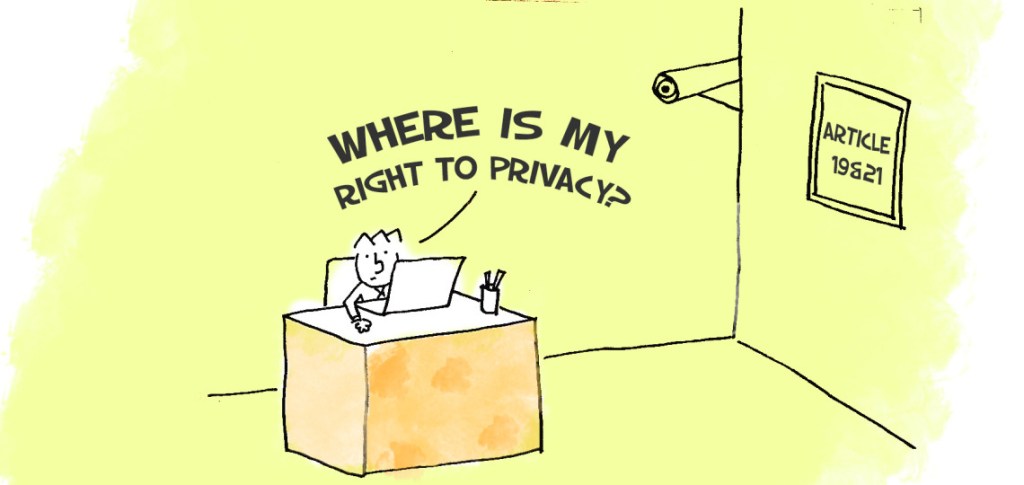
Embracing the Positive Obligation of Privacy
Read more: Embracing the Positive Obligation of PrivacyMr.Ashit Kumar Srivastava talks about the role of the Union Government as a ‘Data Fiduciary’ after the Puttuswamy judgment which cements the Right to Privacy as a Fundamental Right under Article 21 of the Constitution of India. Even though it is a negative right demanding non-interference of the State, with the Adhaar initiative, the Author…
-

An Inquiry into the Morals of Marriage
Read more: An Inquiry into the Morals of MarriageBertrand Russell’s, “Marriage and Morals” was published 9 decades ago and yet the foundations of modern marriage are deeply embedded in the past which have invoked a certain moral bias. This article by Guneet Singh Sidhu juxtaposes Lord Russell’s arguments against contemporary marriage scenarios to examine the “modern marriage”.
-

Herding and the Dotcom Bubble
Read more: Herding and the Dotcom BubbleIn this article, Sanjana Medipally explores the herd mentality of the stock market by taking a close look at the dot-com bubble. The article looks into this bubble and the impact it had, especially due to the creation of the internet and it’s impact on the growth in the revenue of companies. Read on to…
-

Did the ‘Herd Behaviour’ give the East Asian Economies a ride during the Financial Crisis?
Read more: Did the ‘Herd Behaviour’ give the East Asian Economies a ride during the Financial Crisis?This article, Lakshmi Priya analyses the impact of ‘herd behavior’, which is considered to be the quickest decision-making device, on the East Asian financial crisis. Herd behavior, due to constant social influence and social learning from interconnected clusters, is the end process of social learning. The article explains how this herd mentality can lead to…
-

A Feminist Perspective to Demonetization in India – Effects of the Demonetization Crisis of 2016 on Women and Transgender Communities
Read more: A Feminist Perspective to Demonetization in India – Effects of the Demonetization Crisis of 2016 on Women and Transgender CommunitiesIn this article, Srivatsan Manivannan uses George Akerlof and Rachel Kranton’s notion of identity and its role in affecting economic outcomes in the context of gender identity to analyze the effects of demonetization on women and transgender persons. Read on to find out more.
-

Public Policy Series – III
Read more: Public Policy Series – IIIIn the following article, the author, Priyam Agarwalla tries to make a point as to how pubic policy making should not be merely seen as a technocratic exercise in form of executive implementation as per (pre)defined rules of the game but must evolve as an interdisciplinary body of knowledge.
-

On Revisiting the Invisible Hand Theorem
Read more: On Revisiting the Invisible Hand TheoremThis paper by Sreejith Sasidharan Nair assesses the invisible hand theorem and the emerging possibility of dual interpretations. Primary emphasis is put on drawing out the circumstances under which two interpretations are feasible.
-

Shock Therapy vs. Gradualism: Approaches of India in 1990s and 2016.
Read more: Shock Therapy vs. Gradualism: Approaches of India in 1990s and 2016.This paper by Sanjana Medipally analyses gradualism mode of economic change which was the default mode of economic change in 1990s and the shock therapy mode of economic change which was seen during demonetisation drive in 2016 implemented in India.

Nickeled & Dimed
Penny for your thoughts?
We are accepting articles on our new email: cnes.ju@gmail.com
 NICKELED AND DIMED