
By – Khushi Choudhary
Abstract
Between January 2024 and January 2026, the Supreme Court of India experienced a tumultuous period of environmental law involving the Aravalli Hills and Ranges. Previously, environmental protection measures have been premised upon scattered state-specific criteria ranging from the relief threshold in Rajasthan to gair mumkin pahad classification in Haryana. In response to such ‘regulatory arbitrage,’ the Court instituted a universal geomorphological criterion on 20 November 2025 using a 100-metre relief threshold. However, it was observed through FSI mapping that this criterion could leave out 91.3 per cent of the Aravalli hills unprotected. Following public outrage and criticism by scientists, a vacation bench of the court in a suo motu ruling on 29 December 2025 overturned this decision. This case is an example of the risk associated with leaving environmental decisions to technical criteria and also highlights the constitutional need for ecosystem protection under Articles 21 and 48-A..
Introduction: The Classificatory Paradigm in Indian Environmental Law
Within the intricate framework of Indian environmental law, the extent of protection given to a landscape can sometimes be dependent upon the administrative classification of that landscape. Definition thresholds, the precise definitions as to what qualifies as a ‘forest,’ ‘wetlands,’ or ‘hills’ serve as the initial jurisdictional triggers for protection in the legacy of T.N. Godavarman Thirumulpad. Failure to conform to certain technical thresholds means that such landscapes do not qualify for immunity from exploitation by extractive companies and developmental projects even though they may play an essential ecological role. This is evident in the current conflict over Aravalli Hills.
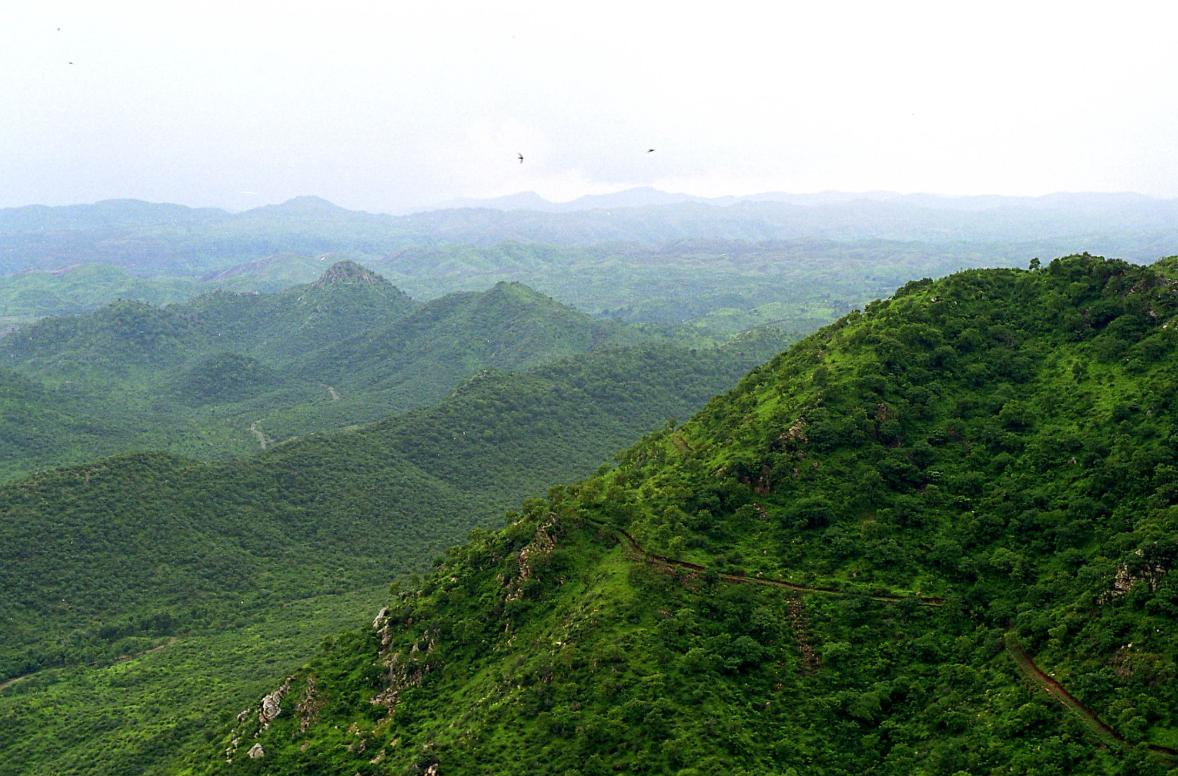
Aravalli Ranges, which are about 670 million years old, is one of the most ecologically significant ranges in India. It covers Gujarat, Rajasthan, Haryana, and Delhi, forming the main ecological barrier for the eastern spread of the Thar desert and acts as a vital groundwater recharge zone for the NCR region. Despite being an important range, there was no defined legal definition of the Aravalli range for many decades. The range was marked by Rajasthan using relief criteria from 2006, Haryana using colonial revenue nomenclature and forest records while in Gujarat and Delhi, different administrative processes prevailed. These differences made it possible for regulatory arbitrage especially in the mineral extraction industry. There was exploitation by the developers due to lack of the range-wide criteria.
Institutional and Legal Context: The Road to Uniformity (2024–2025)
The move towards the “scientific” classification system was therefore a calculated judicial reaction to the exploitation of regulatory discrepancies in the mining industry. In January 2024, the Supreme Court directed the Central Empowered Committee (CEC) to conduct an inquiry into the validity of the existing state-based classifications. Such judicial interference resulted from the discovery that the revenue record systems often lacked the ecological truth were being misused to undermine environmental laws. As a temporary measure of relief, the Supreme Court banned any new mining lease in the area and demanded a proper management plan.
Formulation of a “neutral” definition of forest land was left to the expert committee appointed by the Ministry of Environment, Forest and Climate Change (MoEFCC). Importantly, the expert committee consisted of officials from the State Forest Secretaries, Forest Survey of India (FSI), Geological Survey of India (GSI), and the CEC. It was recommended to adopt the Murphy landform classification as the national classification system, thus placing emphasis on geomorphological evidence rather than administrative documentation.The landform classification of Murphy follows the geomorphological approach as opposed to the administrative one based on the shape of the terrain rather than just its administrative classification. When used for the Aravallis, landforms having an elevation of 100 meters above the local relief are classified as hills, together with the slopes supporting them. Ignoring the administrative aspect in favor of a strict geomorphological approach may result in greater scientific consistency in the regulation as well as in ensuring that administrative boundaries match physical features. Yet, the implications are far-reaching in that a certain elevation requirement will exclude ecologically connected slopes and other landforms from being classified as hills despite their role in the broader hill environment.
The November 2025 Judgment: Acceptance, Exceptions, and Immediate Ramifications
In the matter of In Re: Issues Relating to Definition of Aravali Hills and Ranges, on 20 November 2025, the Supreme Court officially adopted the Murphy definition. This decision clearly showed a marked deference to the advice of the expert committee. But it was made in the broader backdrop of accommodating development needs. Just two days earlier, a different Bench had allowed ex post facto environmental clearances, a departure from the position taken in May 2025. The two rulings indicated that there was a drift towards balancing the preservation of ecology with extractive interests.
The 20 November decision incorporated certain ‘developmental carve-outs’ to allow for mining of ‘strategic, critical, and atomic minerals’ even within newly protected areas. But what was most revealing was the FSI’s quantitative survey which clearly exposed the ratio decidendi of the 100-metre rule: Total surveyed hills: 12,081, Qualifying hills (according to 100 m rule): 1,048 (8.7%), Exclusion rate: 91.3% loss of protected status. This quantitative absurdity led to the declassification of over 90 percent of the surveyed Aravalli range, making them available for mining and urbanization in crucial corridors like Gurugram and Faridabad. This massive decline in the protected areas was prima facie a violation of the public trust doctrine where a mere technical measurement was being used to strip the ecological identity of an entire mountain range.
Public Backlash, Suo Motu Cognisance, and the December 2025 Reversal
Contestation by the scientific community followed in the wake of such high exclusion rates, where experts claimed that the 100-metre relief limit was an administrative decision rather than a scientific discovery because of the omission of the importance of small ridges for prevention of desertification. Fortunately, a vacation bench headed by the Chief Justice took up the issue to avert an imminent ecological disaster.
Thus, on 29 December 2025, the Court took suo motu cognizance of the issue and stayed its 20 November order, thereby mandating the creation of a new expert committee while ensuring that the ban on mining leases continued. Strikingly, it was the executive that acted to ensure that it aligned with the decision of staying its order. With the acceptance of the decision, the executive had found a way to avoid the adverse consequences of declassification of the areas as corridors by disassociating itself from the political repercussions of the act. Thus, by invoking the ‘Aravalli Green Wall’ restoration scheme as well, the government ensured that the corridor preservation narrative would provide immunity from criticism regarding the exercise of discretionary powers by the administration.
Theoretical Analysis: Scientific Deference, Committee Governance, and Constitutional Imperatives
The case in point is thus one example of ‘ecology by classification’, whereby judicial power has been delegated more and more to technical experts. While couched in neutral terms, the 100 metre rule highlights how the use of such criteria carries within it dangers of ‘regulatory laundering’, in effect, political-economic compromises, for example the trade-off between mining revenue and conservation, get packaged as neutral expert finding in order to insulate them from judicial review.
It must be noted that there is an inevitable conflict between the ‘formalist approach’ as represented in the Murphy case and the ‘functional approach’ as exemplified by the Godavarman case. In the latter case, the Supreme Court had held that ecological considerations, rather than administrative or revenue records, have to determine protection. However, in the 100 metre rule, protection has been rendered as a binary choice that can be made with the help of a simple criterion, thereby overlooking the irreversibility of the damage caused if most of the range is declassified.
In order to avoid a ‘accept and then reverse’ process, the threshold setting for critical ecosystems needs to be a constitutional issue. What constitutes a hill within a 670 million year old range is not merely an administrative matter, but a constitutional one, concerning the right to life and a healthy environment guaranteed under Articles 21 and 48-A. When a technical definition poses a danger to the very survival of a crucial geological barrier, the court cannot confine itself to the dictionary meaning or administrative nomenclature.
Conclusion and Jurisprudential Outlook
The Aravalli controversy is a classic illustration of the peril inherent in the weakness of committee-based governance. The 91.3 per cent risk of exclusion illustrates the peril of letting technical criteria eclipse the actual doctrine of Indian environmental law. The quick reversal by the Supreme Court proves that deferring to experts cannot replace the Precautionary Principle.
Going forward, the Aravalli controversy provides a lesson that courts need to see through the ‘administrative label’ in order to safeguard the ecological identity of a landscape. Scientific deference needs a check: the court should be able to determine on its own if the technical criteria suggested meet the constitutional duty of conservation. Unless the legal doctrine of Indian environmental law gets stronger to allow for review of the substance of expert advice, India’s most precious ecosystems will always be at risk of such technocratic categorizations.
About the author
Khushi Choudhary is a final-year LLB Hons student at Jindal Global Law School. Her research interests lie in the area of environmental law along with constitutional law.
Image Source : https://www.britannica.com/place/Aravalli-Range