
By – Erla Sree Samhita
Abstract
Decarbonising the world is dependent on neo-colonial extraction of resources, across the Global South. This renewable energy transition is known by many as ‘climate colonialism’ which entails a high global demand for minerals which also act as transition minerals. This rush “results in high levels of water scarcity in the region”, and “high toxic industrial pollution” and “systematic indigenous displacement” according to UN reports. This article reviews the pressing need of ecological justice by studying lithium mining in South America, cobalt mining in DRC, and carbon offset land acquisitions.
Introduction
An unprecedented industrial race in search of renewable energy infrastructure has been triggered by global “net-zero” targets. Electric vehicles, wind turbines and solar arrays are commonly touted as saviors of the planet. Yet, as highlighted by the International Energy Agency, clean energy production is in essence very resource intensive. Transition minerals are mainly found in developing countries and minerals are the inputs needed in the decarbonization process.
This imbalance gave rise to the concept of ‘climate colonialism‘. Rapid decarbonisation targets are set in industrialised countries which externalise the ecological costs on vulnerable people. Green transition thus exacerbates global inequality, with toxic pollution and rural land grab. Decarbonisation is often assessed in the field of international diplomacy on an aggregate carbon level basis. Every time the local community members complain about the polluting water resources, it is just taken as a case of ‘administrative irritation’.
These local costs are often overlooked by diplomatic bodies. Their strong focus is on achieving swift decarbonization targets. If the local people complain about poisonous mining water, they’re “obstructionists”, in the eyes of the bureaucrats. This institutional blindness is like one that is observed in the supply chain of companies. In rich countries, the human costs is completely concealed from the end consumer. A range of decarbonisation policies do not feature specific, legally binding human rights baselines. The result is that populations of the area are permanently marked by industrial scaling. International financial institutions are still investing in mining whilst failing to carry out a thorough human rights’ due diligence process. This structural absence is an unequal global division of labor. Global North is withdrawing the ecological security, and Global South is taking toxic liabilities.
Moreover, current green agendas tend to take for granted the benign nature of energy transitions. It views technology as a ‘neutral solution to planetary crises’. However, renewable energy systems with large land use footprints are faced with ecological challenges. These conflicts present a opposition between the global need for climate mitigation and the rights of a local people to survive. To find a solution to this dilemma, it is necessary to examine the supply chains on which green technology relies.
Extractivism vs. Sustainability in the Amazon Rainforest
Electric mobility is based on the fundamental technology of lithium-ion batteries. As a result, lithium is now a very wanted material within the ‘Lithium Triangle’ of South America which contains Bolivia, Argentina and Chile. Lithium extraction is a process that is very water intensive and lessen fossil fuel use in the Global North.
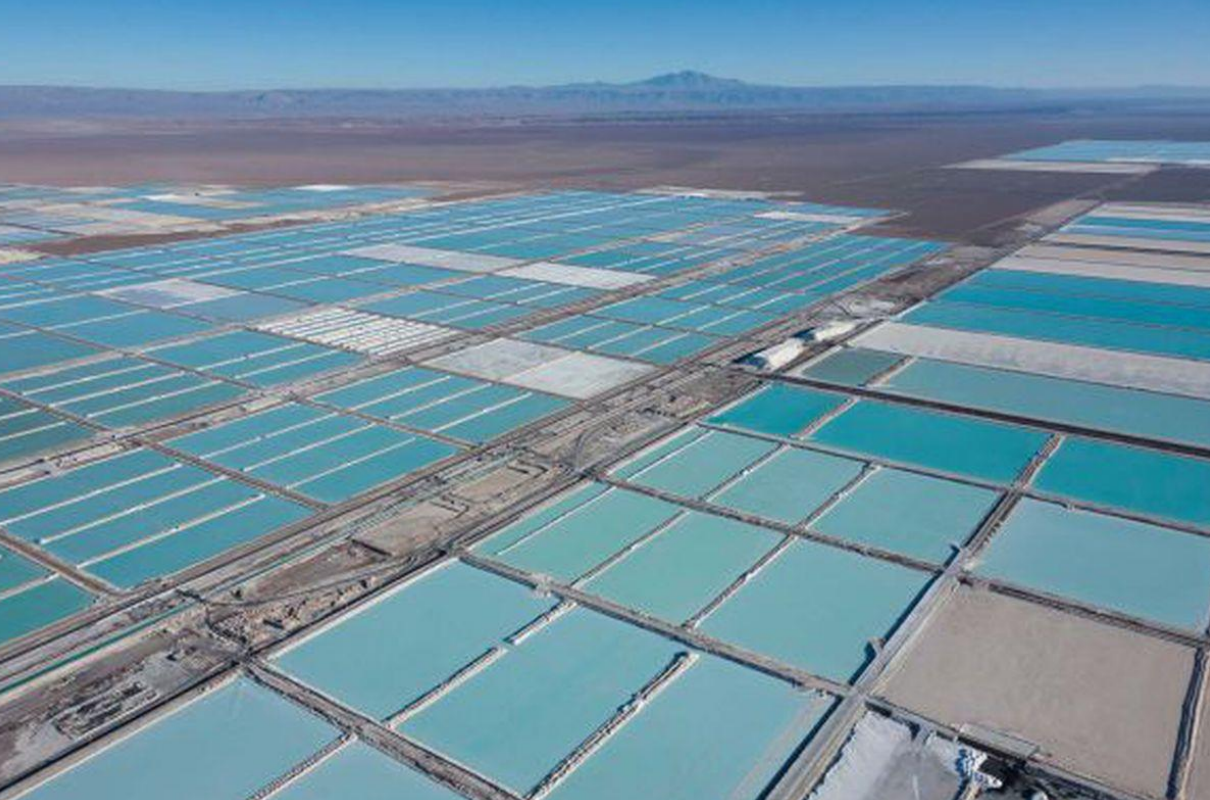
Extracting lithium from the Andean highlands involves pumping from underground reservoirs of millions of gallons of salt water into evaporation ponds. For every metric ton of lithium produced, up to half a million gallons of local water is used. This intensive spiritual extraction leads to the unproductive use of precious water resources, at the cost of ruined indigenous Atacameño communities and livelihoods of farmers. In addition, the DRC accounts for more than 70% of the world’s cobalt supply. Sadly, it is the home of artisanal and industrial mining which results in extreme deforestation as well as extreme cases of child labour.
Mineral ores are raw materials and are sent abroad for industrial refining. The host countries gain polluted ecosystems, low profits, and lose their natural resources. Local governments are often keen to receive foreign investment and to accept this they are willing to weaken environmental regulations, resulting in a destructive race to the bottom. The huge profits the multinationals take reflect how poorer the municipalities turn.
There are reports of serious contamination impeding the regional river systems by acid mines draining. There has been a decline of more than 40% in agricultural production in the nearby valleys. Multigenerational farming families lose their family land. They move towards areas of overcrowded shantytowns in urban areas. In urban contexts there they are part of the urban precariat. Green prosperity becomes actual only as local people become destitute.
These are in addition to the environmental risks posed by the sheer scale of the future mineral demand. In the next 20 years, it has been projected that mineral production will need to quadruple to achieve climate targets. Until radical changes are made in the way extraction is done, mining areas will reach complete ecological collapse. Permanent toxic wasteland may result from the rush for green metals and devastation of fragile watersheds.
Indigenous Dispossession and Environmental Injustice
Green energy schemes have been repeatedly seen to flout the principle of FPIC. Indigenous ancestral territories are deemed climate mitigation national sacrifice areas. Forced evictions and cultural erasure are caused by the developer’s appropriation of traditional land for lithium salts evaporation ponds and mega-dams.
There is a low level sharing of mineral wealth to the local population. Financial windfalls focus only on multi-national companies and political leadership. Mining impacted areas are locked in systemic poverty and ecological devastation. Such spatial injustice is a real-life expression of historical colonial pillage.
There is heavy retaliation experienced by environmental defenders who stand up to the encroaching corporations. Around the world, the murder of activists defending the environment has increased dramatically in Latin America and Asia. Many victims were stridently objecting to unconsented mining on tribal lands. Often, it’s the state security forces that safeguard a corporation instead of a civilian’s safety. Corporate criminals still enjoy impunity in mineral-rich jurisdictions.
A sacred ground is bulldozed for extraction and cultural heritage is destroyed. Industrial access roads chop over people’s oral histories, spiritual heritage sites and burial sites. Indigenous rules and regulations are superseded by management committees controlled by corporations. The esteem for self-determination undermines the physical and cultural survival of tribals.Indigenous people, who have been blocking the illegal spread of mining operations, are faced with the military police to disperse the peaceful protesting. Transnational mining consortia often involves state apparatuses. Access to justice for the dispossessed landowners, often, is lacking through legal systems in developing countries. Hence, structural violence arises in the process of extraction of “green” resources.
Carbon Offsets, Forestry, and Green Land Grabs
Carbon offset and tree planting programs are also being motivated by the modern green economy. Rich countries buy carbon credits in developing countries, with the aim of countering their own carbon emissions. These projects often translate into grand schemes of green land grabs in practice.
In the African and Southeast Asia, forest dwellers are being forcibly displaced from their forests, where death by violence is not uncommon. These projects are managed by international conservation NGOs and carbon brokers. These false solutions treat nature as a commodity and de legitimize the custodians of nature’s biodiversity, namely, traditional community stewards.
Carbon markets support emissions ‘business as usual’ by big emitters. They place costs on carbon storage on the vulnerable agrarian communities. The natural world is turned into an object of
speculation and is removed from local democratic processes of accountability. In practice, projects measuring the actual carbon sequestration are unusual in offset processes and are predominantly facilitated by corporate ‘greenwashing‘.
Communal peasants who are depending on communal grazing rights and rights on forest products are locked out of their forests. Conservation boundaries are enforced by armed park rangers who receive orders from far away carbon brokers. The rate of food insecurity increases dramatically in communities which have lost their ability to forage in traditional lands. Carbon forestry initiatives become instruments for “environmental talkback” to the rural poor.
A Just Transition and Global Climate Reparations
A paradigm shift is needed to prevent and stop climate colonialism. Significant movement to replace fossil fuels with extractive ‘point’ mining can never achieve the objective of just transition. Policymakers and companies need to implement enforceable human rights standards in supply chains.
Decolonial green transition essential pillars are set to:
1. Enforceable FPIC: Indigenous communities must own an absolute veto power of projects on ancestral land.
2. Circular Economy: Virgin minerals, heavy investment in battery recycling and sodium ion research.
3. Ecological Reparations: high emitting countries to pay for environmental reconstruction and adaptation in the Global South.
In addition, international trade must include provisions for environmental and social captive clauses. CBAMs must not discriminate against and punish developing countries for past emission differentials. Technology transfer agreements should stipulate that manufacturing patents of renewables should be freely shared with the Global South. Coercion must be replaced by equity in international climate negotiations.
Conclusion
Climate Action should not be based on the economic logic of ecological collapse. Green extractives demonstrate a decarbonisation without decolonisation is a shift of suffering onto vulnerable populations. Priority is to be given to indigenous rights and supply chain accountability for a truly equitable transition. Considering the need for a healthy planet, the destruction of its most vulnerable stewards should not be necessary.
About the Author
Erla Sree Samhita is a fourth-year law student with a strong interest in climate justice, environmental law, and indigenous rights, particularly as they intersect with the Global South’s experience of the green energy transition.