
By – Trisha Bhatnagar
Abstract
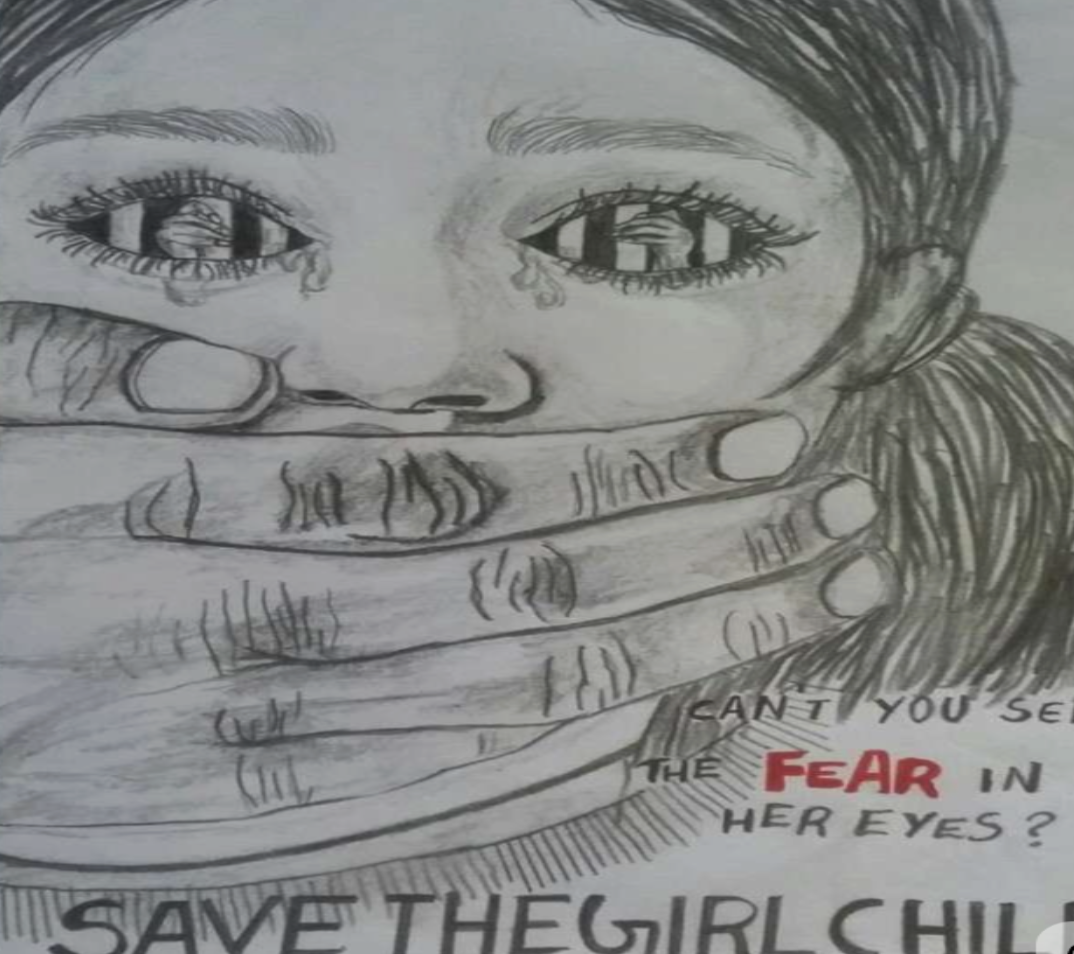
The state of Haryana has struggled with a long-standing cultural issue of a disproportionate gender ratio. This ratio is the result of generations of son preference and the resultant female infanticide/female feticide. This article looks at how advances in medical technology have been used for illegal sex selection. It further discusses the state’s war on crimes against newborn females.
Additionally, this article examines the various approaches that the state has taken to address this situation, which range from enforcing laws to community-based educational and awareness programs, along with helping improve conditions for female infants and toddlers. These continue to evolve and highlight the importance of both continued awareness and regulatory action to prevent a future recurrence.
Introduction
Infanticide/fetalicide represents one of the most egregious forms of violence against women and denies them their most basic right, the right to live. Infanticide has been practiced in india for centuries and often stems from caste hierarchies and the desire to avoid lowering “family status” due to lack of potential husbands. However, in the modern world, there exists another form of discriminatory behavior called fetal sex selection. Fetal sex selection occurs when an individual determines the sex of their fetus during pregnancy and then terminates the fetus based on the sex determined. As mentioned above, nowhere has this issue been greater than in the Indian state of Haryana. According to India’s census data for 2011, Haryana has an overall sex ratio of 834 females per 1,000 males and a child sex ratio (births aged 0-6) of only 830. The disparity between the two ratios suggests that the large number of missing females is not the result of biology, but rather an intentional killing of female fetuses. For many years, couples in Haryana planned their pregnancies through differential contraceptive methods. They would keep trying until they obtained the number of sons they wanted, and terminate pregnancies bearing females. To combat these issues, we must deal with a very established socio-cultural paradigm, eliminate the black market of medical services, and encourage the survival and education of the girl child.
Sociocultural Causes of Son Preference
The main reason for female foeticide in Haryana is that there is a strong patriarchal culture that believes sons are better off than daughters. Sons are viewed as a resource for their families because they will carry on the family line, take care of their parents in old age, and complete funeral rites that ensure spiritual liberation for their family members. Daughters are considered ‘paraya dhan’ or another person’s wealth, thus making any investment made in her education or care fruitless. The high costs associated with dowries contribute to additional financial burdens on families with daughters.
Finally, growing rates of crime against women and girls, particularly kidnapping and domestic abuse, create great fears among mothers concerning safety. Many choose to protect themselves and their families by choosing to stop having daughters.
Community organizations such as Khap Panchayats reinforce patriarchal values. Khap Panchayats are male-only organisations that govern rural areas and exclude women from participating in decisions affecting their lives. Primarily run by the Jat community, these councils enforce rigid codes governing marriage and punish transgressors harshly. Ironically, the misogyny embodied within Khap Panchayats has led to what sociologists call a “marriage squeeze”. As a result of decades of foeticide resulting in fewer female-born children available for local marriages, tens of thousands of Haryanvi men remain bachelors. Therefore, many choose to marry young women trafficked from other states like Assam, West Bengal, and Kerala. Yet, society continues to deny this fact, often attributing it to liability instead of recognising their own practice of eliminating daughters.
How Medical Technology Contributed to Democidal Trends
Advances in medical technology, primarily the introduction of ultrasound devices in India in the late 70s and early 80s, enabled families to utilize amniocentesis and ultrasound devices to identify whether
their unborn child was male or female. Once this information was known, many families chose to terminate the pregnancy immediately. The use of ultrasound machines spread rapidly throughout India and eventually Haryana. Some physicians were so enthusiastic about providing sex-determination tests that they traveled door-to-door in their automobiles running mobile clinics offering illegal sex-determination tests.
Consequently, India experienced a catastrophic demographic collapse. The number of females aborted rose dramatically and was part of an increasingly sophisticated underground trade in illegal sex-selective abortions. After the government passed the Pre-Conception and Pre-Natal Diagnostic Techniques (PCPNDT Act) in 1994, rather than putting an end to this practice, the industry simply went underground, which increased the price of clandestine abortions. There is evidence that upper-class landowners practiced female-foeticide at a higher rate than lower-class citizens. While poor, marginalised communities were historically closer to parity in terms of sex ratio at birth, over time medical technology created an economy. It revolves around foetal-sex determination that ultimately resulted in between 40 million and 80 million missing females from India’s population over recent decades, with Haryana contributing disproportionately to this number.
Grass Roots Movements and Changing Attitudes
An excellent example is Bibipur village, where female foeticide was rampant. A group of villagers were empowered by a village woman, Sonia Danda, and decided to form an all-women council that would lead a movement to prevent female feticide, host seminars discussing female foeticide, and celebrate the arrival of girls with songs and sweetmeats. Such a tradition is typically reserved for boys. In addition to supporting grassroots movements, Haryana has also institutionalised other ways to honour girls.
For example, ‘kuan pujan’, a ceremony traditionally performed strictly for newborn boys, is now followed by girls across 21 districts in Haryana. This is mandated as a part of government-funded and encouraged celebrations. Another example is ‘nanhe chinh’, a community initiative piloted in Panchkula wherein the community chart displays an outline of girl children’s footprints as symbols demonstrating acceptance of girls’ existence by their community. Enhancing opportunities for infant and toddler vaccinations. Finally, to support social change at a broader level of community, Haryana’s women and child development ministry launched ‘mahri ladoo’, a nationwide radio show reaching approximately 2 million listeners; it addresses topics within women’s rights, financial empowerment, and legal protection.
Evaluating Welfare Schemes and Present Demographic Trends
Welfare schemes that provided financial incentives to reduce son-preference have served as a core element of Haryana’s strategy to alter societal views regarding girls. Apni Beti Apna Dhan was initiated in 1994, providing families with cash payments upon birth and long-term savings bonds redeemable when daughters turned 18. Thereby, providing high returns and encouraging education. Each successive welfare scheme, such as the Ladli Scheme, Sable Scheme & Sukanya Samriddhi Account, is sponsored by the federal government. They have attempted to erase perceived financial burdens related to raising daughters. Beti Bachao Beti Padhao, a more recent scheme, was introduced in Haryana in 2015 and sought to bridge gaps among interagency collaboration by combining resources from the health, education, and police departments to promote education and survival of girls.
Between 2008 and 2023, Haryana saw significant improvements in the sex ratio at birth, rising from pre-BBBP levels by 34 points and peaking at 923 girls per 1,000 boys in 2023. The state claims hundreds and thousands of girls were spared death. Experts cautioned, however, that some administrators engaged in window-dressing, which means registering female newborns quickly while waiting on birth records for males. Their predictions proved correct as the ratio began declining again starting early 2026, dropping from 923 girls per 1,000 boys to just 895 within the first four months of that year. Certain districts fell below 800 and fell below 770. This sharp decline foreshadows the re-emergence of organised cross-state sex-selection networks. It shows that short-term successes may be realised by employing administrative coercion and that sustained demographic stability depends upon vigilant oversight.
Conclusion
Nonetheless, recent declines in the sex-birth ratio indicate that administrative control over medical services, technology & monetary incentives itself will not bring long-term solutions. Established social paradigms such as those represented by institutions like Khap Panchayats, dowry systems, and valuing masculinity over femininity must be dismantled continuously. Henceforth, combating female feticide not only demands maintaining active policing of medical services and black markets, but also creating a veritable grassroots revolution. This fundamentally changes cultural perceptions regarding inherent value, entitlement, and dignity associated with girls and young women.
Author’s Bio
Trisha Bhatnagar is a 4th-year law student pursuing a B.B.A. L.L.B (Hons.) in Business Administration and Legislative Law at Jindal Global Law School. Her interests lie in exploring how gender and identity interact with society and its power structures at large across education, technology, agriculture, sanitation, and more.
Image Source: https://pin.it/1Can949IH