
By — Erla Sree Samhita
Abstract
In the current era of labour markets, AI is also seen as a non-biased and objective system. However, when it comes to its role in hiring algorithms and in gig platforms, it seems that artificial intelligence doesn’t overcome gender inequality at all. This paper aims both at studying this issue through the lens of four factors: biased datasets, Black Boxes, design of gig platforms, and regulation. Recognising that there is some ground for concern, the continuous presence of a gender penalty in algorithmic labour markets may be due not to gender bias going largely undetected but because those reaping the reward of it are not motivated to tackle the issue. Further, precariousness and changes thereof in the nature of women’ occupational precariousness will be examined, based on the flexibility in gig employment.
Introduction
While this isn’t stat-proven, it is usually claimed that the hiring process becomes more equitable with the AI recruiters. Despite everything, women earn less than men, possess less capital and occupy less managerial position. But AI recruitment apps or gig-economy apps haven’t been much help to them. In a eureka moment of AI, it was revealed that the artificial intelligence recruitment apps were also found to be discriminatory against gender and race, as well as a 7% difference in compensation between male and female gig drivers.
The gig economy is growing at a tremendous pace over the past decade and by 2026 the value of the market is expected to be $674.1 billion at a CAGR of 15.79%. Worldwide, there is a large percentage of gig workers who are female: 46% of all gig workers in the United States are women vs. 54% men. Moreover, automated recruiting systems are available that have never required any kind of guide intervention as all resumes are filtered by the software system before meeting a human eye.
Whereas the issue around traditional discriminatory practices are simpler with algorithmic discrimination, it happens behind the façade of math. This will take a long time for regulators to come up with any solutions for that issue and the rejected cannot do much about it.
The Illusion of a Neutral Machine
The appeal of embedding the logic of implementing an algorithm in recruitment is obvious and even alluring: put emotion aside and follow the numbers. Thus, in 2014, Amazon started to develop its own algorithmic tool for automating the process of recruiting engineers. It was based on ten years of past resumes; most of them belonged to males. In doing so, the tool learned all the information from the data provided. The tool had already been discriminatory against resumes with “masculine” wording and biased against “women’s” terms in resumes in 2015, such as “women’s chess club”.
Though not a problem that Amazon invented, it is certainly one that existed and was based on by Amazon’s algorithm.Furthermore, the problem is not a singular one since, as per the NIST and according to “Gender Shades”, the facial recognition systems prove themselves less accurate when they are applied to women than they are when applied to men,and to women of colour.
Due to the neutrality of the system, it is hard to judge the damage inflicted on a chip using only this attribute. The computer is not purposely a male machine because all databases that fed into this analysis were biased to begin with, and because everything the computer recognizes is patterns, or data, it does so based on the patterns that it was trained on, which were in turn biased. In an environment where it has long been believed that women do not have equal opportunities for promotion it acknowledges certain “qualities” as “good leadership potential” and where women have traditionally sacrificed their careers to care for family affairs it recognizes “constant employment as a show of devotion.It is not deliberate, but rather inequality wrapped up in a “score.” Very few firms disclose the algorithm’s computations, therefore, the applicant has no way of knowing why he was denied an employment offer due to his skills or due to what was termed algorithmic discrimination.
Gig Work: Flexibility That Comes With Fine Print
Even though algorithmic recruitment creates discrimination via a “black box” which is not understood by the developers themselves, the gig economy applications provide transparency in this respect, although proving discrimination is still hard. Uber, Amazon Flex, and other food delivery applications present themselves as more flexible than traditional jobs and thus attract many women.
The systems work on the principle of algorithmic management that controls just about every aspect of a worker’s daily routine, the tasks assigned, their cost, the customer receiving the service, and the timing of delivery. They are generally shrouded in mystery, and the workforce can’t bargain collectively or receive fixed wages, let alone any other advantages associated with employment. Besides analyzing resumes, algorithms assess availability and reliability; however, there is hardly any place left for the understanding that women, unlike men, usually balance work and childcare.
For instance, in 2023, an analysis carried out by the World Bank indicated that women still earn two-thirds of what men make in global gig platforms while doing the same job. While the gig economy can help increase women’s participation in the workforce in developing countries, this does not seem to be a reality anytime soon. This is not a matter of effort or competence, but rather of whether women can work shifts.
India’s Gig Economy: A Closer Look
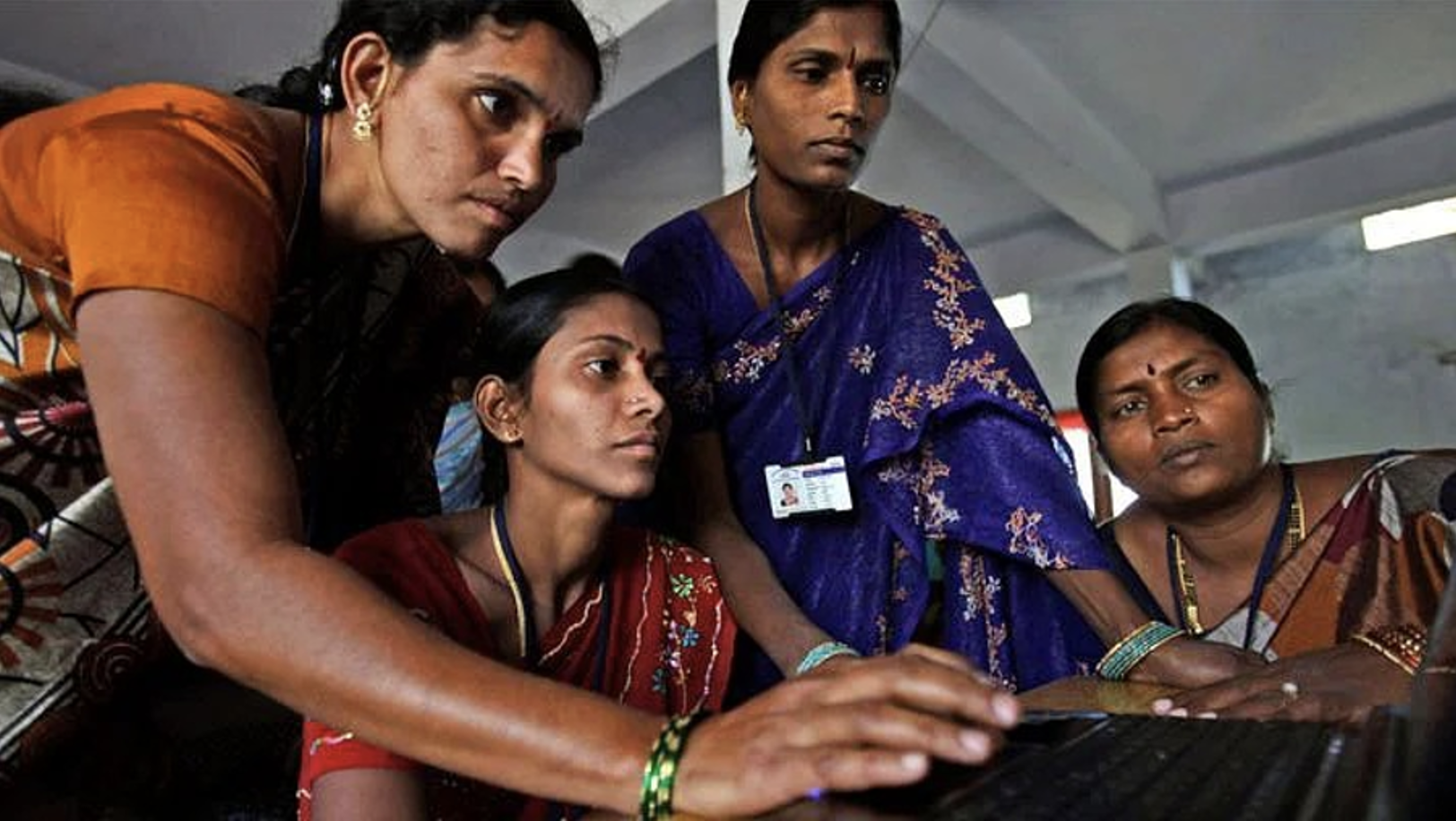
This is reflected very well in the example of India. Companies like Ola, Swiggy and Zomato have got a slew of couriers and drivers, but only a small advantage, if at all, have female drivers. From the evidence, we can observe that the gender effect is consistent that female gig worker workers in India deployed fewer hours, earn less from surge pricing and earn 7% less per hour than men. A disparity due to safety issues is thought to be a major reason as to why the difference occurs, as it is not a result of the working person’s decision.
Regulation Meets Reality (and Mostly Loses)
Even if algorithmic sexism was just an engineering issue, it would have already been fixed silently. The reason why it is still happening is that the motivations behind it have stayed the same for a long time. Companies that run the gig economy in the US have redefined their gig economy employees as independent contractors for which the federal minimum wage laws do not apply.
However, the EU has opted for another course. In 2024, the EU introduced its Platform Work Directive, which imposes transparency on the functioning of the algorithm, provides human involvement in major automated decisions, and introduces a right to contest where automated decisions affect workers’ pay and schedules. By 2026 member states are toestablish this into their legislation. Regardless of its shortcomings, that’s at least a step toward understanding that it is not a private business that is making decisions on job requirements with an algorithm.
A middle ground exists in India: many employees workload on platforms, not very much in the field of regulation, such as the E.U. The lack of such measures will make it hard to solve the gender wage gap in the gig-economy in India.
What would have to change?
These biased hiring algorithms and the temporary work platforms further accelerate one another. This claim will be realized through a discriminatory algorithm in the formal job market, followed by exploitation without protection to platforms of gig work.
This won’t just happen by itself without repairs.
Firstly, there should be clarity in the way that these algorithms are being employed. At a minimum companies should disclose to the regulators how the hiring and scheduling algorithms work. It is a duty of the companies to conduct an audit of the algorithms for any discrimination of women.
Secondly, there should be safeguards in workplaces against such algorithms. This should include setting in place a minimum standard of earnings, no measures that enable algorithms without good grounds to be deactivated, and indeed a right of appeal to the decision of the algorithm. The Platform Workers Directive in the EU is an effective template that can be easily replicated in other countries, such as India.
Finally, solutions must also be based on data not yet collected. If the algorithm is based only on an unfair historical past, it will also produce an unfair future. Bias cannot be addressed during data collection and during gender impact assessment in the design phase, but it must be done for any solution to be effective, as emphasized by Stanford’sHuman-Centered AI Institute.
Conclusion
This may not seem like a frightening paper, nor does this paper so argue, but algorithms don’t have to be bad, and gig work is not automatically an exploitative labour. The two are shown as unemotional, contemporary and inevitable occurrences; but this representation is completely wrong. No matter how carefully made, a mat isn’t neutral; it is alwayssomebody’s product.
However, this is something that can be fixed. It is possible that the gender wage gap in algorithmic labour could be significantly reduced and in a very short period, through transparency standards, enforced labour rights and the improvement of initial design. It’s not about having the technological skill, it’s about not being willing to move fast enough. But the rapid spread of such programs, which sees more and more economic activity added to them, means “someday” is a costly reality at the earliest.
About the Author
Erla Sree Samhita is a 4th-year law student at the OP Jindal Global University, and her interest is in the field of the convergence of technology, labour law and gender studies. Her research focuses on the impact of new technologies, such as digital, on labour relations practices and norms, especially in the Global South.
Image Source: https://behanbox.com/2023/02/20/why-focus-must-shift-from-what-restricts-womens-employ ment-to-what-works-for-them/