
By — Manushree Mahat
Abstract
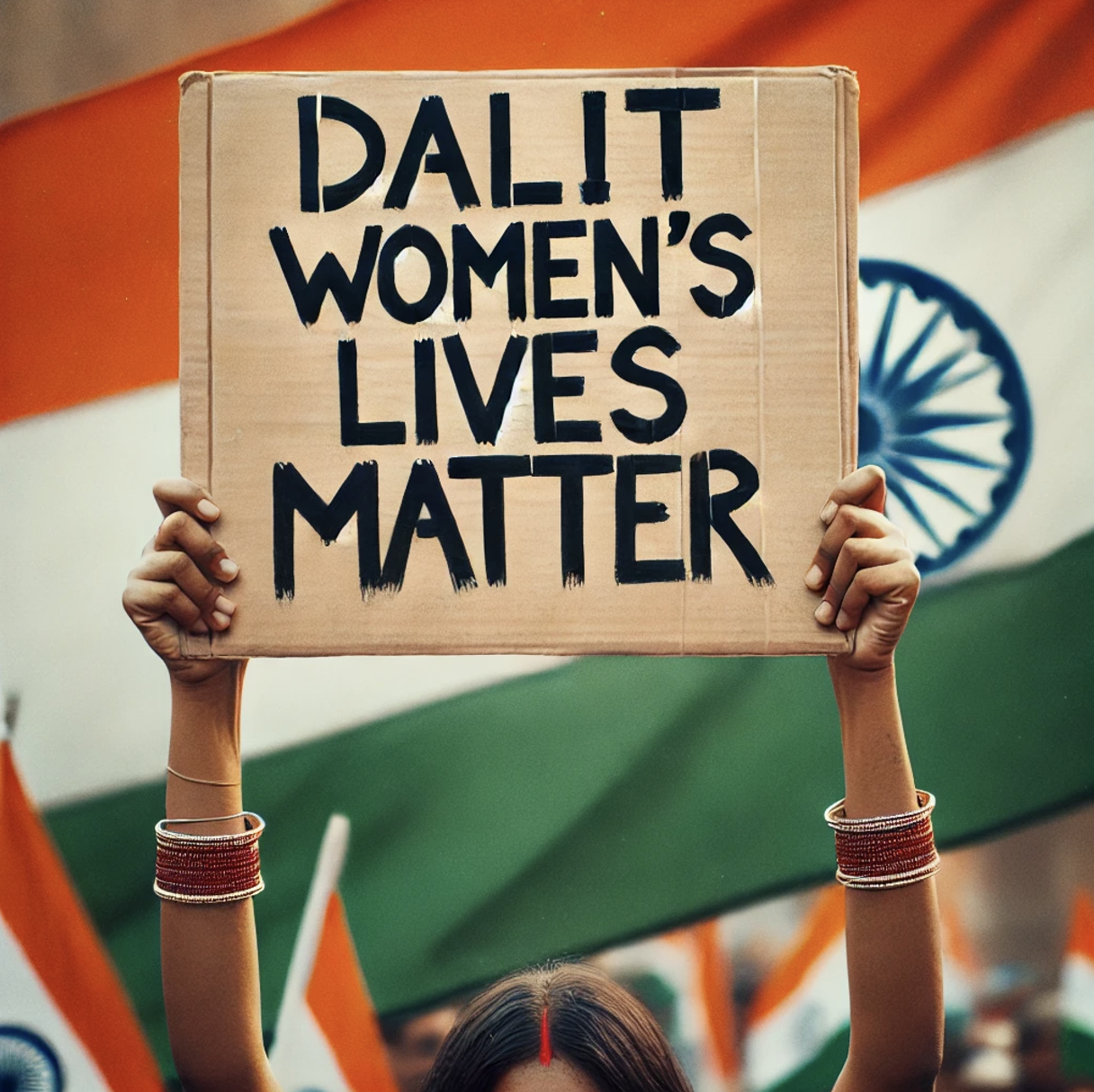
The article aims to contextualize how experiences of Dalit women vary significantly in the digital sphere, where both empowerment and harassment are ever-present. While some online spaces become spheres of activism, others become means through which hatred and bigotry is actively spread. The article will examine how being a woman and being a member of the Dalit community intensifies this hatred directed towards Dalit women in the digital space.
Introduction: The exclusion of Dalit women from Digital Resistance
The digital space, without a doubt, has become a major tool for directing social change and activism. The # MeToo movement came out as one of the most successful social media feminist movements that resulted in a late, albeit significant source of empowerment for many women who have experienced harassment at their workplace. All over the world, including India, the # MeToo movement took off. However, research has revealed that the # MeToo movement itself has been unevenly distributed, Dalit women, in particular, have been the victims of underrepresentation. Researchconducted on Dalit women’s participation in the# MeToo movement has revealed that approximately 89% of # MeToo tweets focused entirely on non-Dalit women. This is a significantly low percentage for a claim that the digital sphere is a space for online resistance. It begs one to ask the question of who this resistance is truly directed towards, and who are consistently and systemically marginalized in the digital space as well.
Dalit women, caste, patriarchy, and Double Burden
Gopal Guru highlighted the necessity of Dalit women’s voices in his work, as they provide a unique lens of subalternity where being Dalit and being a woman creates a doubly horrific case of marginalization. Dalit women are victims of the caste system and the patriarchal system, where their voices are not only suppressed by the larger caste-centric society but also by men within their own community, where patriarchy is ever-present.
While the sexual assault and rape of a higher caste woman is received with national outrage, the case of a Dalit woman being raped rarely makes the news. This kind of discrimination is prevalent in all facets of society. For example, a missing white woman in America receives much more national attention than a black woman, where literally the term ‘missing white woman syndrome’ has been coined to describe the phenomenon. We can look at the works of intersectional feminists like Kimberle Crenshaw to understand how marginalization works at different levels based on caste, class, race, and color, and so to contextualize the experiences of Dalit women as well. In fact, Dalit feminism looks at the experiences of Dalit women with a slightly more multifaceted lens, where the blanket of caste burden makes their marginalization even worse.
While rape cases involving Savarna women, like the Nirbhaya case, and the Kolkata rape case, receive widespread anger from the Indian society, the rapes of Dalit women are not only suppressed in the media, but they are also rarely ever met with the same kind of sustained outrage. The Hathras rape case is an example of this. Not only was the district administration complicit in the cover-up of this rape and murder, but the justice system also severely failed the Dalit girl and her family, when 3 of the 4 involved in the rape and murder were acquitted of all charges.
It is important to discuss the reality of Dalit women in the non-digital space because the digital space reflects this reality. The very fact that Dalit women’s presence in the # MeToo movement was severely minimal compared to her high caste counterparts is proof that spaces of possible digital resistance are also barred for Dalit women.
The advent of the #MeToo movement and subsequent exclusion
The # MeToo movement in India was essentially started by a Dalit woman in academia. Raya Sarkar posted a crowdsourced list of men in academia with alleged accusations of sexual harassment against them, which opened a floodgate of discussion on social media exposing accusers and due process. While Sarkar’s move was highly criticized by many feminist scholars themselves, it does beg one to ponder on when and who benefits from digital resistance.
Although Sarkar’s method of fighting back against sexual harassment may not have been the most just form of exposure, one can’t help but wonder if any ‘due process’ would have been taken against the accused men had she not published the list. As a matter of fact, nothing of consequence even happened to the accused men, and some of the men in the list already had complaints filed against them. Furthermore, Sarkar did not even intend to pursue institutional means of obtaining justice; she simply wanted to make women aware of the accused men.
This is what online resistance for Dalit women can look like: a space where they can perhaps speak up, but their voice is subsequently muted by an unsupportive crowd. Instead of opening discussions on how Dalit women’s voices and experiences are minimized in the real world, her experiences are also silenced in the digital space. Yes, perhaps the famous LoSHA list could’ve been vetted for verification, but the fact that no subsequent investigations were opened up on the accused men, and instead became a battleground of discussing ‘due process’, pretty much evidence that mainstream feminism fails to incorporate Dalit experience by and large.
Conclusion: Dalit Feminism and Subaltern Voices
Dalit feminist scholars like Sharmila Rege and Gopal Guru have highlighted the significance of bringing the voices of Dalit women to the fore for truly understanding their experiences under a casteist and patriarchal Indian society. The case of Raya Sarkar could’ve been used by feminist scholars to understand the Dalit women’s experience in academia, but this did not happen. The only way that digital resistance can also take off for Dalit women is if scholars around the globe make the effort to unravel the marginalized voices of Dalit women, to bring their experience to the mainstream. Scholars have to go deeper to make these stories visible because the casteist and patriarchal society has extra efforts to suppress the voices of Dalit women. For digital resistance to become truly equal, the Dalit women, who have long been silenced by society, must be able to fully tell their stories as well.
About The Author
Manushree Mahat is an amateur writer based in Kathmandu. She has experience in culture, lifestyle, and social journalism, and also dabbles in fictional storytelling once in a while.