
By – Dhruvi Solanki
Abstract
Global production networks today are deeply interconnected, relying heavily on maritime transport routes to move critical raw materials and intermediate goods. Recent geopolitical conflicts, especially those affecting key maritime chokepoints like the Strait of Hormuz, have exposed the fragility of these systems. This article examines how war-induced maritime disruptions reshape supply chains in three strategic sectors: fertilisers, semiconductors, and energy. Drawing on recent data and real-world disruptions, it highlights how localised conflicts trigger cascading global effects, increasing costs, delaying production, and intensifying economic vulnerability. The analysis also reflects on how these disruptions reveal structural weaknesses in global trade dependence and the urgent need for resilient supply chain strategies.
Introduction: Maritime Chokepoints and Global Vulnerability
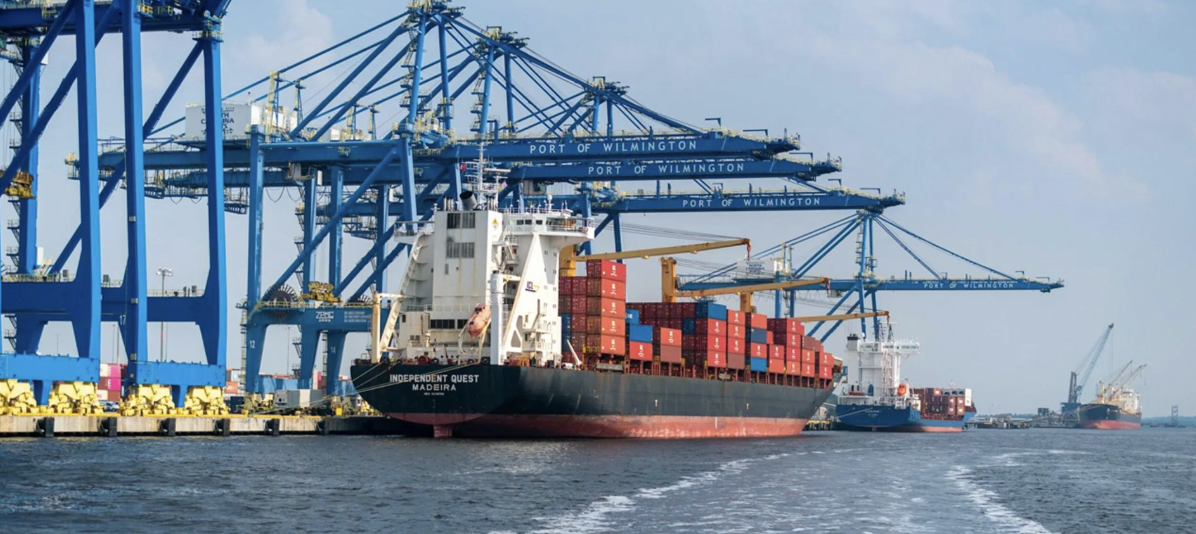
Modern globalisation depends on maritime trade, with over 80% of global goods transported by sea. Strategic chokepoints such as the Strait of Hormuz are particularly critical, as they serve as gateways for essential commodities. Recent conflicts have demonstrated how quickly disruptions in these areas can paralyse global production networks. For instance, the Strait alone carries roughly one-quarter of global seaborne oil trade, along with significant volumes of liquefied natural gas and fertilisers. The ongoing crisis in the region has led to a dramatic decline in shipping traffic, with tanker flows dropping by up to 70% and, at times, nearly halting altogether. Such disruptions do not remain localised; instead, they ripple through interconnected industries worldwide. As production networks become more complex and specialised, their dependence on uninterrupted maritime logistics increases, making them highly sensitive to geopolitical shocks.
Fertiliser Supply Chains: Security at Risk
Fertilizer supply chains are among the most vulnerable to maritime disruptions due to their geographic concentration. The Middle East plays a central role in global fertilizer production, particularly for urea and sulfur-based inputs. Gulf countries collectively account for a substantial share of global urea exports, and nearly half of the world’s sulfur trade passes through the Strait of Hormuz. When maritime routes are disrupted, fertilizer availability declines sharply. Estimates suggest that a prolonged closure of key shipping lanes could reduce fertilizer supply chains by up to 33%, with sulfur supplies falling by 44% and urea by 30%. These shortages directly affect agricultural productivity, particularly in import-dependent regions such as Africa and South Asia. Recent conflict-related disruptions have already caused fertilizer prices to surge, exacerbating food insecurity in vulnerable economies. Countries heavily reliant on imports face cascading effects: rising input costs, reduced crop yields, and increased food prices. This demonstrates how maritime disruptions in one region can translate into global food system instability, highlighting the tight coupling between logistics networks and agricultural production.
Semiconductor Supply Chains: Fragility of High-Tech Networks
The semiconductor industry represents one of the most complex and globally distributed production networks. It depends on a wide range of inputs, including rare minerals, ultrapure gases, and specialized equipment, sourced from different regions. Maritime disruptions interfere with both raw material flows and energy supplies essential for chip manufacturing. One critical example is helium, a key input in semiconductor fabrication. Qatar supplies around 30% of the world’s helium, and disruptions to its production due to regional conflict have already reduced exports and driven up prices. Since helium is difficult to store and transport, even short-term disruptions can create immediate bottlenecks in semiconductor manufacturing. Additionally, semiconductor production is highly energy-intensive. Major producers like Taiwan rely heavily on imported energy, with up to 37% of their energy supplies coming from the Middle East. Maritime disruptions that restrict oil and liquefied natural gas flows, therefore, directly threaten chip production capacity. The complexity of semiconductor supply chains amplifies these risks. Key inputs such as gallium, silicon, and rare earth elements are sourced globally, making the system highly interdependent. When one node is disrupted, the effects propagate across the entire network, leading to delays, increased costs, and strategic reallocations of production toward high-value products.
Energy Supply Chains: The Backbone of Global Production
Energy supply chains are perhaps the most immediately affected by maritime disruptions. Oil and gas shipments are heavily concentrated through specific sea routes, making them particularly vulnerable to geopolitical tensions. The Strait of Hormuz alone handles about 20% of the world’s daily oil supply. Recent conflicts have caused oil prices to surge above $100 per barrel, reflecting the scale of disruption and market uncertainty. These price increases have far-reaching consequences, affecting transportation costs, industrial production, and household energy expenses worldwide. Moreover, energy disruptions have a multiplier effect on other supply chains. Fertilizer production depends heavily on natural gas, while semiconductor manufacturing requires stable electricity supplies. When energy flows are disrupted, the resulting shortages and price volatility cascade across multiple sectors, amplifying the overall economic impact. The scale of potential disruption is enormous. Estimates suggest that up to $1.2 trillion in annual trade flows could be affected by prolonged instability in key maritime regions, with energy products accounting for the majority of this trade. This underscores the central role of energy in sustaining global production networks.
Interconnected Impacts: Cascading Failures Across Sectors
One of the most significant insights from recent disruptions is the extent to which global production networks are interconnected. A disruption in maritime transport does not affect a single industry in isolation; instead, it triggers cascading failures across multiple sectors. For example, disruptions in energy supply increase production costs for fertilisers and semiconductors, while shortages of fertilizers affect agricultural output, which in turn influences global trade flows. Similarly, semiconductor shortages impact a wide range of industries, from consumer electronics to automotive manufacturing. Research on supply chain networks shows that the short-term impact of disruptions can be significantly more pronounced than long-term effects due to these interdependencies. The more complex and specialised the network, the greater its vulnerability to shocks. This explains why even temporary maritime disruptions can have disproportionate global consequences.
Adaptation and Resilience: Rerouting and Strategic Adjustments
In response to maritime disruptions, firms and governments have adopted various strategies to maintain supply chain continuity. These include rerouting shipments through alternative ports, increasing inventory levels, and diversifying sourcing strategies. However, these adaptations come at a cost. Alternative routes are often longer and more expensive, leading to higher transportation costs and delays. For instance, rerouting shipments around disrupted regions can add significant time and fuel expenses, further increasing prices for end consumers. In some cases, companies have turned to air freight for high-value goods, despite its higher cost, to avoid delays. Others have invested in digital logistics systems to improve visibility and responsiveness within supply chains. While these measures can mitigate short-term disruptions, they do not fully address the underlying structural vulnerabilities of global production networks.
Conclusion: Rethinking Global Production Networks
The recent wave of maritime disruptions caused by geopolitical conflicts has highlighted the fragility of global production networks. Fertilizer, semiconductor, and energy supply chains are particularly vulnerable due to their reliance on specific regions and transport routes. These disruptions reveal a fundamental trade-off in globalization: while increased specialization and efficiency have reduced costs, they have also increased systemic risk. The concentration of production and dependence on critical maritime chokepoints make global supply chains susceptible to shocks that can quickly escalate into global crises. Moving forward, resilience must become a central priority. This includes diversifying supply sources, investing in alternative transport routes, and strengthening regional production capacities. At the same time, improved coordination between governments and industries will be essential to manage future disruptions effectively. Ultimately, the challenge is not to eliminate global interdependence but to make it more robust. As recent events have shown, the stability of global production networks depends not only on economic efficiency but also on geopolitical stability and the resilience of the systems that connect them.
About the Author
Dhruvi Solanki is a second-year Economics and Finance student at Symbiosis School of Economics and a member of the Economics and Finance Cluster of Nickeled & Dimed. She is an avid student of economic policy and market behaviour, with a strong interest in fiscal policy, consumer economics, and the real-world impact of taxation on markets and households.