
By : Geetaali Malhotra
Abstract
When the WTO rolled out the TRIPS Agreement in 1995, it was sold as a grand plan to fuel innovation and reward pharmaceutical breakthroughs. Instead, it has become the world’s most effective paywall for survival, turning medicine into an exclusive club where only the wealthy get VIP access. By locking life-saving drugs behind ironclad patents, TRIPS has ensured that pharmaceutical giants keep cashing in while millions in developing countries are left treating curable diseases with hope and good intentions.
A Patent on Life: The Economic Colonialism of Medicine
TRIPS was not just another bureaucratic trade policy – it was a seismic shift in global economics, tilting the balance of power firmly in favor of pharmaceutical giants headquartered in wealthy nations. Before TRIPS, many developing countries had flexible intellectual property (IP) laws, allowing them to manufacture affordable generic drugs. India, often called the “pharmacy of the developing world,” thrived by producing cost-effective alternatives to expensive Western medicines. Brazil, Thailand, and South Africa similarly relied on domestic pharmaceutical industries to ensure that life-saving treatments were within reach for their populations. Then came TRIPS, like a wrecking ball. By obligating signatory States to impose strict patent protections in their municipal domains, the agreement transformed essential medicines into high-priced commodities protected under the garb of patented drugs that only a fraction of the global population could afford. This was economic colonialism in a new form: just as raw materials were historically extracted from the Global South and sold back as expensive finished goods, today, life-saving medicines are developed in the West and marketed at prices that many developing nations simply cannot afford.
Evergreening: The Corporate Trick to Keep Prices High
Perhaps the most insidious consequence of TRIPS is the practice of “evergreening,” where pharmaceutical companies make minor, often medically insignificant modifications to existing drugs to extend their patents. This prevents the production of cheaper generics, even when the original patent has expired.
The leukemia drug imatinib, sold under the brand name Gleevec, developed in the 1990s, was hailed as a breakthrough in cancer treatment. As its patent neared expiration, manufacturer Novartis made minor modifications and sought a new patent to block generic competition. In 2013, India’s Supreme Court rejected the attempt under Section 3(d) of the Patents Act, 1970, which prohibits patents for known substances without enhanced efficacy. This landmark ruling curbed evergreening practices, but many countries lack the legal tools or political will to challenge pharmaceutical corporations.
The Human Cost: When Patents Kill
TRIPS is not just a trade agreement; it’s a death sentence for millions of people who cannot afford life-saving medicine.
When insulin was first discovered in 1923, its co-inventors, James Collip and Charles Best, sold the patent to the University of Toronto for just $1, believing that life-saving medicine should be available to all. Yet today, insulin prices have skyrocketed, particularly in the United States, where a vial of Humalog (insulin lispro) rose from $21 in 1999 to $332 in 2019 — a 1,000% increase. Unlike in other developed countries where government oversight keeps drug prices in check, the U.S. allows pharmaceutical companies — Eli Lilly, Novo Nordisk, and Sanofi— to run free, maintaining monopolies through evergreening and complacent patent laws permitting it.
The result? People are dying because they cannot afford a drug that has existed for over a century. Alec Smith, a 26-year-old from Minnesota, aged out of his mother’s insurance plan and was unable to afford insulin. He tried rationing his doses while saving for coverage but died from diabetic ketoacidosis in June 2017.
The underlying issue is systemic: in the U.S., health care is treated as a private business rather than a public service, prioritizing profits over lives. Thus, real reform requires a shift away from private market control toward a universal health care model — one that ensures essential medicines remain accessible to all, not just those who can afford them. Solutions such as stronger patent regulations, nonprofit generic manufacturing, and public oversight of drug pricing could prevent unnecessary deaths.
While India’s legal safeguards have provided some resistance to TRIPS as made evident in the above examples-induced monopolization, the broader implications of the agreement remain grim. The Doha Declaration on TRIPS and Public Health, adopted in 2001, attempted to soften the blow by reaffirming the right of nations to use compulsory licensing —-a mechanism allowing governments to override patents in cases of public health emergencies. Thailand, in a bold move, issued compulsory licenses for HIV/AIDS medications in 2007, drastically reducing treatment costs. Yet, the backlash was swift and severe. Pharmaceutical companies, backed by Western governments, threatened trade sanctions, pressuring Thailand to retract its stance. This incident shows that while TRIPS flexibilities exist on paper, their application in practice is fraught with political and economic motivations. In 2012, India itself issued a compulsory license for Bayer’s overpriced cancer drug, Nexavar, reducing its cost by 97%, from $5,500 per month to just $175. The response? Bayer’s CEO famously declared:
“We did not develop this medicine for Indians. We developed it for Western patients who can afford it.”
Let that sink in.
Conclusion: So, What’s the Fix?
If the WTO wants to retain any legitimacy as a global trade regulator, it must reform TRIPS to reflect the realities of public health rather than corporate interests. At the very least, the agreement should be amended to allow automatic patent waivers for essential medicines in low-income countries, ensuring that life-saving treatments are never held hostage by monopolies.
But beyond that, the world needs to rethink the role of intellectual property in medicine altogether. We don’t treat fire departments, clean water, or emergency services as luxury goods—- so why do we allow medicine to be held hostage by profit-driven corporations? Big Pharma wants us to believe that without patents, innovation will die. The pharmaceutical feudal system has put our society in a chokehold where a handful of corporations decide who lives and who dies based on the ability to pay. Medicine is not a luxury handbag or a high-end smartphone-product where exclusivity drives profit. Medicine is, quite literally, a matter of life and death.
Until the WTO recognizes this, TRIPS will remain not just a flawed trade policy, but a moral catastrophe.
About the Author
Geetaali Malhotra is a 2nd year B.Sc.(Hons.) Economics student with a minor in International Affairs and Diplomacy. She is a writer and analyst specialising in Indian economic policy, financial markets, and political economy.
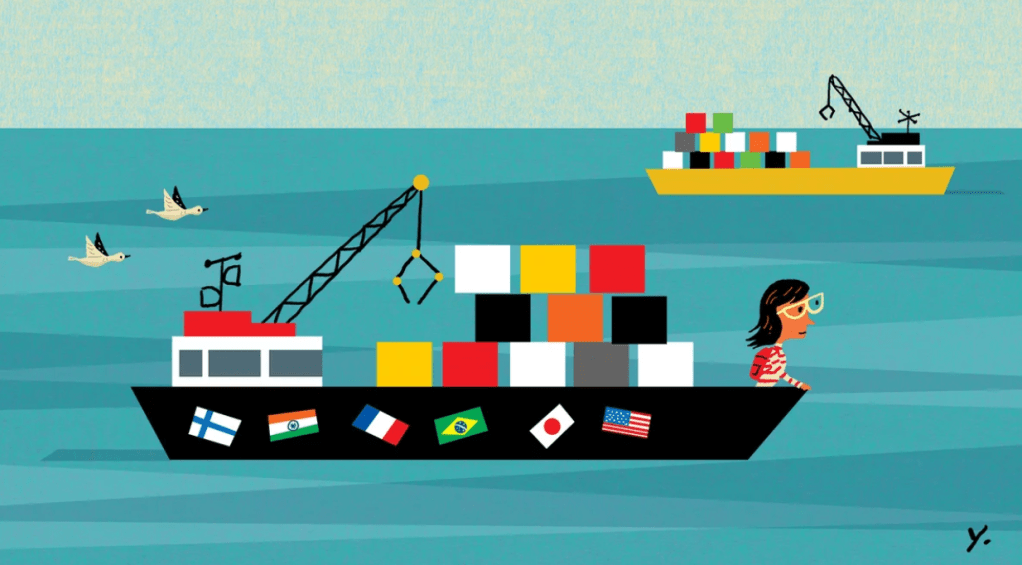
Image Source : Photo by James Yang for NPR
 NICKELED AND DIMED