
By : Apoorva Lakshmi Kaipa
Abstract
Persian Poetry has long been recognised for its unparalleled beauty and depth. It has the ability to encapsulate insightful philosophical, political and experimental realities. Persian poetry has fostered a culture where deep emotions and socio-political commentaries blend seamlessly giving rise to poignant verses. This article aims to explore the expansive world of Persian poetry through aesthetic and political lenses.
Can Poetry Be a Substitute for Theory?
Poetry is generally used as a vehicle for artistic and abstract expression, but its potential extends beyond only aesthetics. Poetry allows the use of metaphors, allegory and symbolism to show complex realities, unlike rigid theoretical constructs. In traditional Persian poetry, it is seen that poems function as a dialectical process. From Rumi to Hafiz to ongoing conversations that reflect reality while challenging and redefining it. Persian poets are renowned for their rich imagery and metaphors to address themes of justice, freedom and human experience. Hafiz and Rumi’s poetry conveys deep spiritual and philosophical themes that serve as conduits for both personal enlightenment and broader social commentary. This suggests that poetry, through its nuanced and multi-layered meanings, can function as a standby to theoretical discourse by engaging the readers in an intellectual and emotional dialectic. While Poetry cannot be a substitute, it has the means to catch readers’ attention and increase awareness about social concepts. Rather than serving as an alternative to theoretical discourse, poetry operates as an extension. Poetry possesses a unique ability to increase awareness about social narratives in an accessible and emotionally resonant way. This is a complementary role which comes into play to engage audiences who might not otherwise engage with traditional academic texts. Poetry has the potential to make abstract theories tangible. Both poetry and theory maintain their importance in this sense, with poetry enhancing theoretical discussions.
The Aesthetic and Symbolic Power of Persian Poetry
One of the main pillars of Persian poetry is its unparalleled aesthetic richness. The artistry to blend sound, rhythm and meaning creates an experience that transcends mere intellectual understanding. The inherent musicality of the Persian language allows poets to create verses that are evocative and stimulating. Symbolism is often used in by Persian poets to discuss complex ideas in an accessible manner. In Rumi’s work, the imagery of the “beloved” is often used as a metaphor for divine love and the conquest for transcendence. These artistic expressions serve as spiritual and philosophical functions while also subtly critiquing the rigid dogmas and oppressive structures which reflect the wider socio-political undercurrents.
Poetry as a Shield Against Oppression
Historically, Persian poetry has been deeply intertwined with political thought and resistance. During periods of intense political turmoil, poets used their craft to veil their dissent in allegorical expressions. Those who sought these messages were ensured to understand these poems while evading the strict regime and prosecution by authorities. Saadi’s Gulistan and Bustan incorporate political satire within moral and didactic tales. Similarly, Ferdowsi’s Shahnameh serves as a nationalist epic. It preserves Persian identity and history in the face of Arab conquests. By embedding political messages within layers of poetic beauty, Persian poets not only preserved cultural memory but also instilled the spirit of resistance.
Poetry’s role as a form of socio-political commentary has remained strong in both historical and contemporary Iran. Even though the methods and platforms of the expression have changed the messages have evolved with it and have only gotten stronger. In the past, classical poets used allegories to critique rulers and social norms while under monarchic and religiously structured societies. Saadi’s Gulistan showcases humor and satire to expose societal and human flaws. For instance, one story in Gulistan features an ant advising an arrogant elephant, using this allegory to emphasize the virtue of humility and critique arrogance among the powerful. Meanwhile, poets of contemporary times engage directly with issues of social justice, gender inequality and state oppression. Iranian protestors have often turned to the verses of traditional poets to voice their demands for justice and reform.
“Don’t be satisfied with stories, how things have gone with others. Unfold your own myth.”
(One of Rumi’s well-known lines from Unfold Your Own Myth. This line acts as a call to action that resonates with modern Iran. Poetry continues to inspire political engagement and empowerment.)
Poetry as Protest in Iran
The use of poetry in protests illustrates how poetry is till date an essential means of resistance. Especially in an environment where direct political criticism can be met with severe repercussions. The death of Mahsa Amini in 2022 ignited a widespread protest across Iran. Amidst this unrest, Shervin Hajipour composed “Baraye” which encapsulated the problems and aspirations of the protesters. The lyrics articulated desires for freedom, justice, and an end to oppression. It became the anthem of the movement and resonated deeply with Iranians domestically and abroad.
Further, Simin Behbahani, known as the “Lioness of Iran”, has become a crucial figure in modern Persian poetry. She fearlessly addresses issues of gender discrimination and political suppression. Her work continues the tradition of Persian poetry being a tool for both art and politics. In the current digital era, Persian poetry has had a rebirth on social media platforms and in protest movements. Poets and activists use poetry to mobilize people, raise awareness and preserve Iran’s rich poetic traditions. The “Digital Persianate” conference critically examined how digital transformations have influenced artistic, literary and theatrical domains of Persian culture. This transition from manuscripts to social media posts has enabled Persian poetry to maintain its historical role in shaping societal consciousness while adapting to modern forms of resistance and communication.
Conclusion
Persian poetry’s eminence lies in its ability to function as both an aesthetic and political tool. It serves as an option but not a replacement for theoretical discourse by presenting complex realities in imaginative and accessible forms. Through metaphors, symbolism and allegory, Persian poets have historically articulated political dissent and existential reflections. The classical poets crafted a tradition that persists to this day in contemporary Iranian culture. Both as a means of personal introspection and as an instrument of resistance, Persian poetry remains a testament to the power of mere words shaping human experiences. Classical poetry is still heard around houses and as slogans in protests in Iran today. This bridges the past and the present, showing that the legacies of Hafiz and Rumi are more than just relics but an active and evolving force in the political and cultural landscape of Iran. As the world continues to find out about the vast literature of Persia, it is vital to recognise its enduring role in artistic enrichment as well as being a voice for the voiceless.
About the author
Apoorva is an undergraduate student doing law at Jindal Global Law School. She is interested in exploring the intersection of feminism, law and social responsibility.
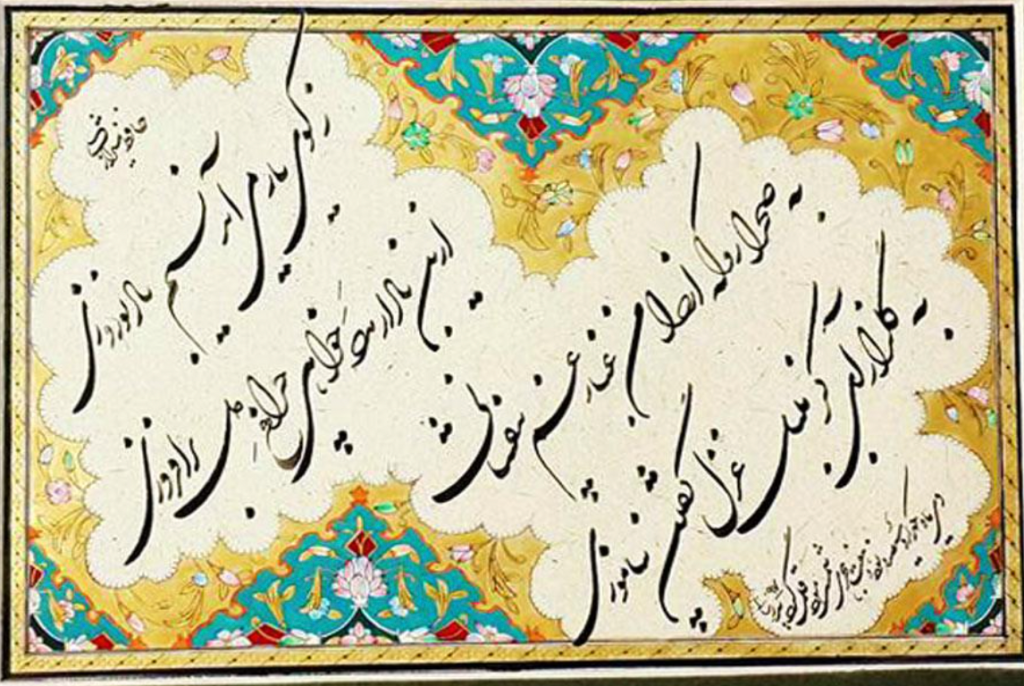
Image Source : https://packtoiran.com/blogs/detail/106/Hafez-great-Iranian-poet:-Life-and-poems
 NICKELED AND DIMED