
By Neel Das
Abstract
The journey of a transgender person is a complex one that spans centuries marked by the very
means of oppression, resistance, and discrimination with gradual progress embarking on legal
recognition and social acceptance, from the British colonizers’ era, where implementation of
discriminatory laws to the contemporary landmark case of the NALSA judgement in 2014,
the transgender community has navigated through challenges towards inclusion and equality.
Article 14 of the Indian Constitution provides for equal protection to all and Article 15 talks
about non-discrimination on grounds of race, caste, and especially sex. Yet, the
implementation of these articles post-independence did not significantly change them, and
faced discrimination and social stigma without any social recognition. Nevertheless, the legal
and social situation of the transgender community saw a ray of hope with the 2014 judgment
when they were provided with the right to self-identify their gender. This article explores the
history of the transgender community and their transformative journey from colonial
repression to legal recognition.
Regressive regulatory legal framework:
The effects of British colonists on gender and sexuality were evident, having shaped many
aspects of society and subjecting institutional frameworks against the transgender
community. The intent behind the colonizers in enforcing such discriminatory frameworks
was to impose the Eurocentric notions of gender binary and heteronormativity. Thus, any deviation from these norms attracts suspicion and disdain. The institutional framework that
they derived to oppress gender minorities is the Criminal Tribes Act of 1871. This legislation
mainly targeted the trans or hijra groups, identifying them as aberrant and disruptive in
nature. These groups were classified as “criminal tribes” under the Criminal Tribes Act, and
the legislation compelled their monitoring and control based on arbitrary classifications.
These categories include criminalising acts like cross-dressing, which is an important aspect
of their identity. Other traditions, which include sodomy, alms collection, and rituals relating
to fertility, were also criminalised. By imposing arbitrary regulations on these communities,
the colonizers hoped to foster a rigid binary conception of gender and sexuality, thus
eliminating the concept of gender variety and promoting heteronormativity in Indian culture.
The reinforcement of the Criminal Tribes Act subjected accorded prosecution to trans
individuals. The process started with registration where they were termed with dehumanizing
terms as “Eunuchs” which can be viewed as biological attributes rather than an identity.
Immense surveillance measures, including police raids and harassment, restricted their
movements and activities. As Jessica Hinchy describes in The Eunuch Archive: Colonial
Records of non-normative gender and Sexuality in India, the heteronormative approach of the
colonizers goes to the extent of policing and suspecting those “eunuchs” with kidnapping,
castration and, especially sodomy. The concerns that the Indian colonizers had after the 1857
rebellion were the threats of ‘social diseases’ like prostitution and public obscenity, and they
made it a point to save the children from kidnapping and castration from those ‘Eunuchs’, or
‘criminal tribes.’ There were times when the colonial administration disregarded the
guidelines of the CTA and kept records of the hijras which were deemed private and
unnecessary. Hence, the Criminal Tribes Act specifically targeted the trans community and
despite the discrimination and social ostracization they faced, hijras and other gender-non-
conforming individuals continued to assert their identities and sought spaces of belonging
within their communities.
In the post-independence scenario, transgender groups continued to face struggles and
challenges, despite the shift in political power. Their struggle for equality and acceptance was
exacerbated even after a new constitution and administration were established due to
marginalization and prejudice that amounted to a lack of legal legitimacy. The persistent
stigma and discrimination that transgender groups in India have had to deal with since
independence stems from the legacy of colonialism.
As we analyse Rahul Rao’s Chapter on the queer politics of postcoloniality, we understand
how legal frameworks, cultural customs, and religious organizations were frequently used by
colonialism to impose harsh heteronormative and patriarchal norms in colonized areas. These
structures marginalized gender minorities and opposing sexualities, causing bigotry,
discrimination and violence against these groups. Despite various efforts towards nation-
building and social reform, traditional gender norms and conservative attitudes prevailed,
pushing transgender individuals to the edge. Transphobia and discrimination persisted in
different spheres of life, also depriving the community of fundamental services such as healthcare, education, employment, and housing. This, in turn, limited opportunities for
transgender people to take on their rights and thrive.
Again, without legal recognition of their gender identity, transgender individuals encountered
difficulties accessing basic rights and services, such as documents for identification,
healthcare, employment, etc. As mentioned by Bhattacharya and Ghosh, this lack of
recognition left them vulnerable to harassment, violence, mental distress, and exploitation,
with little recourse for justice or protection under the law. Now, if they were provided work,
for them to sustain, prejudice and discrimination followed along.
Kimberle Crenshaw defined the term “intersectionality,” as an understanding of how multiple
components of a person’s social and political identities, such as gender, ethnicity, class,
sexuality, and so on, interact to generate distinct categories of discrimination. This concept
helps analyse overlapping and interrelated systems of discrimination. Many Dalit-trans
individuals are involved in the sex business, and this, in conjunction with intersectional
discrimination, has a substantial negative influence on their mental health. Studies have
demonstrated the link between discrimination and heightened psychological discomfort as
well as a rise in risky behaviours such as drug use. These results emphasize the urgent need
for initiatives that tackle the overlapping effects of discrimination and establish mental health
and wellbeing-promoting environments.
Movement to ‘progression’
In order to meet their needs and campaign for their rights, transgender
communities established advocacy groups and networks of support and solidarity within their
communities. As witnessed by the works of Laxmi Narayana Tripathi, A. Revathi, and
several others, transgender groups aimed to combat stigma, promote awareness, and demand
legal recognition through grassroots activism and collective mobilization. The NALSA
judgment was the first significant development. In 2014, the Supreme Court’s ruling in
NALSA v. UOI, addressed important questions pertaining to discrimination, equality under
the Indian Constitution, and the right to self-identity. The NALSA ruling upheld the
fundamental rights of transgender people, such as their freedom of speech, equality, and non-
discrimination, and acknowledged their inherent dignity. It emphasized the significance of
honouring the autonomy and self-identification of transgender people while acknowledging
the variety of gender identities and expressions within the community. The NALSA ruling
reshaped the dominant heteronormative notions that had long marginalized and discriminated
against transgender people in Indian culture by recognizing the right of transgender people to
self-identify as their gender. It emphasized the need to let go of outdated gender stereotypes
and acknowledge the rights of every person, irrespective of their gender identity or sexuality.
The NALSA judgement made a point to address the historical injustices and systematic
discrimination that the transgender community had to undergo, particularly concerning access
to healthcare, education, employment, and housing. The Supreme Court called upon
measures to be implemented that will ensure the welfare and inclusion of the gender minority
in society. Steps had been taken in a positive direction, but the judgement revealed
underlying complexities and challenges. The focus on the legal and medical aspects
overlooked the broader cultural and social barriers faced by the groups. Again, for the purpose of self-identification, certificates had to be issued, and improper procedures were
followed in a few health centres, which caused bureaucratic hurdles. Of course, the
emergence of the Transgender Persons (Protection of Rights) Bill of Rights played an
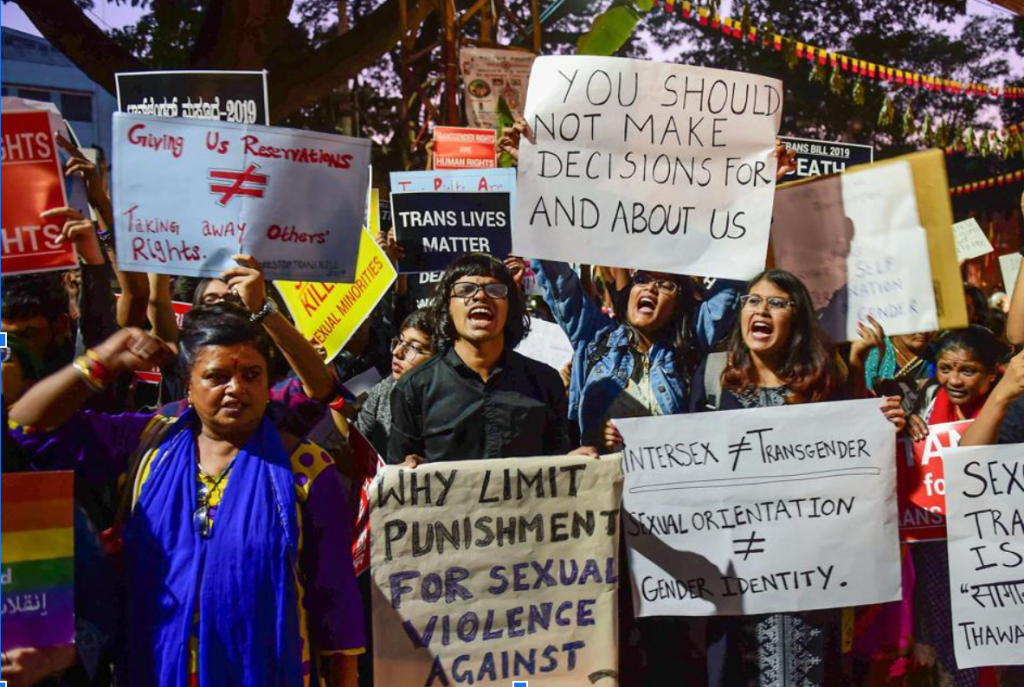
important role, but it came with its drawbacks. Grace Banu proclaimed this bill a “murder for
gender justice” and that this bill failed to take stricter action against rape and other forms of
discrimination they were subjected to, thus not helping with their upliftment. Various
amendments were introduced in the provision, but yet again, the judgement and the
legislation failed to address the root causes of discrimination, and there is still a need for
comprehensive policy reforms aiming to spread awareness and implementation for inclusion
of these groups.
Although transgender community have come a long way in India, much more has to be done.
We can create a future in which transgender citizens are completely recognized, respected,
and included in all facets of society by giving legislative changes, public education, legal
advocacy, and community empowerment top priority.
About the author:
Neel Das is a first-year LL.B. student at Jindal Global Law School. His areas of interest are
history, intersectionality, human and gender rights
 NICKELED AND DIMED