-

Lessons For and From India’s UPI
Read more: Lessons For and From India’s UPIBy – Anubhi Srivastava Abstract India’s Unified Payments Interface (UPI), launched in 2016, is a key example of ‘Glocalisation’ in digital payments, where global fintech principles are adapted to India’s diverse socio-economic landscape. It has rapidly ascended to become the world’s largest real time payment system, processing over 650 million transactions daily and dominating India’s…
-

Death by Discretion: Arbitrary Sentencing and the Indian Constitution
Read more: Death by Discretion: Arbitrary Sentencing and the Indian ConstitutionBy – Aasmi Bali Abstract This article examines the extent of judicial discretion in India’s death penalty sentencing and questions how justice may truly be served when the results are so indeterminate. It attempts to analyse the constitutional tensions generated by such sentencing procedures, which cut across Articles 14 and 21, the rights enshrining equality…
-

The Leeches of Lakshadweep
Read more: The Leeches of LakshadweepBy – Sahithi Shukla Abstract This article explores the insidious ways in which the law has been weaponised for control in Lakshadweep. Amidst the media furore that erupted in 2021 about Lakshadweep and its newfound potential to become a tourist hotspot rivalling the Maldives, the silent process of urbanising and sanitising the island had begun.…
-

TRIAL-IN-ABSENTIA: A Necessity or Shortcut to Conviction?
Read more: TRIAL-IN-ABSENTIA: A Necessity or Shortcut to Conviction?By – Srisoniya Subramoniam Abstract “No man shall be condemned unheard.” While an ideal justice system strives to hear both parties, giving them equal opportunities to establish their innocence, the BNSS’s (Bhartiya Nagarik Suraksha Sanhita, hereinafter, BNSS) regime simply fails to do so. Despite the core tenet of the Indian criminal justice system being a…
-

Culture, Capital, Commodity: On Shillong’s Mawphlang Forests and the Dangers of Ecotourism
Read more: Culture, Capital, Commodity: On Shillong’s Mawphlang Forests and the Dangers of EcotourismBy – Poorvanshi Tyagi Abstract The 1996 ecotourism initiatives at the Mawphlang sacred forests brought recognition to the essence of the area, transforming it into a wonder destination for many. A multitude of trip-advisory articles shed light on the systematic structure set in place for the exploration of these sacred groves. It raises a moral…
-
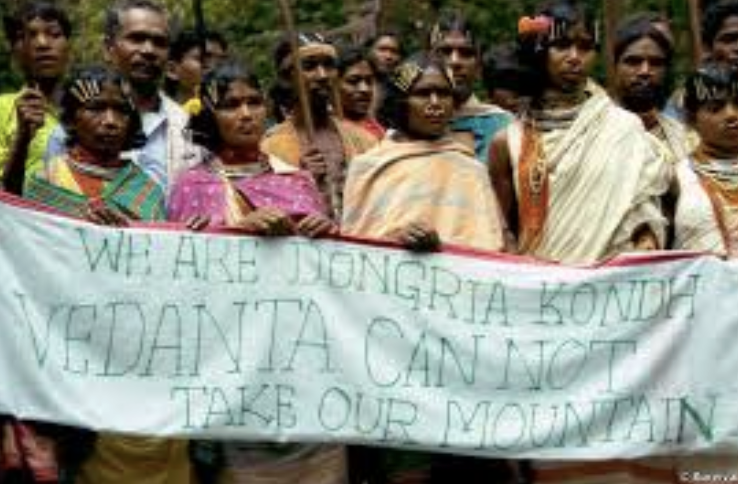
Law, Environment, and the Quiet Violence of Development
Read more: Law, Environment, and the Quiet Violence of DevelopmentBy – Gauri Yadav Abstract This article elucidates the colonial origins and post-colonial continuity of environmental law in India. It argues that environmental regulation was never designed for preservation but rather for legitimising dispossession. Through an examination of forest laws, development projects, and mining regimes, the article traces how legal structures have historically served extractive…
-

The Power of Being Counted: Caste Census and the Future of Indian Governance
Read more: The Power of Being Counted: Caste Census and the Future of Indian GovernanceBy -Vansh Aggarwal Introduction: “Justice has always evoked ideas of equality… But equality requires the absence of special privileges.” – Dr. B.R. Ambedkar. For a country that often speaks of caste-based injustice, its governance remains oddly blind to the actual numbers that define its social landscape. The last comprehensive caste enumeration was conducted in 1931,…
-

Rivers? More like Sewers!
Read more: Rivers? More like Sewers!By – Mani Meghana Godavarthi Abstract Water is essential for survival; however, one of the biggest concerns that the world is facing today is that of river pollution. This article utilises secondary data to establish that regardless of how a river is perceived, it inevitably falls at the mercy of the polluters using secondary data.…
-

Dhaka Muslin: The Forgotten Fabric and Art of Reclaiming Power
Read more: Dhaka Muslin: The Forgotten Fabric and Art of Reclaiming PowerBy : Vasatika Saraswat Abstract Dhaka Muslin, once the pinnacle of luxury and craftsmanship, is more than a forgotten textile—it is a symbol of imperial plunder and now, a potent instrument of cultural reclamation. Woven from the rare Phuti karpas cotton along Bengal’s riverbanks, Muslin was celebrated across imperial courts from the Mughals to the…
-

The Financial Rupture of Vizhinjam International Transhipment Deepwater Multipurpose Seaport
Read more: The Financial Rupture of Vizhinjam International Transhipment Deepwater Multipurpose SeaportBy : Athma Maria Mathew Abstract The challenges of balancing the fiscal equation within a quasi-federal country, in addition to the irregularities in featuring a mixed economy, is a rising crisis in India’s democracy. This article attempts to address these issues by evaluating the financial markets involved in constructing India’s first International Deepwater Multipurpose Seaport…
-

Meerut 1987: Memory, Erasure, & the Silences of Power
Read more: Meerut 1987: Memory, Erasure, & the Silences of PowerThis article examines the 1987 Meerut riots, focusing on the systematic erasure of the massacre through state complicity and narrative manipulation. It explores how communal tensions, political interests, and biased investigations contributed to reframing the violence as a “riot” rather than a state-enabled massacre. By analyzing institutional failures, selective violence, and the withholding of justice,…
-
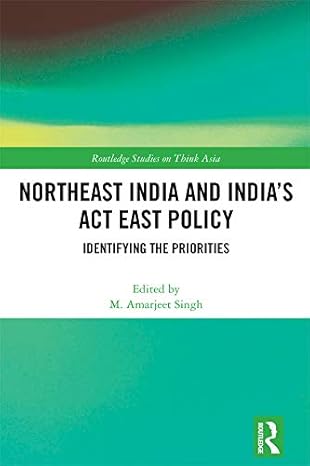
The Key Pillars and Priorities of India’s Act East Policy and Examining it’s Northeast Region: A Book Review
Read more: The Key Pillars and Priorities of India’s Act East Policy and Examining it’s Northeast Region: A Book ReviewThis article is set to critically review the book Northeast India and India’s Act East Policy, edited by Amarjeet Singh and examine it’s arguments. The book delves into India’s evolving engagement with Southeast and East Asia and the central role of it’s Northeast region owing to it’s proximity. The book discusses the shift from the…

Nickeled & Dimed
Penny for your thoughts?
We are accepting articles on our new email: cnes.ju@gmail.com
 NICKELED AND DIMED