-
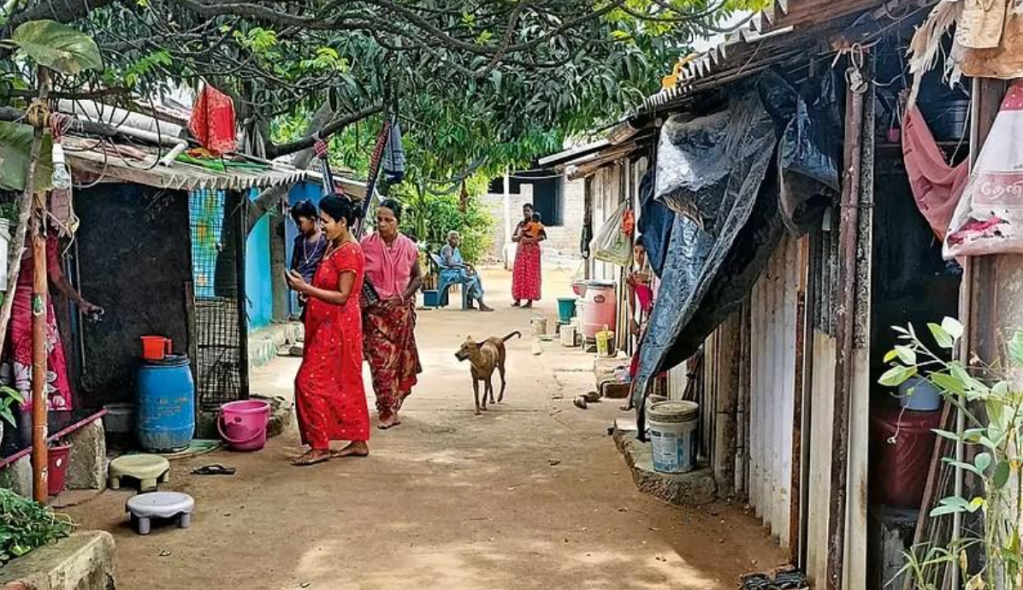
Madras Cafe and India’s Refugee Dilemma
Read more: Madras Cafe and India’s Refugee DilemmaBy – Hritika Mishra Introduction Refugee crises are not new to South Asia. From the 1947 partition of India and Pakistan to the Rohingya today, every conflict has left behind displaced people. India, despite no formal refugee law, has hosted refugees from many countries, such as Tibet, Afghanistan, Myanmar, and Sri Lanka. Shoojit Sircar’s Madras…
-

Welfare in the Age of Algorithms: AI and the Future of Public Policy in India
Read more: Welfare in the Age of Algorithms: AI and the Future of Public Policy in IndiaBy -Vansh Aggarwal Abstract: This article explores how AI is reshaping public policy in India, focusing on welfare schemes like MGNREGA and PM-JAY. Drawing lessons from DigiYatra, FASTag, and CoWIN, it examines both the efficiency gains and the risks of privacy loss and bias. The article also proposes integrating AI with Aadhaar to build smarter,…
-

Protection or Exclusion: Does India Gain from Its Refugee Policy Change?
Read more: Protection or Exclusion: Does India Gain from Its Refugee Policy Change?By – Ayushmaan Abstract This piece examines the historical shift in the Indian Government’s approach to the rising refugee population in India with respect to recent security concerns from the neighbouring countries of India. History is evident; India adopted non-refoulement towards refugees. without any specific obligation, neither domestic nor international. The past decade presents India’s…
-

Israel’s Innovation Playbook: What India Can Adapt and Localise
Read more: Israel’s Innovation Playbook: What India Can Adapt and LocaliseBy – Vansh Aggarwal Abstract India’s innovation story stands at a critical juncture where global ideas must meet local realities. Drawing lessons from Israel’s state-led innovation, defence-tech advances, and agri-tech revolution, India can adapt these models to its unique socio-economic landscape. Introduction There is a Japanese saying, ‘Dochakuka’, which means adapting global knowledge to suit…
-

Lessons For and From India’s UPI
Read more: Lessons For and From India’s UPIBy – Anubhi Srivastava Abstract India’s Unified Payments Interface (UPI), launched in 2016, is a key example of ‘Glocalisation’ in digital payments, where global fintech principles are adapted to India’s diverse socio-economic landscape. It has rapidly ascended to become the world’s largest real time payment system, processing over 650 million transactions daily and dominating India’s…
-

Glocalising Iceland’s 100% Fish Project: A Transformation of India’s Fisheries into a Circular Blue Economy
Read more: Glocalising Iceland’s 100% Fish Project: A Transformation of India’s Fisheries into a Circular Blue EconomyBy – Samaira Prakash Abstract: The aquaculture sector in India currently faces a paradox, where the production of fishery remains on the rise, while there is minimal value addition, alongside a significant increase in externalities caused by the widespread discarding of fish waste. The 100% fish project, an initiative spearheaded by Iceland’s Ocean Cluster, offers…
-

Glocalization of Slum Housing Policy in India: Inspiration from The Brazil Favela-Bairro Program
Read more: Glocalization of Slum Housing Policy in India: Inspiration from The Brazil Favela-Bairro ProgramBy – Ayushmaan Abstract This article examines the limited efficacy of India’s current Slum Housing policy – PM Awas Yojana Urban, despite receiving a significant and increased budget every 5 years. The centralised decision-making framework of the policy hinders implementation at the lowest level, affecting the beneficiaries in return, resulting in a lower use value…
-

Biometric Schooling: Are We Normalising Surveillance for an Entire Generation?
Read more: Biometric Schooling: Are We Normalising Surveillance for an Entire Generation?By – Ann George Abstract As biometric technologies become increasingly embedded in educational settings, from facial recognition for attendance to emotion-detecting AI, the school is no longer just a site of learning but one of surveillance. This article critically examines the growing normalisation of biometric surveillance in schools and its psychological, behavioural, and legal implications…
-

The Broke Generation: Why Gen Z’s Economic Reality Is Nothing Like What Boomers Think
Read more: The Broke Generation: Why Gen Z’s Economic Reality Is Nothing Like What Boomers ThinkBy – Ann George Abstract This paper challenges prevailing stereotypes that label Generation Z as “lazy” or “entitled” by exploring the distinct economic challenges they face in contrast to previous generations. Factors such as soaring housing costs, stagnant wages, overwhelming student debt, and insecure labor markets, exacerbated by technological changes like AI, have created significant…
-

Quiet Quitting the City: Should Public Policy Support Digital Nomadism?
Read more: Quiet Quitting the City: Should Public Policy Support Digital Nomadism?By – Ann George Abstract Digital nomadism, a growing lifestyle enabled by advances in remote work and digital technology, is reshaping traditional notions of home, work, and mobility, particularly among younger generations such as Generation Z and Millennials. This paper explores the complexities of digital nomadism, highlighting its appeal alongside significant global inequalities rooted in…
-

The Power of Being Counted: Caste Census and the Future of Indian Governance
Read more: The Power of Being Counted: Caste Census and the Future of Indian GovernanceBy -Vansh Aggarwal Introduction: “Justice has always evoked ideas of equality… But equality requires the absence of special privileges.” – Dr. B.R. Ambedkar. For a country that often speaks of caste-based injustice, its governance remains oddly blind to the actual numbers that define its social landscape. The last comprehensive caste enumeration was conducted in 1931,…
-
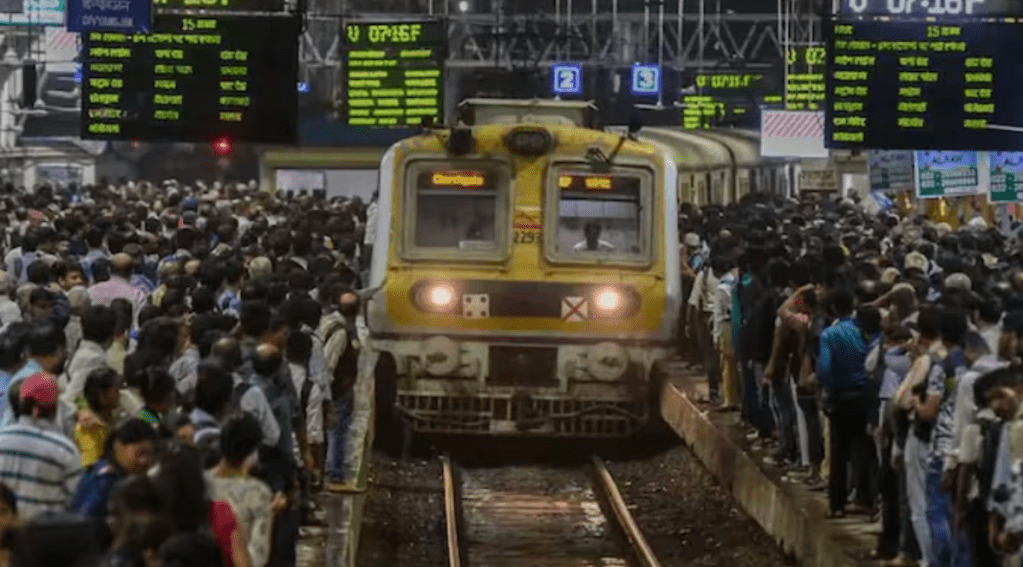
Who and what drives the Great Indian Public Transport
Read more: Who and what drives the Great Indian Public TransportBy – Anubhi Srivastava Abstract India’s public transport system stands at a crossroads. While public systems ensure affordability, they often suffer from inefficiency and poor service. Privatisation brings innovation but risks inequity and exclusion. Drawing from global models and domestic public-private partnerships, this paper argues for a hybrid and regulated approach that integrates equity, environmental…

Nickeled & Dimed
Penny for your thoughts?
We are accepting articles on our new email: cnes.ju@gmail.com
 NICKELED AND DIMED