-

The Criminal Reality Of The Metaverse: A New Avenue For Gendered Atrocities
Read more: The Criminal Reality Of The Metaverse: A New Avenue For Gendered AtrocitiesThe metaverse, a virtual reality space for social interactions, mirrors real-world inequalities and crimes, particularly gender-based violence. A range of crimes from virtual sexual harassment to virtual rape is no more just cyberbullying but a rather heeded incident given the immersion involved in virtual reality. Technologies are often unregulated when developed and put in the…
-

Balancing Justice: The Introduction of ‘Trial in Absentia’ in India’s New Criminal Code
Read more: Balancing Justice: The Introduction of ‘Trial in Absentia’ in India’s New Criminal CodeThe introduction of the provision for ‘Trial in Absentia’, under section 356 of the Bhartiya Nagarik Suraksha Sanhita [“BNSS’] marks an essential juncture in the Indian Criminal Justice system, aimed at providing speedy trials and preventing undue delays caused by absconding accused individuals. While the inclusion of this provision is a landmark step towards enhancing…
-

Tackling the contemporary “Aaya Ram Gaya Ram”
Read more: Tackling the contemporary “Aaya Ram Gaya Ram”There’s a popular phrase “Aaya Ram Gaya Ram” and let’s just say Nitish Kumar is the modern-day embodiment of it. Are there laws to stop elected politicians like him? Yes, an anti-defection law exists in our Constitution. Then why doesn’t it apply to Nitish Kumar and many other politicians like him? This is exactly what…
-

Anwar’s Aftermath: A Retrospective Reassessment
Read more: Anwar’s Aftermath: A Retrospective ReassessmentIn this article, I examine the jurisprudence following Anvar and how the Courts have treated the operational applicability of the ruling, arguing that a retrospective application is the only position good in law. I further submit a more radical vision, suggesting a return to the position in Navjot Sandhu, which recognised that Section 65-B must…
-

REFORMING OR REPEATING? THE INTENDED OR UNINTENDED CONSEQUENCES OF INDIA’S CRIMINAL JUSTICE REFORMS
Read more: REFORMING OR REPEATING? THE INTENDED OR UNINTENDED CONSEQUENCES OF INDIA’S CRIMINAL JUSTICE REFORMSThe overhaul of India’s criminal justice system through the Bharatiya Nyaya Sanhita (BNS), Bharatiya Nagarik Suraksha Sanhita (BNSS), and Bharatiya Sakshya Adhiniyam has been criticized for failing to achieve ‘decoloniality’. Despite claims of indigenization and democratization of the criminal justice system, these new laws either retain most of colonial-era provisions or make them more terrorizing…
-

Restorative Justice Approaches in Sexual Offense Cases: Potential and Pitfalls
Read more: Restorative Justice Approaches in Sexual Offense Cases: Potential and PitfallsLegislation on sexual offences is designed to address and mitigate crimes such as rape, sexual assault, and harassment, ensuring that victims receive justice and perpetrators are held accountable. This article examines the effectiveness of these laws in achieving procedural justice for victims and in assessing how well current legislation aligns with the principles of procedural…
-

Political Integrity vs. Individual Rights: The Debate on Anti-Defection Laws
Read more: Political Integrity vs. Individual Rights: The Debate on Anti-Defection LawsBy Nethra Katikaneni Abstract The objective of this paper is to provide a comprehensive analysis of Anti-Defection laws inIndia, focusing on their historical development, legal framework, and implications fordemocratic governance. Anti-Defection laws were introduced to address the issue of politicaldefections, where elected representatives switch parties, often for personal gain, destabilizinggovernments and undermining the electorate’s mandate.…
-

THE ENIGMATIC WORLD OF AVIATION LAW
Read more: THE ENIGMATIC WORLD OF AVIATION LAWAviation law governs air travel, operations, and safety protocols worldwide, influenced by international conventions and organizations like ICAO. India’s regulatory framework, rooted in the Aircraft Act of 1934, includes key legislation such as the National Civil Aviation Policy and UDAN initiative. Landmark cases emphasize aviation safety and passenger rights.
-

“Analyzing the Social Security Code and Employees’ Compensation Act: A
Read more: “Analyzing the Social Security Code and Employees’ Compensation Act: AThe Social Security Code, 2020 is a significant legislative overhaul aimed at regulating and simplifying social security provisions in India for not only the organized sector but also the unorganized sector. This article provides a comparative analysis between the previously existing and longstanding legislation, the Employees’ Compensation Act, 1923, and the Social Security Code, highlighting…
-
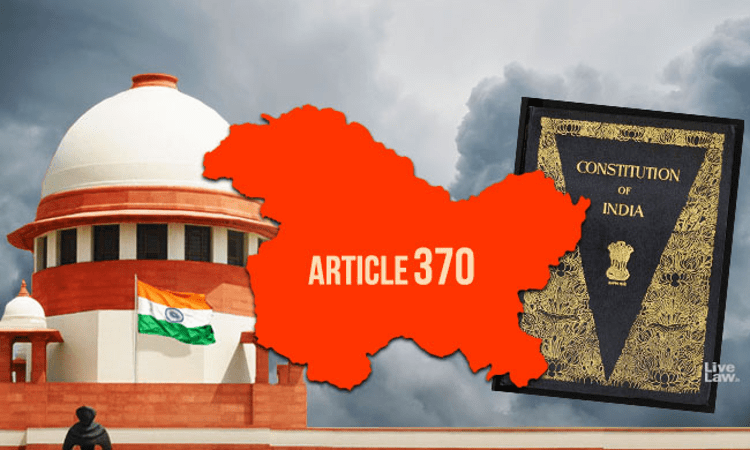
Constitutional Dynamics: Exploring the Legal Consequences of Article 370 Revocation inJammu and Kashmir
Read more: Constitutional Dynamics: Exploring the Legal Consequences of Article 370 Revocation inJammu and KashmirBy Nethra Katikaneni Abstract The abrogation of Article 370 in Jammu and Kashmir was a major constitutional change thatsparked arguments about its possible legal ramifications. This article explores the complexconstitutional dynamics that surround the repeal of Article 370 and the ensuing ramifications. Bya brief summary of Article 370, outlining its historical significance and tracking its…
-

Intimate Partner Violence in India
Read more: Intimate Partner Violence in IndiaIndia stands at 122 in the Gender Inequality Index and 135 in the Global Gender Gap Index. What have we done to improve this? What have we done to make our women feel safe inside and outside their homes? How does one measure and establish consent to prove it effectively in a court of law?…
-

Beyond Decriminalization: The Fight for Marriage Equality in India
Read more: Beyond Decriminalization: The Fight for Marriage Equality in IndiaSupriyo v. Union of India (2023) addresses the freedom of marriage for LGBTQIA+ people in India. The Supreme Court heard cases requesting that same-sex marriage be recognized under constitutional protections after homosexuality was decriminalized. By a vote of 3:2, the Court rejected this right, recognizing the legitimacy of queerness and the court’s jurisdiction to consider…

Nickeled & Dimed
Penny for your thoughts?
We are accepting articles on our new email: cnes.ju@gmail.com
 NICKELED AND DIMED