-
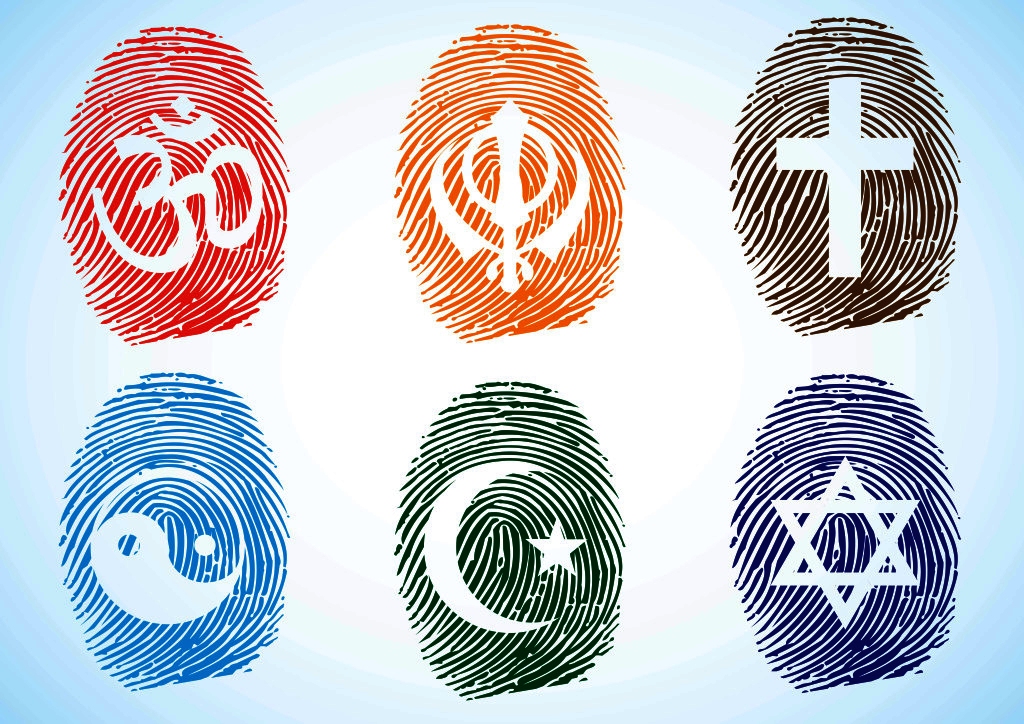
The Role of Reward and Punishment in Major Religions
Read more: The Role of Reward and Punishment in Major ReligionsThis article explores the concept of reward and punishment for good and bad actions in major religions. It highlights how this idea defines the attitudes of followers and helps establish ethical and moral standards. How it can serve as a nourishing elixir for the soul or a poisonous venom that infects and harms society. The…
-

Power of a Narrative: Unearthing the Effects of the Bolivarian Revolution in Venezuela
Read more: Power of a Narrative: Unearthing the Effects of the Bolivarian Revolution in VenezuelaThe Bolivarian Revolution in Venezuela took the world by storm, for an attempt atfor Latin American socialism was taking place right in the United States’ backyard. The racial and resource politics in Venezuela combined with the international interests of the West led to the narrative of the Revolution being one of chaos and authoritarianism spreading,…
-

A History of South Asian Representation at the Oscars
Read more: A History of South Asian Representation at the OscarsThe recent awards season sweep by Daniels’ Everything, Everywhere All at Once and RRR’s upbeat track “Naatu Naatu” has brought the complex debate surrounding South Asian representation in Hollywood to the forefront. This article will dive into the complex history of South Asian representation in Hollywood, and analyze whether these recent victories are truly symbolic…
-

How Business Interests Fueled India’s Division
Read more: How Business Interests Fueled India’s DivisionThis article explores the economic aspects of the Partition of India and the role of businessmen in this historical event. It highlights the fact that businesses with valid economic rationality tended to be in favour of the partition, regardless of religious affiliation. The article examines the rise of communalism, not only on religious lines but…
-

A Train to Pakistan by Khushwant Singh: Book Review
Read more: A Train to Pakistan by Khushwant Singh: Book ReviewThe book A Train to Pakistan, authored by Khushwant Singh, has garnered enormous attention in the field of partition literature. It presents before its readers the pre and post-partition scenes in the village Mano Majra.
-
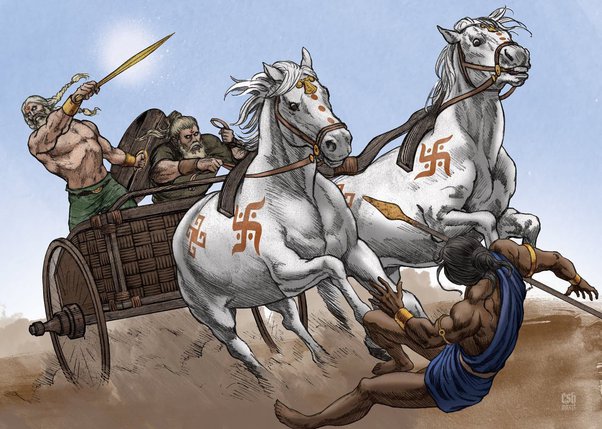
The Aryan Invasion Myth: Origins, Entrenchment, and Implications
Read more: The Aryan Invasion Myth: Origins, Entrenchment, and ImplicationsThe Aryan Invasion Theory (AIT), a creation of orientalists and colonialists, states that there was a mythical tribe of Indo-Europeans known as Aryans who invaded India sometime around 1500 BC and displaced the indigenous people of the country known as Dravidians. There exists no scientific evidence of the AIT and has been completely debunked. This…
-

Exploring the Shadows of War and Love: A Review of ‘Seven Moons of Maali Almeida’
Read more: Exploring the Shadows of War and Love: A Review of ‘Seven Moons of Maali Almeida’he Booker prize winner of 2022, The Seven Moons of Maali Almeida is a book that exposes us to the Sri Lankan War with dark humour and magical realism. The obvious literary comparisons are with the magical realism of Salman Rushdie and Gabriel García Márquez. But the novel also recalls the wit and surrealism of…
-

Partition and the Ideological roots of Pakistan
Read more: Partition and the Ideological roots of PakistanAlthough partition has remained a much-talked-about topic of discussion, its ideological roots before the reinvigoration of the Muslim League led by Muhammad Ali Jinnah are rarely discussed. While partition was not inevitable, its roots were nevertheless not spontaneous. This article argues that Jinnah merely utilised the two-nation theory propagated by extremist elements with a history…
-

Penning the Revolution: The Progressive Writers Movement and its impact on India’s Freedom Struggle
Read more: Penning the Revolution: The Progressive Writers Movement and its impact on India’s Freedom StruggleThe Progressive Writers Movement in India was a literary and cultural movement that took place in the early 20th century. It aimed to bring about social and political change through literature by highlighting the problems faced by the working class and marginalised communities. The movement was influenced by Marxist ideas and advocated for a socialist…
-

The Good Migration: Food During the Partition Period
Read more: The Good Migration: Food During the Partition PeriodThe partition of India was a horrific incident that caused mass violence and bloodshed. Communities that had lived together for hundreds of years took up arms against each other. Millions of people were forced to migrate and leave their livelihoods behind due to an unanticipated and reckless move from the Britishers. But with this migration…
-
The politicization of menstruation: The case of Armagh Prison’s No Wash Protest
Read more: The politicization of menstruation: The case of Armagh Prison’s No Wash ProtestAs a part of the No-wash protest, women in the Armagh Prison of Northern Ireland used their menstrual blood as a mode of resistance against the British authorities. While the British state used menstruation to control the bodies of women, the latter used it to challenge the existing gender norms.
-

The politicization of menstruation: The case of Armagh Prison’s No-Wash Protest
Read more: The politicization of menstruation: The case of Armagh Prison’s No-Wash ProtestMenstrual blood is a taboo, expected to be concealed and kept private. However, its public showcase by the female inmates of Armagh prison took everyone by surprise and the event turned into a spectacle.

Nickeled & Dimed
Penny for your thoughts?
We are accepting articles on our new email: cnes.ju@gmail.com
 NICKELED AND DIMED