
By — Mansi Khetan
Abstract
From campaign trails to conflict zones, memes have become unlikely instruments of geopolitical influence. What was once dismissed as digital vernacular now shapes legitimacy, public perception, and narrative dominance in real time. This article examines how virality transforms political authority into a performance calibrated for algorithms rather than institutions. It asks: have memes evolved into strategic tools of power that redefine how global conflicts are understood and legitimised? If so, this shift signifies a transition from a rules-based order to an aesthetics-based order.
Introduction
Historically, wars were announced through radio broadcasts, policies were debated in parliaments, and diplomacy was conducted behind closed doors. It was an exclusive boys’ club. Today, geopolitical narratives are shaped by TikTok edits, Twitter threads and memes captioned in Impact font. Somewhat between the United Nations and the Instagram page, global politics discovered virality. Memes, which were once dismissed as digital inside jokes for chronically online teenagers, have evolved into instruments of influence. They compress ideology into humour, outrage into relatability and conflict into shareable symbolism.
In the New York mayoral race, candidate Zohran Mamdani curated meme-worthy personas as carefully as policy statements, and that was a major factor in his win. The same algorithmic logic that dictates local electoral success now governs the moral framing of international conflict. During the Israel-Palestine war, hashtags and viral clips travelled faster than official statements. Leaders now market themselves like brands, conflicts unfold as narrative battles, and legitimacy is increasingly measured not just in votes or treaties, but in likes, shares, and trending status. Virality prioritises emotional resonance over procedural formality. It does not merely reflect politics; they shape perception, define moral framing and quietly redistribute power. This article explores how memes and viral digital content have transformed into strategic tools of geopolitical influence, reshaping legitimacy, public perception, and narrative power in global conflicts.
The Rise of Meme Politics
Political authority today is shaped as much by algorithms as by institutions. In the digital arena, visibility and emotional resonance increasingly determine whose voice is perceived as legitimate. As Daniel Kreiss argues in Prototype Politics, modern campaigns operate as branding enterprises, where identity, aesthetics, and digital strategy shape voter engagement as much as policy substance. In this environment, political legitimacy is cultivated through recognisability and shareability rather than procedural gravitas. The New York mayoral race provides a telling example. Candidate Zohran Mamdani’s campaign embraced meme culture and short-form video to project relatability and humour, circulating content tailored for algorithmic visibility. Rather than treating memes as peripheral, the campaign incorporated them as central messaging tools, recognising that emotional resonance often outpaces policy white papers in digital ecosystems. In the American context, campaigns increasingly rely on TikTok trends and influencer-style communication to mobilise younger voters, effectively collapsing the distinction between political messaging and online entertainment.
This evolution reflects what Zeynep Tufekci describes as networked visibility: power accrues to actors who can mobilise attention rapidly across digital networks. Virality prioritises immediacy and affect, rewarding those who speak in culturally fluent, platform-native languages. Political leaders globally have adopted self-aware humour, informal tone, and participatory digital engagement to signal authenticity. In doing so, they transform diplomacy from a formal, closed-door club into a performance calibrated for algorithmic amplification. The consequence is a reconfiguration of political authority. Legitimacy is no longer secured only through institutional endorsement; it is continuously performed before digital media followers.
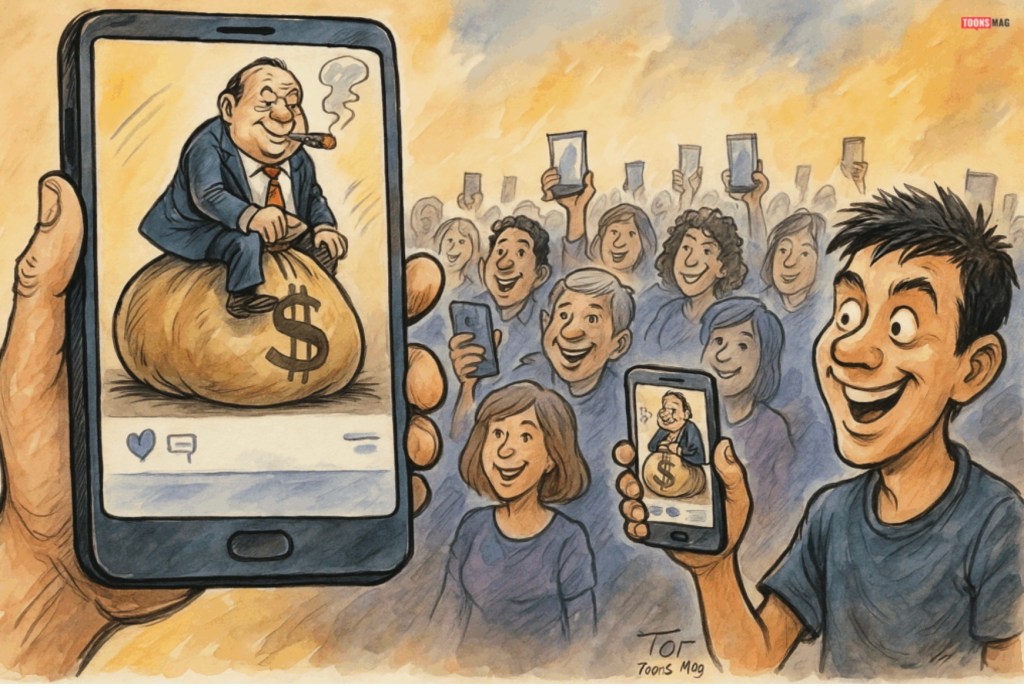
Memes compress ideology into humour and controversy into shareable symbolism, allowing leaders to bypass traditional gatekeepers and communicate directly with audiences. In this spectacle-driven environment, politics resembles brand marketing: narrative coherence and emotional engagement become instruments of strategic influence. Virality does not merely transmit political messages; it shapes the conditions under which authority itself is recognised. Having first emerged within electoral campaigns and domestic political rivalries, this logic of meme-driven visibility has now extended beyond national politics, increasingly shaping how international conflicts are framed, perceived, and contested in real time.
Meme Warfare in Conflict
The Israel-Palestine conflict demonstrates how legitimacy is increasingly fought in real time across digital platforms rather than solely within diplomatic chambers. While formal statements continue to circulate through the United Nations and foreign ministries, the moral framing of the conflict now unfolds on Instagram stories, TikTok feeds, and X timelines. Marc Lynch’s work on the Arab uprisings illustrates how new media environments allow political narratives to bypass traditional gatekeepers and shape regional and international opinion rapidly. The digital contest between China and the United States over Venezuela illustrates how geopolitical rivalry now unfolds through meme warfare as much as through formal diplomacy.
A recent investigation by the Atlantic Council’s Digital Forensic Research Lab showed how Chinese state-linked actors used AI-generated imagery, coordinated hashtags, and visually compelling memes across platforms like X, Weibo, and Douyin to counter US narratives about Venezuela’s political crisis. Rather than relying solely on official foreign ministry statements, messaging was crafted for virality to promote emotionally resonant, symbolically sharp, and optimised for algorithmic reach. Hashtags anchored the narrative, while stylised visuals framed the crisis through themes of sovereignty and Western interference. The strategy blurred the line between state messaging and participatory digital culture, allowing geopolitical framing to circulate as shareable content rather than a formal policy argument.
By mimicking grassroots discourse and targeting audiences beyond China, particularly in the Global South, the campaign sought to reshape perceptions of legitimacy in real time. This episode reveals how international legitimacy is increasingly negotiated online. Competing powers no longer depend solely on institutional recognition; they compete for visibility, emotional resonance, and narrative dominance. Meme warfare does not replace diplomacy, but it increasingly shapes the moral terrain upon which diplomacy operates.
Digital Hegemony or Democratic Voice: Who Controls Meme Power?
If the Cold War was fought with missiles and manifestos, the current geopolitical order is fought with memes and megabytes. A single edited clip, a doctored image, or a four-word slogan can now travel across continents faster than any diplomatic cable. And there is no political figure who has demonstrated this dynamic more effectively than Donald Trump. Trump’s meme power operates as a form of digital dominance. His political persona is not merely communicated; it is memefied, remixed, and endlessly circulated by supporters and haters alike. During election cycles and global crises, Trump-affiliated content, whether satirical portrayals of rivals or simplified geopolitical takes, spreads at algorithmic speed. The spectacle becomes the message. What makes this powerful is not simply popularity, but platform dominance. This represents the power of Memfied Populism.
This concept thrives in this ecosystem by packaging political narratives into viral, emotionally resonant content that aligns perfectly with algorithmic preferences, thereby reinforcing existing global hierarchies of visibility and influence. Western social media ecosystems like X, Instagram, and TikTok remain structurally embedded in the US digital infrastructure, which has also spread across the entire world. Visibility on these platforms is not neutral; it is mediated by algorithmic design, cultural capital, and linguistic dominance. As Ayşe Zarakol’s work on norm hierarchies suggests, global legitimacy is historically structured by Western standards. Digital virality risks reproducing this hierarchy, amplifying actors who already command infrastructural advantage while marginalising voices from Afghanistan, Iran, or the broader Global South.
At the same time, state-sponsored digital campaigns, from China’s coordinated messaging to US and Israeli information strategies, demonstrate how meme culture can blur into strategic propaganda. Reports by MERICS and Brookings show that governments increasingly invest in narrative control online, weaponizing humour, outrage, and viral symbolism to shape global perception. In volatile contexts such as US-Iran tensions, memes have circulated claiming imminent war, exaggerated military movements, or fabricated diplomatic statements, which are intensifying public anxiety and misinformation. The danger lies not in humour itself, but in the compression of complex geopolitical realities into emotionally charged fragments. Memes collapse nuance into spectacle. They privilege immediacy over verification and virality over responsibility. What appears democratic, that is, the ability of anyone to post, dissect, or comment, often masks structural inequalities in reach and amplification. In this environment, meme power does not necessarily democratise global politics. It risks entrenching digital hegemony, where those who control attention increasingly shape what the world perceives as legitimate crisis, conflict, or authority.
Conclusion
Memes may appear fleeting or trivial, yet in digital politics they operate as powerful carriers of ideology and influence. What was once cultural noise now shapes how legitimacy is performed and contested in real time. From electoral campaigns to geopolitical conflicts, virality determines how events are framed long before formal diplomacy intervenes. By translating complex crises into emotionally resonant, shareable symbols, memes shift authority away from institutions toward networked visibility. However, this transformation carries risks. The same systems that enable participation also amplify misinformation and reinforce structural hierarchies. Meme warfare does not replace traditional power politics, but it increasingly shapes how power is perceived. In this environment, developing critical aesthetic literacy becomes essential. In the age of the “vibe shift,” the greatest threat to global stability is not propaganda itself, but the erosion of a shared material reality, an outcome that reflects a deeper condition of epistemic fragmentation.
About the Author:
Mansi Khetan is a third-year B.B.A. LL.B. student at Jindal Global Law School with interests in international foreign policy, company law and litigation. She has interned with leading practitioners, published on contemporary legal issues, and writes on foreign policy and global governance.
Image Source: https://www.toonsmag.com/editorial-cartoons-and-economic-policy/
 NICKELED AND DIMED