
By — Hansin Kapoor
Abstract
As India integrates Artificial Intelligence into its digital public infrastructure, a critical tension arises between technological efficiency and cultural plurality. This article examines whether AI is acting as an agent of monoculture by streamlining India’s vast linguistic and social diversity into machine-readable formats. By applying the lens of social entropy and algorithmic colonization, the discussion explores how Western-centric data models risk flattening the hyper-diversity of the Indian subcontinent. It concludes that while AI poses a threat of homogenization, India’s unique approach to Sovereign AI may offer a blueprint for digital pluralism.
Introduction
India is often described as a land where diversity is not just a characteristic but a fundamental condition of existence. With over 120 major languages and thousands of dialects, the social fabric is a complex arrangement of local traditions and regional identities. Today, this intricate tapestry is being fed into the cold logic of Artificial Intelligence. As Large Language Models and recommendation engines become the primary gatekeepers of information, a quiet transformation is underway. There is a growing concern among scholars that AI is not just reflecting Indian culture but actively reshaping it into a standardized, machine-friendly version of itself. This process is driven by the technical requirement for data uniformity, which often sacrifices the nuances of local life at the altar of computational efficiency.
The concept of social entropy and algorithmic reduction
To understand the risk of a monoculture, we must look at the concept of social entropy. In scientific systems, entropy represents a state of disorder or randomness. In a social context, high entropy characterizes a system with high diversity, spontaneity, and complex variations. AI systems are, by nature, entropy-reducing engines. They function by identifying patterns, categorizing behaviors, and predicting outcomes based on historical averages. When applied to a country like India, these algorithms attempt to solve for the complexity of its social fabric. By nudging users toward popular content and standardizing language through predictive text, AI reduces the noise of regional variations. This push toward a state of artificial low entropy creates a monoculture where the unexpected and the non-conforming are filtered out because they do not fit the predictive model.
Algorithmic colonization and the Western lens
The scholar Shoshana Zuboff has famously warned about the rise of surveillance capitalism, noting that the core methods of these systems involve predicting and modification of human behavior. In the Indian context, this takes on an even more concerning dimension. When algorithms prioritize engagement, they often surface the most simplified or sensational versions of culture. This leads to what some call algorithmic colonization. Most AI models currently used in India are trained on datasets dominated by Western perspectives. When an Indian user interacts with a global AI, the model often applies foreign ethical frameworks and social norms. As Safiya Noble argues in her work on algorithms of oppression, these systems are not neutral. They are built with the values of their creators, which often marginalize people who live in the Global South. For India, this means that indigenous knowledge and local social structures are frequently treated as edge cases or errors to be corrected by the algorithm.
Linguistic flattening and cognitive narrowing
Linguistic flattening is perhaps the most visible casualty of this potential monoculture. While projects like Bhashini aim to bridge the digital divide, the underlying technology often favors high-resource languages like Hindi or English, making translation bias a persistent issue. AI translation often strips away the flavor of regional dialects, replacing vibrant local idioms with sterile equivalents. If an AI cannot process a specific tribal language, that language effectively becomes invisible in the digital economy. We are seeing a form of cognitive narrowing. As people rely more on AI-generated text, their own vocabulary may begin to mirror the limited, statistically probable word choices of the machine. This leads to a linguistic monoculture where the depth of Bharat’s oral traditions is lost to the efficiency of the script.
The filter bubble and the erosion of syncretism
The digital world also creates filter bubbles that prioritize the familiar over the diverse. In a country where social cohesion relies on the constant negotiation of different identities, algorithmic insulation is dangerous. It hardens identities into silos and prevents the cross-pollination of ideas that has historically defined Indian syncretism. Instead of a melting pot, we risk becoming a series of isolated, algorithmically curated echo chambers. Jaron Lanier has pointed out that the illusion that technology will fix itself is dangerous. He suggests that the devaluation of human labor and local context is a feature of these siren servers. In India, if the local artisan or the regional poet is replaced by a generative model that only knows the average of all things, the result is a cultural desert.
Conclusion
AI is a mirror that often reflects the biases of its creators. If left unchecked, it will continue to act as a force of social cooling, reducing the vibrant heat of Indian diversity into a cold, uniform monoculture. However, technology is not destiny. By recognizing the threat of social entropy and resisting algorithmic colonization, India can harness AI to actually amplify its diversity. The movement toward Sovereign AI suggests a different path. These efforts aim to build foundational models trained on Indian languages and cultural histories to create a pluralistic AI. The goal should not be to make India machine-readable, but to make machines India-literate. Only then can we ensure that the digital future remains as colorful as the past. If we do not actively safeguard this hyper-diversity, we may find ourselves living in a country where the only culture left is the one the algorithm can understand!
About the Author
Hansin Kapoor is a final year student at O.P. Jindal Global University. His academic pursuits lie at the intersection of geopolitics, history, law, and technology. Hansin explores how historical structures and legal frameworks adapt to the rapid evolution of the digital age, with a particular focus on preserving India’s unique social identity within global technological shifts.
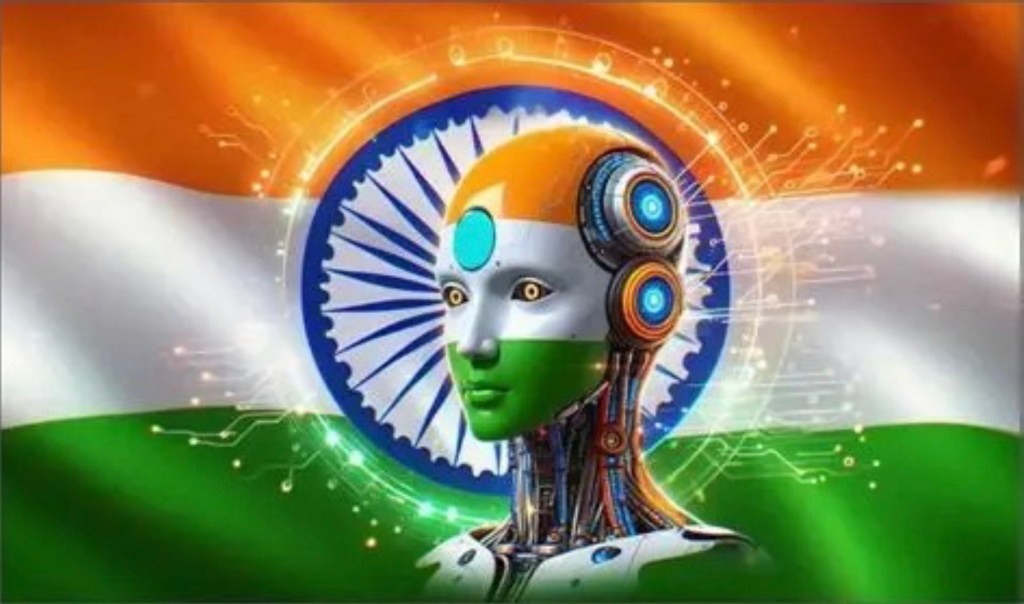
Image Source: https://akainewsindia.com/indian-tech-firm-sarvam-ai-pioneers-a-landmark-move-in-lang uage-ai-integration/
 NICKELED AND DIMED