
By – Delisha Clara Rao
Abstract
The shift from traditional news media to social media being the one stop for all news related concerns raises mixed opinions on it being both a boon and a bain. While the increased accessibility of information has expanded public engagement and awareness, this transformation has also exposed significant vulnerabilities within contemporary political communication. This article examines the intersection between social media and contemporary world politics, focusing primarily on the distortions produced by algorithmic curation, influencer authority, and the rapid circulation of unverified content. It analyses how narrative competition, epistemic fragmentation, and strategic disinformation contribute to the polarisation of public opinion and the erosion of shared standards of truth. By drawing on recent case studies and media reports, the article demonstrates how digital platforms increasingly privilege emotional resonance and visibility over accuracy and contextual understanding. It argues that social media platforms have contributed to a fragmented and unstable political environment in which perception often outweighs evidence. The study concludes by emphasising the need for greater media literacy, institutional accountability, and regulatory oversight to safeguard democratic discourse in the digital age.
Introduction
The British television series Black Mirror by Charlie Brooker is a powerful critique of how digital technologies mediate human perception, behaviour, and consciousness in contemporary society. Through dystopian yet disturbingly plausible narratives, the series illustrates how individuals gradually with or without their knowledge surrender their autonomy to data-driven systems. Rather than just reflecting personal preferences, these technological architectures shape values, beliefs, and moral alignments. Although some episodes are an exaggerated cautionary tale on how technological proliferation can turn dystopian if we do not blur the lines, the core message of the series remains grounded in present realities: when societies allow digital systems to operate without enough ethical reflection, regulation and oversight technology stops functioning as a neutral tool and instead becomes a powerful mechanism of social control and behavioural conditioning. In this sense, Black Mirror does not predict a distant technological future, but it exposes the latent political and psychological consequences of contemporary digital life, particularly in relation to how individuals perceive authority, construct identity, and engage with public discourse.
The Fragmentation of Political Knowledge in the Digital Public Sphere
Social media platforms have become the platform for political communication in today’s world politics. They are gradually taking the role of government briefings, television news, and newspapers as the main sources of political information. A Pew Research Center study from 2022 states that social media platforms are now the primary source of political news for most young adults and this statistic has only increased since. Although knowledge has become more accessible, it has also undermined established methods of editorial control, credibility of news and verification. Collective clarity cannot be achieved when a multitude of users are constantly voicing their opinions on topics like public policy, foreign policy, or conflict. Rather, it creates a fragmented and unstable communication environment where people’s takes just exist without any factual analysis or any method to verify them and the whole political media space becomes convoluted.
Epistemic fragmentation is one of this transformation’s most important effects. In earlier media systems, journalists and editors ensured accuracy and filtered political content using professional standards of truth. On social media, this monitoring function has largely disappeared. Political content is now primarily disseminated through peer networks, viral videos, and influencers. Therefore users come across multiple and often contradictory interpretations of the same events. The BBC’s 2023 report on online discourse surrounding the war in Ukraine showed how audiences were confused by conflicting narratives, selectively edited footage, and false claims which spread widely across platforms.
Political polarization and echo chambers are made worse by this fractured environment. Social media algorithms constantly baits users by reinforcing preexisting beliefs and promoting content that users are most likely to interact with. According to research published in The New York Times in 2021, recommendation engines on websites like YouTube and TikTok often directs users toward more extreme political content. Eventually, people become isolated into ideological bubbles where they barely come across opposing viewpoints. The line that divides verified truth from fragmented information gets blurred over time. This is what leads to opposing viewpoints to be seen as threats rather than as positions that can be discussed.
The Escalation of Misleading and Unverified Information in the Age of Influencer Authority.
Prominent users and influencers play a critical role in shaping public opinion on politics. To their followers, many influencers present themselves as objective analysts who “explain” political events. But often than not their information is derived from unreliable sources and subjective viewpoints. Reuters (2023) looked into how popular TikTok creators regularly spread misleading information about global issues while receiving millions of views. The need for engagement encourages users to create and share politically charged content without verification.
In spite of their lack of professional or academic accountability, influencers gain an excessive amount of control over political interpretation. Political content spreads like this in a variety of ways, such as misinformation, disinformation and personalized opinion.
Audiences, in turn, equate popularity with credibility. Studies cited by Pew Research Center (2021) show that users are more likely to trust political information shared by familiar or popular personalities than by genuine institutional sources. As a result, influencers gain a disproportionate authority over political interpretation, despite lacking professional accountability. Consequently, political knowledge becomes increasingly personalised and fragmented, shaped not only by deliberate manipulation but also by unverified claims and individual biases, thereby reinforcing uneven power relations between content creators and audiences. Ordinary users often share inaccurate material without malicious intent, motivated by emotional reactions, ideological loyalty, or social pressure. These practices normalise low standards of verification and weaken public expectations of accuracy. For example, in the aftermath of the 2025 Bondi Beach attack in Australia, innocent individuals were falsely identified as perpetrators and shared widely across social networks as fact, despite no verification. These posts were circulated by ordinary accounts and amplified by larger followings, causing significant harm before corrections were issued.
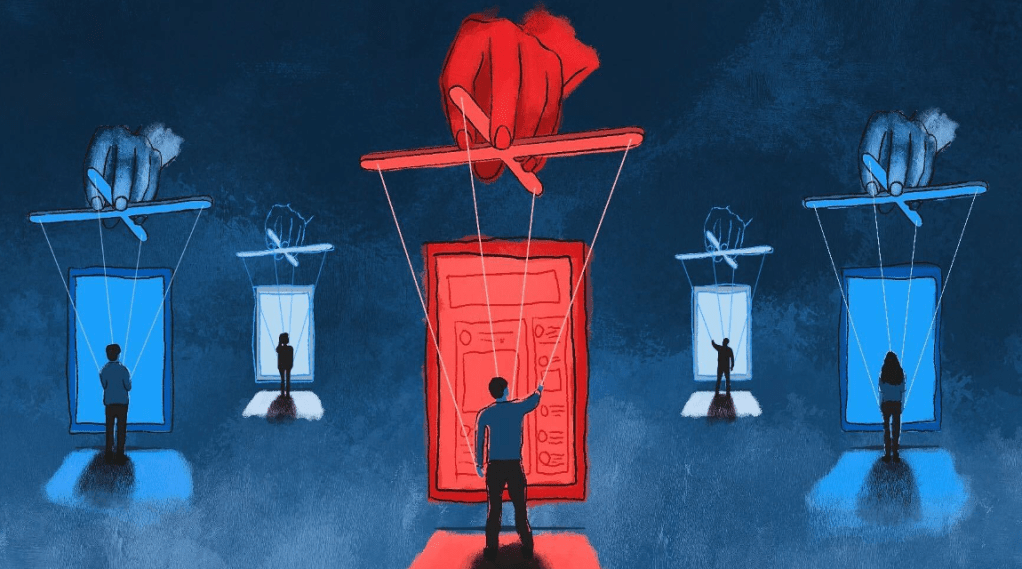
The problem is further intensified by organised disinformation campaigns. Governments and political groups increasingly exploit social media dynamics to manipulate public opinion. These networks often rely on influencers and pseudo-independent media pages to give propaganda the appearance of grassroots support. This blurs the boundary between genuine public expression and strategic political messaging.
The State and Influencer Integration
In recent years, states have integrated influencer culture into their official communication strategies, engaging social media personalities to promote policy positions and national narratives in digital spaces. In 2025, filings under the U.S. Foreign Agents Registration Act revealed that the Government of Israel funded an expansive influencer campaign targeting U.S. audiences, with select content creators receiving thousands of dollars per post to disseminate pro-Israel messaging across TikTok, Instagram, YouTube, and X. These efforts were part of a broader public diplomacy initiative that combined paid influencer content with AI-driven messaging and conventional advertising, demonstrating how governments now leverage digital intermediaries to shape international discourse and public opinion while avoiding direct attribution to formal government spokespeople. Members of the U.S. Congress have also called for greater transparency, arguing that influencers paid by foreign governments should be required to register under transparency laws such as FARA, underscoring the political significance of these campaigns. Such government–influencer partnerships reflect a global trend in which state actors exploit social media’s reach to advance strategic narratives outside traditional media channels.
These dynamics also reshape political power. Political leaders increasingly respond to online sentiment rather than deliberative institutions. Policymaking becomes reactive to viral outrage and trending hashtags. Symbolic gestures and communicative performances are prioritised over actual reforms. Digital popularity has become a key factor in political legitimacy, often overshadowing policy competence or institutional credibility.
Conclusion
The cumulative effect of these processes is cognitive overload and political fatigue. Continuous exposure to conflicting claims, graphic imagery, and moral appeals overwhelms users’ capacity for critical evaluation. Some withdraw from political engagement altogether, while others rely on simplified narratives and trusted personalities. In both cases, independent political judgment is weakened.
Taken together, these developments reveal that contemporary political communication is shaped less by rational deliberation than by algorithmic incentives, influencer authority, and strategic manipulation. While social media platforms formally expand participation, they simultaneously undermine the foundations necessary for meaningful democratic engagement. As Black Mirror anticipates, individuals increasingly surrender interpretive autonomy to systems that prioritise engagement over understanding. The result is not an informed global public sphere, but a fragmented and polarised environment in which perception outweighs evidence and visibility substitutes for credibility. Unless regulatory, educational, and institutional reforms address these structural distortions, digital politics will continue to privilege persuasion over truth and spectacle over substance in global affairs.
About the author
Delisha Clara Rao Essampally is a second-year undergraduate student of Diplomacy and Foreign Policy at the Jindal School of International Affairs. Her academic interests focus on environmental governance, geopolitics, peace and conflict studies, and the analysis of public policy and institutional frameworks that shape global action. She has a strong inclination towards interdisciplinary research, particularly at the intersection of sustainability, security, and international cooperation. In addition to her academic pursuits, she actively engages in research writing and policy analysis.
Image source: 2020-05-26-social-media-usage-at-high_wide-2ce718006c751757fe7371bc8ebe8d13e1d239ad.jpg
 NICKELED AND DIMED
