
By – Inika Gupta
Abstract
This article analyses the weaponisation of global trade, where dominant powers use sanctions and semiconductor monopolies (Pax Silica) to coerce nations. Highlighting the hypocrisy of Western sanctions against India and the resulting crisis in WTO law, it details India’s dual strategy of domestic fiscal firewalls and strategic multilateral alignment.
Introduction
The post-Cold War era of globalization operated on the optimistic premise that complex commercial interdependence would pacify geopolitical friction. Today, that paradigm has inverted. Interdependence is no longer a deterrent to conflict but rather the primary vector through which it is waged. Dominant powers are increasingly utilizing the global trade of essential commodities to exercise aggressive economic statecraft.
By deploying unilateral sanctions, export controls, and secondary blockades, these states are fracturing supply chains and plunging international trade law into an existential crisis. The global commons, once governed by market economics, has been effectively transformed into a facade of coercion.
Energy, Gold, and the Rise of Pax Silica
The modern weaponization of trade operates by choking access to critical nodes of the global economy. Instead of physical combat, Western powers use financial dominance to neutralize rival countries. They weaponize global trade by placing intricate sanctions and price ceilings on adversarial oil and gas. This economic strategy hampers enemy revenues without triggering war. Targeted nations have subsequently engineered a parallel maritime economy. A shadow fleet of aging tankers now moves millions of barrels of crude daily, actively subverting Western maritime insurance regimes.
Beyond energy, the 21st century is increasingly governed by Pax Silica, a geopolitical order dictated by the control of semiconductor supply chains. The weaponization of technology is now absolute as dominant powers restrict rivals from accessing advanced microchips and specialized lithography equipment. This silicon strategy is deeply intertwined with the control of critical minerals.
Nations holding monopolies over rare earth elements, such as gallium and germanium, are retaliating with their own export quotas. Consequently, Pax Silica has transformed mundane supply chains into heavily guarded national security assets. The freezing of sovereign central bank assets has weaponized the fiat financial architecture, prompting non-Western central banks to accelerate their purchases of physical gold. For nations fearing future secondary sanctions, physical rare minerals stored within domestic borders have become the ultimate sanction-proof asset, driving a slow but steady trend toward de-dollarization.
The Hypocrisy of Selective Sanctions
The friction between economic sovereignty and trade weaponization is highly evident in the selective enforcement of energy sanctions against India. During 2024, driven by a need to secure affordable energy and contain domestic inflation, India imported approximately 34% of its crude oil from Russia. This absorption acted as an important shock absorber that stabilized global oil prices and indirectly benefited Western consumers.
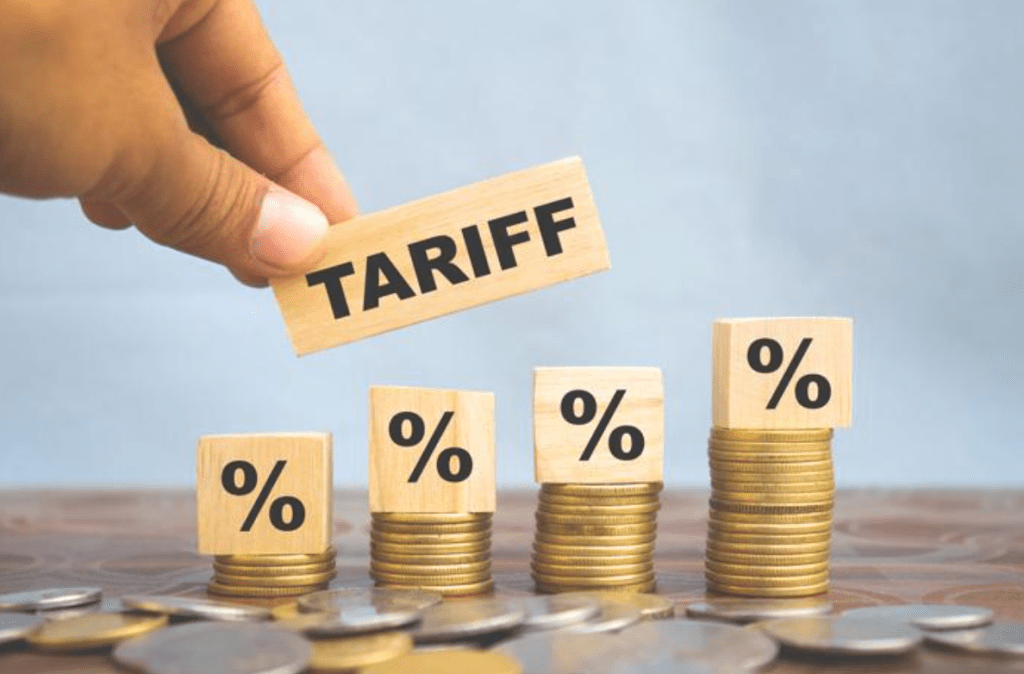
Despite this stabilizing role, Washington and Brussels have aggressively targeted New Delhi. The European Union recently implemented its eighteenth sanctions package, which prohibits the import of petroleum products refined from Russian crude via third countries, directly penalizing Indian refiners. Concurrently, a United States Executive Order imposed a punitive 50%, tariff on Indian imports, which was brought down to 18%, explicitly linking half of that penalty to India’s continued energy trade with Moscow.
These actions expose a glaring double standard. While India faces severe economic penalties, the European Union continues to import billions of euros worth of Russian liquefied natural gas, and the United States sustains its imports of critical Russian uranium. By displacing Russian oil from Western markets and transferring the adjustment costs onto developing economies, Western powers are narrowing the space for sovereign policy choices.
The Crisis of International Trade Law
The deployment of domestic trade tools to universally enforce unilateral foreign policy tests the very limits of international law. When economic sanctions pressure a state to alter lawful policies within its domestic jurisdiction, they cross the line into prohibited economic coercion. Furthermore, these measures blatantly challenge the frameworks of the World Trade Organization.
The European import bans and the American punitive tariffs contravene core provisions of the General Agreement on Tariffs and Trade. These specifically include Article XI regarding quantitative restrictions and Article II concerning agreed tariff rates. To justify these breaches, sanctioning states routinely hide behind the national security exception found in Article XXI.
However, the landmark 2019 WTO Panel ruling in the Russia Traffic in Transit case established that this exception is not absolute. Extending a national security justification to penalize a third-party state like India for trading a fungible commodity stretches the article beyond legal recognition. Ultimately, it transforms a narrow security provision into a shield for pure protectionism.
India’s Strategic Response and Fiscal Firewalls
Faced with the selective weaponization of trade law, India’s response blends domestic fiscal firewalls with pragmatic international alignment. Domestically, the Union Budget 2026-27 serves as a direct countermeasure to global economic coercion. The government recognised that its current struggles to secure energy could soon turn into shortages of important tech minerals. To prevent this, special zones were funded to process rare earth metals and launched a national plan to secure these vital resources. By eliminating customs duties on mineral processing equipment, India aims to insulate its defence and tech sectors from future export controls.
To directly counter the geopolitical constraints of Pax Silica, India has launched the India Semiconductor Mission (ISM) 2.0. India is moving toward absolute technological sovereignty by funding the indigenous manufacturing of semiconductor equipment, developing full-stack Indian intellectual property, and expanding the Chips to Startups (C2S) program to build a massive, localized talent pool. Coupled with Production-Linked Incentives (PLI) for high-volume fabrication plants, this is a domestic silicon firewall against future contingencies.
Internationally, New Delhi is actively securing its position within the emerging technological order. On February 20, 2026, India officially joined the Pax Silica initiative and signed the India-United States Artificial Intelligence Opportunity Partnership. This strategic accession leverages India’s growing mineral processing capacity to build resilient supply chains for foundational semiconductor technologies, effectively hedging against silicon embargoes.
Simultaneously, policymakers are mitigating financial coercion risks by expanding genuine de-dollarization frameworks, such as Rupee-trade settlement mechanisms and BRICS local currency initiatives, which bypass Western financial leverage entirely. Broader economic resilience is also being pursued by diversifying trade through agreements like the EU free trade agreements, while actively debating a domestic blocking statute. This dual strategy of fiscal sovereignty and strategic technological integration ensures India remains resilient amidst power conflicts.
Conclusion
The weaponization of Pax Silica, energy, and rare earth elements represents a profound regression from a rules-based international order to a power-based regime. By leveraging market access to dictate the external relations of sovereign states, dominant powers are eroding the legitimacy of global governance frameworks.
Unilateral sanctions have proven to be destructive instruments when applied to complex third-party supply chains. As recent fiscal and diplomatic manoeuvres demonstrate, the developing world will not passively accept the role of collateral damage in great power conflicts. The ultimate casualty of this escalating economic warfare may not be any specific national economy, but rather the foundational legal architecture of global trade itself.
About the Author
Inika Gupta is a third-year B. Com LL.B. (Hons.) student at Jindal Global Law School, and a research analyst at the Economics and Finance Cluster of Nickeled & Dimed. She is passionate about critically examining emerging legal and economic policy trends through rigorous, data-backed analysis.
Image Source: Navigating Tariffs and Sanctions in Your Supply Chain – Corbus
 NICKELED AND DIMED