
By — Dhruvi Solanki
Abstract
Central banks across the world are buying gold at the fastest pace in modern history. This shift is not accidental or temporary. It reflects inflation shocks, geopolitical tensions, sanctions risk, diversification away from excessive dollar dependence, and the search for financial credibility in uncertain times. By using real-world data, policy developments, and country-level examples, this article explains why gold has regained importance in reserve management. It argues that gold today functions as strategic insurance rather than nostalgia for the past.
Record-Breaking Turn Toward Gold
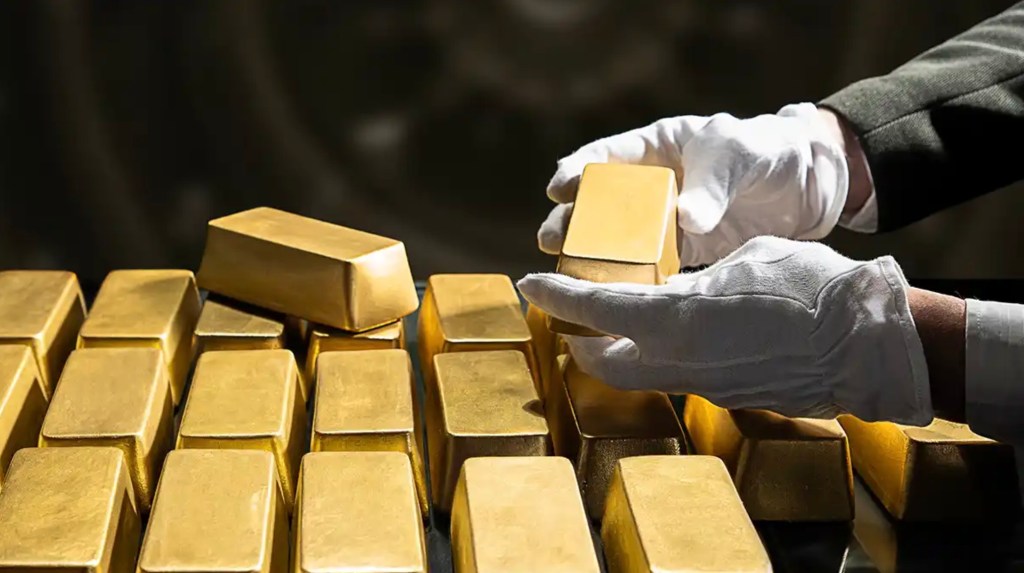
Something unusual has been happening quietly inside central banks. Vaults are filling up, not with euros, but with gold. In 2022, central banks bought 1,136 tonnes of gold, the highest annual purchase on record. Many assumed it was a one-year reaction to global uncertainty, which was not the case. In 2023, central banks added another 1,037 tonnes, confirming the shift was structural rather than temporary. To put this into perspective, these are the largest sustained purchases since modern record-keeping began in the 1950s. Central banks are not speculative investors instead they move slowly and carefully. When they act in such volumes, it signals a deep reassessment. For decades, foreign exchange reserves were dominated by U.S. Treasury bonds and other government securities. Gold had a presence, but often secondary, however that balance is now changing. Countries across Europe, Asia, the Middle East, and Africa are increasing the share of gold in their reserves. This is not nostalgia for the gold standard, rather it is risk management.
Inflation Shocks and the Return of Hard Assets
The pandemic disrupted economic assumptions as governments increased spending, central banks expanded money supply, and supply chains broke down. Inflation surged worldwide. In the United States, it peaked at 9.1% in June 2022, the highest level in four decades, while Europe experienced similar spikes following the Ukraine war. Rising inflation erodes purchasing power and reduces the real value of bonds and currency reserves. Gold behaves differently because its supply is limited and cannot be printed. History shows that during inflationary periods, including the 1970s, gold preserved value while real bond returns declined. Reflecting this logic, the Reserve Bank of India has increased its gold reserves to nearly 800 tonnes to strengthen financial stability.
Sanctions Risk and the Lesson from Russia
If inflation reopened the conversation about gold, geopolitics accelerated it. In 2022, following Russia’s invasion of Ukraine, Western governments froze approximately $300 billion of Russia’s foreign exchange reserves held abroad. The mechanics and legal background of these assets froze, which shocked policymakers globally. Foreign exchange reserves are meant to provide security during crises, yet Russia discovered that reserves held in foreign institutions could become inaccessible almost overnight. That changes how reserve safety is perceived. However, gold is different, if stored domestically, it cannot be frozen by foreign governments. It does not rely on foreign payment systems or diplomatic relations.Importantly, Russia had already been increasing its gold holdings after earlier sanctions in 2014. Data from the World Gold Council’s country holdings database shows that Russia significantly raised the share of gold in its reserves over the past decade. That strategy reduced exposure to U.S. Treasuries and dollar assets. Even those not directly involved in geopolitical conflicts began reassessing their vulnerability. Reserve managers asked themselves a difficult question: What happens if political tensions escalate? Gold provides one answer. If political tensions escalate, assets held abroad can become restricted or politically vulnerable, but gold held domestically remains under national control and outside the reach of foreign sanctions.
Diversification Beyond the Dollar
It is important to be clear. The U.S. dollar remains the dominant global reserve currency.. The dollar still accounts for the largest share of global reserves. However, its share has gradually declined over the past two decades. This does not signal collapse, it signals diversification. Reserve managers prefer balance because overexposure to a single currency creates concentration risk. If U.S. interest rates rise sharply or fiscal policy weakens confidence, reserve values fluctuate. Gold offers neutrality because it is not issued or controlled by any single government. It is not tied to the monetary policy of any single government. Gold carries no credit risk because it is not a liability issued by any government or institution. In 2023, gold overtook the euro as the world’s second-largest reserve asset by market value. Poland provides a compelling case study, as the National Bank of Poland has been one of the most aggressive buyers in recent years. According to official data from the National Bank of Poland’s reserve reports, gold now constitutes a significantly higher share of its reserves than a decade ago. Polish officials have publicly stated that gold strengthens national financial security and credibility. Diversification is not dramatic. It is prudent. And gold fits that purpose well.
Emerging Markets and Currency Vulnerability
Emerging markets often face stronger currency volatility than advanced economies. When global investors pull capital out, exchange rates fall. When external debt becomes harder to service and inflation rises, gold serves as an anchor. Turkey is a striking example of this dynamic. During periods of severe lira depreciation and high inflation, Turkey’s central bank increased its gold reserves. The World Gold Council documents Turkey’s active gold purchases and policy adjustments in its country-level reserve data. For Turkey, gold helped strengthen reserve adequacy during currency stress. Kenya has also announced plans to include gold in its reserve portfolio to diversify away from heavy dollar reliance. This policy direction was reported by Reuters on Kenya’s central bank gold strategy. For developing economies, increasing gold reserves is a practical strategy because gold helps stabilize reserve value during periods of global monetary tightening. When the U.S. The Federal Reserve raises interest rates, capital flows back to the United States. Emerging markets often suffer during periods of global tightening, and gold holdings help cushion that impact. It does not eliminate risk, but it reduces dependency.
Psychology, Trust, and Financial Signaling
Financial systems rely not only on quantitative metrics but also on confidence, and gold carries psychological weight because it is widely perceived as a safe haven during periods of market stress and geopolitical uncertainty, a role highlighted in analysis by the European Central Bank. During crises, investors instinctively move toward it. In 2008, during the global financial crisis, gold prices surged as confidence in banking systems fell. During the early months of the COVID-19 pandemic, gold again rose sharply as uncertainty spread. Central banks understand this behavior, and holding gold signals preparedness and financial strength. It reassures markets that reserves are backed by tangible assets. An analysis by the European Central Bank on gold’s role in reserves explains that gold’s performance during periods of geopolitical stress increases its attractiveness as a diversification tool. The ECB highlights how gold behaves differently from financial assets during market turmoil. This signaling effect matters especially for smaller economies. If investors believe a country has solid reserves, borrowing costs decline.When investor confidence improves, currency pressure tends to ease, and stronger gold holdings reinforce that perception of stability. In other words, gold is not only insurance, but it is also reassurance.
Conclusion
The renewed central bank interest in gold reflects a changing understanding of financial security in the global economy. In recent years, policymakers have witnessed inflation erode purchasing power, sanctions freeze sovereign assets, and currency volatility disrupt markets. These developments exposed vulnerabilities in relying heavily on foreign currency reserves and financial assets issued by other governments. Gold’s growing presence in central bank reserves signals a shift in priorities. Stability is no longer defined only by liquidity or returns, but also by resilience. Unlike many financial assets, gold does not depend on the creditworthiness of another government and remains outside the structure of modern financial obligations. This makes it particularly valuable during periods of geopolitical or economic stress. Although gold will not replace the dollar or revive the gold standard, it is regaining strategic importance in reserve management. By increasing gold holdings, central banks are strengthening their financial buffers in a world where economic and geopolitical uncertainty has become more persistent.
About the Author
Dhruvi Solanki is a second-year Economics and Finance student at Symbiosis School of Economics and a member of the Economics and Finance Cluster of Nickled & Dimed. She is an avid student of economic policy and market behaviour, with a strong interest in fiscal policy, consumer economics, and the real-world impact of taxation on markets and households.
Image Source – https://poonawallafincorp.com/blogs/financial-insights/why-are-central-banks-buying-gold
 NICKELED AND DIMED