By -Chandril Ray Chaudhuri
Abstract
“Democracy will not work for the simple reason we have got a social structure which is totally incompatible with parliamentary democracy.”
-Dr. B.R. Ambedkar
Indian democracy is largely treated as a success story based on how elections have been held on time, the people have voted and the constitution has endured through time.
That view of it confuses the difference between what is really done by the machine and what it is intended to accomplish. To the newly independent India, democracy was not just an expansive voting system; it was an assurance of equality, dignity and self-rule of a society that had been massively unequal immediately after independence. There were conditions prerequisite to the promise of democracy that were not there, social equality in the real world, the same schooling for everyone, and a people being taught how to think critically about politics. The resulting fall-through has not been a coincidence; it is a consequence of the social structure democracy sought to regulate.
Introduction
B. R. Ambedkar, in his writings and interviews, has cautioned several times that any attempt to impose political democracy on a caste system would render it more volatile than liberation. He wrote in the last address to the Constituent Assembly that political equality existing with social and economic inequality would place democracy in jeopardy. The idea discussed in this article is that Indian democracy did not collapse due to the unequal society, it was built on inequality.
This article is therefore a warning in itself and it claims that in India, democracy is mostly paper-based since there are social underpinnings that are lacking in order to implement democracy. Elections continue to occur and increasingly individuals participate yet the reality of democracy, equality and considerate discussion remain bound together by the framework.
Ambedkar’s Warning: Political Democracy With Social Democracy
Ambedkar did not struggle against democracy, he struggled with the notion that it was expected to work in India without questioning the foundation on which it was expected to function. He drew a clear distinction between political democracy (through elections and politicians) and social democracy (a society founded on liberty, equality and brotherhood). Without liberty, equality and fraternity, the political bits will only be present in a symbolic sense.
Ambedkar in Annihilation of Caste had defined caste as a system of destruction of brotherhood that divides a society into graded inequality, distributing respect and dignity unequally. Democracy however presumes that every citizen views the other as equal. Ambedkar was very specific in his speech of 25 November 1949: “We are entering a life of contradictions on 26 January 1950. Equality will prevail in politics and inequality in social as well as economic life”. He cautioned that such contradictions would soon blow up the fabric of political democracy.
Ambedkar did not care about ambition; he simply did not believe that by voting, voters could simply learn democracy. The domineering groups would take over political institutions without breaking caste and economic peckings without busting collective self-rule.
Caste, Hierarchy and the Lack of Equal Political Agency
Caste is not merely a discriminatory term, but it also takes an active form in influencing the behavior of people, politically. It conditions you to follow, to rely and to wait as it obviates independent critical agency. In Who were the Shudras? Ambedkar explained that caste assigned people’s position and made them remain in a type of cycle, which replenishes itself. Political democracy is providing citizens that are capable of thinking independently. In the caste society, you have subjects, whose politics are dictated by loyalty, fear, and patronage.
Indian political studies continue to indicate that the voting is being organized by blocs rather than by individuals. Instead of referring to caste as a cultural identity, Andre Beteille termed it as a system of power, which determines who receives resources and whose voice is represented. In that case, democracy does not really add preferences up, it merely supports hierarchies by continuing to exist.
This is not a mental illness of the voters, but the outcome of a social order which penalizes nonconformity and rewards conformity. In situations when being loyal to caste is the only way to survive, democracy is a second priority.
The Inequalitarian Education and the Faltering of Critical Political Thinking
Democracy presupposes that individuals are able to make decisions about policies, institutions, and leaders in the long run. In India, there is inequality in access to education, which greatly inhibits such capability. Although the literacy figures mask enormous disparity in the standards of schools, language access, and instructional practices, the majority of children receive rote learning that destroys their critical thinking and political consciousness.
It has been demonstrated by Jean Dreze and Amartya Sen that the lack of education directly undermines political agency by depriving it of access to information and general reasoning. This situation is still reflected in the Annual Status of Education Report where the basic comprehension levels remain low even among children who are enrolled in a school. Therefore, democracy is not deliberative but symbolic.
Ambedkar regarded education to be the foundation of democracy. In States and Minorities, he wrote that political rights without the ability to utilise them only increase domination and not freedom. The absence of education as a means to bring about critical judgment results in the voter basing his judgment on identity signals, emotional appeals, and appearance of the candidate.
The Divisive issue between the classes and ‘Freebies’, and Rational Shortrun Political Choice
All election nights are dramatic and voters are regularly morally indoctrinated to accept welfare and freebies. That moralizing lacks the reasoning of making a choice in economically constrained times. A free fridge or a subsidy is more tangible than the institutional reforms that are being abstractly discussed by families that struggle to even put a sandwich on the table.
Partha Chatterjee terms it the Politics Of The Governed whereby the marginalized individuals form the state to exist and not follow any exalted ideal. Democracy desires long-term evaluation of policy yet poverty alters the horizon. A refrigerator is better today than reforms tomorrow.
It does not necessarily imply that democracy is corrupt, and it simply seems truncated. The elections are turned into transactional neglecting deliberations. Economic inequality, according to Ambedkar, would render political equality meaningless because it would transform votes into a means of survival and not an instrument of judgement.
Tamil Nadu case study: Welfare and Democratic Limits
A good example is Tamil Nadu. The movement of the Dravidians upset the traditional power system that was Brahmin-centric and demanded welfare and social mobility. M. S. S. Pandian demonstrates how anti caste politics transformed the state representation and the public sphere. These profits should be appreciated and cannot be swept away, but prolonged populism has made the process of democracy stricter rather than liberal. Welfare programs have begun to take the place of profound ideological discussion and politicians are becoming more authenticated by personality and show than policy. Narendra Subramanian believes that Tamil Nadu mobilizing is founded on symbolic recognition instead of practical deliberation participation. The outcome is a subaltern bureaucracy that is materialistic and shallow on substantive decisions; having shifted from ideological Dravidianism to transactional welfare, after all, government benefits for social welfare purposes do not require deep democratic understanding.
Fairness in Democracy Distorted by Celebrity Politics
When movie celebrities enter politics, the boundary between acting and ruling becomes unclear. Such characters as Vijay Chandrashekhar break the line between performance and bona fide governance. Democracy limits the campaign time in order to even the playing field, however, celebrities have already established decades of campaigns in the form of movies, media and fan clubs. Murray Edelman refers to politics as a spectacle in which symbolic discourse substitutes policy discourse. The cinematic heroism used in Tamil Nadu can be a beacon of moral power in the electorate and distinguishing the fictitious virtue and the real political ability may be difficult. This level playing ground allows familiarity to prevail over criticism and popularity over responsibility.
Ambedkar’s warning about bhakti as a political movement becomes highly relevant when people study this celebrity-based voting system. In his 1949 “Grammar of Anarchy” speech, Ambedkar made the argument that people who show devotion to political leaders develop an emotional weakness which creates a fundamental threat to democratic systems. He developed his argument about hero-worship through the statement that it leads to “degradation and to eventual dictatorship” because it transforms citizens into people who follow their leaders without understanding. The political environment causes voters to see their leaders as people who should be treated like holy figures instead of their duty to represent the people.
No Credentials of Power
We have been accustomed to qualifications in medicine, law, or engineering since errors are not punishable publicly. Life, liberty and resources, however, can be taken away by politics without the same ‘gatekeeping’. It is so-called democratic openness, which is in fact an institutional failure. Max Weber also cautioned that competency and restraint must be the ethic of responsibility in politics. Democratic power is easily demagogued and incompetent without some accountability and baseline training. This is what Ambedkar dreaded when the political power was lost to both moral and institutional foundations.
Conclusion
Indian democracy is robust on the surface of appearance but fundamentally fails to be what it was promised to be. Elections continue to be held, people increase participation but equality, fraternity and critical evaluation remains in the bondage of caste, class and inequality. Ambedkar did not have hopelessness as a warning but a diagnosis: when social hierarchy enslaves the very consciousness, democracy can never prosper. Understanding this does not amount to the abandonment of democracy, it disillusions us to the way we see it in India today. Democracy in India will be more of a nominal than a substantial approach until social equality, educational change, and institutional accountability can keep pace.
About the Author
Chandril Ray Chaudhuri is an undergraduate student of law at O.P. Jindal Global University with a strong interest in critical theory, media studies, and economic politics, global and domestic. His work often deals with understanding class and resistance. He researches the morality and politics of law and its intersection with economics.
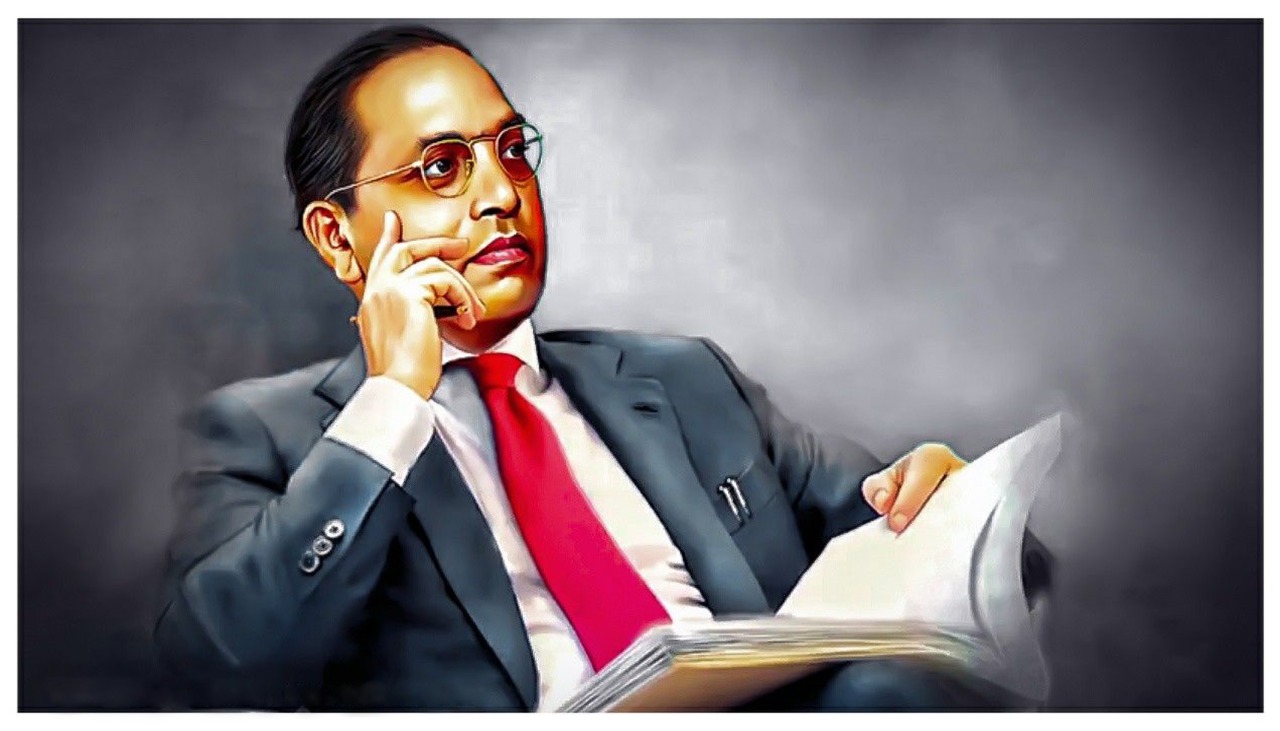
Image source: https://sabrangindia.in/wp-content/uploads/2025/04/pic13.jpeg
 NICKELED AND DIMED