
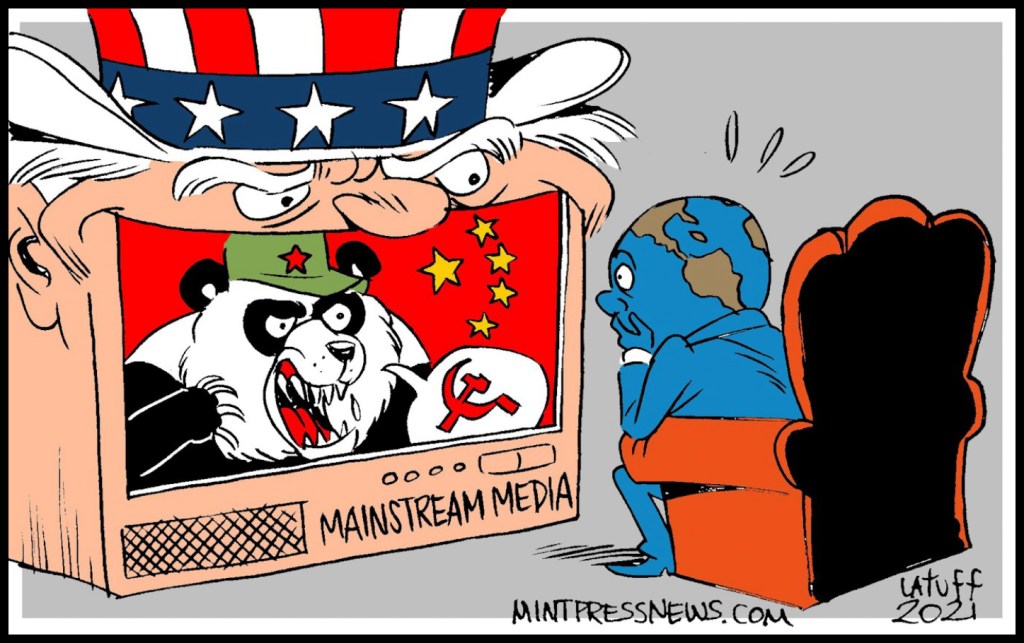
By — Hansin Kapoor
Abstract
In the new cold war of the digital age, every post and hashtag is political theatre. U.S. and Chinese tech giants are not just selling gadgets, they’re selling narratives about who matters in Africa, Asia and Latin America. This rivalry turns social media into a battleground where developing countries often become audiences rather than authors of their own stories.
Introduction
In the digital age’s new cold war, every post is political theatre. While U.S. and Chinese tech giants compete for market share, their true export is a narrative framework that dictates who matters in the Global South. This article asks, “How does the competition between the U.S. “Cyber Freedom” and Chinese “Cyber Sovereignty” marginalize the agency of the Global South, and to what extent do these platforms enforce biases that ignore or censor non-Western crises? Using a comparative analysis of infrastructure and moderation policies, the roadmap examines the “One Net, Two Visions” clash, disparate media coverage in Ukraine versus Africa, and the “Digital Colonialism” of Free Basics and Chinese tech. By assessing algorithmic bias in Palestine and the politicization of TikTok, the piece argues that the Global South must reclaim “Narrative Sovereignty” to frame its own future.
One Net, Two Visions
The U.S.- China contest over social media is as much ideological as it is technological. Washington frames platforms as tools of democracy, while Beijing emphasises sovereignty and state-led development. Yet both wield these networks to extend their global influence. Meanwhile, the U.S. has weakened its own defences. Funding cuts, layoffs, and closures have gutted Voice of America and the Global Engagement Centre, limiting America’s ability to challenge Chinese narratives just as Beijing expands its state-run media abroad.
Beijing’s push is systematic as Chinese state media and diplomats now seek spots on cable packages in Africa and prime time TV slots in Europe; they offer media training in Latin America and even cozy up to foreign publishers. A 2020 study found that CCP outlets reached “hundreds of millions” overseas, often without disclosing their origins. In sum, Washington says “free speech,” but its own retreat leaves a vacuum that China is eager to fill with a very different message. The divide has sharpened into a clear axis that is developed countries led by the U.S. railing for “an open internet” as inherently good, and many developing governments lining up with China’s “cyber sovereignty” pitch.
This clash of visions plays out on familiar battlegrounds as Washington-exported platforms often mute voices that don’t fit U.S. policy, or that question allies, while amplifying others. Conversely, Chinese tech imports to the South are sold as neutral upgrades, but come with subtle strings. Huawei, for instance, built 70% of Africa’s 4G networks; this is development aid, but critics warn it can tighten surveillance and censorship. In addition, Uganda’s security agents infamously even enlisted Huawei technicians to tap phones of opposition leader Bobi Wine. The shared pattern is clear, as both Silicon Valley and Beijing deny coercion while actively shaping the information environments in which narratives are formed. Whoever “holds the pen” thus wields the power to define the story of the Global South and influence the terms of debate.
Wartime Stories, Unheard Cries
The difference in coverage between Ukraine and conflicts in Africa or Asia is a glaring example, wherein Western media have marvelled at Ukrainian resistance, pouring out reports and rallies of solidarity. By contrast, the famine in Ethiopia’s Tigray region or violence in the Sahel barely registers on the global radar, that’s not for lack of suffering. One study finds that when Ethiopia’s Tigray war or crises in Chad “are virtually absent from news cycles, they are also likely to be deprioritized in diplomatic, financial, and public policy agendas” In other words, if the world camera never turns toward you, aid and action dry up.
Some in the Global South have taken to social media to call out this double standard, for example, on X, hashtags, accusing Western audiences of “selective outrage”, thousands of tweets protesting that “Ukrainian lives are worth more than others,” claiming Western nations care more when their allies are in peril. Whether or not those critics are aligned with any foreign disinformation campaign, their point resonates with empathy and media attention, which often follows political and strategic lines. Beijing’s camp will say the West stacked the deck, while Washington’s allies accuse China of supporting strongmen who silence their own people. In the end, the actual victims, whether in Kyiv or Tigray, suffer under narratives not their own.
Free Internet or False Start
Remember Facebook’s Free Basics? Marketed as free Internet for the “unconnected billion,” it was exposed as a Trojan horse and defeated in India in 2016 after activists warned about digital colonialism, by being passive consumers of Western corporate content, now with a curated list of mostly U.S. websites and no alternative social networks, Free Basics was condemned as digital colonialism under the guise of philanthropy.
China offers a parallel, while enforcing a Great Firewall at home, Beijing promotes projects like “Internet for All” abroad, offering free Wi-Fi and smart-city infrastructure in Africa and Asia under the banner of development. To which critics ask a simple question: if someone else decides what “free” means, who controls the conversation?
After all, Facebook’s opponents charged that Free Basics effectively let Silicon Valley decide which pages poor people could read, to which Beijing counters that Chinese tech carries no ideology, but in practice, companies like ByteDance have often cooperated with China’s narrative goals. This asymmetry tells that Facebook frames restriction as philanthropy, while China frames influence as neutrality. In short, even noble-sounding tech donations can obscure a larger conversation about whose voice is on the menu, and who’s left starving for alternatives.
Voices of Palestine
Another flashpoint is how social media tilts the scales in one of the world’s oldest conflicts, Palestinians long complained that Israeli and U.S. officials get a free pass, while pro-Palestinian speakers face censorship, in one recent review of over a thousand
Facebook/Instagram censorship cases, every single removal targeted Palestinian content, in fact, Human Rights Watch documented 1,049 out of 1,050 takedowns involved peaceful pro-Palestine posts, the one remaining case was pro-Israel content, now, this isn’t coincidence, it reflects policy choices. Meta’s “Dangerous Organizations” rules, based on U.S. terrorist lists, effectively bar any praise or support of groups like Hamas, as Washington-issued labels thus echo through Silicon Valley’s code.
Global South critics on social media claim the algorithms “interpret” Palestinian solidarity as violence, while sympathetic coverage of Israeli actions runs with barely a warning. No surprise, then, when governments in the Global South react to domestic unrest by blaming foreign platforms for “partiality.” It’s a two-way street, a Western head of state may call out Chinese TV for propaganda, just as Beijing lashes out at CNN for “biased” interviews in Xinjiang, now meanwhile, the Palestinians perspective is faint on both screens, therefore, the moderation policies, though often framed as neutral community standards, can have geopolitical flavor and for the Global South, that can mean being muzzled or misrepresented by the same megaphones that claim to connect us all.
TikTok and the Tech Trade War
Sometimes a single smartphone app becomes the symbol of this tug-of-war. For example, take TikTok, a Chinese app of global youth culture, remember when India banned TikTok along with dozens of Chinese apps in 2020 after a deadly border skirmish with China, it was hailed as a stand for data sovereignty, now here critics pointed out that TikTok’s Chinese counterpart, Douyin, was painting India’s soldiers in a poor light after the clash, a chilling reminder that even an emoji feed can be politicized. In the United States, lawmakers and regulators have similarly claimed that TikTok could channel user data to Beijing or subtly promote pro-China messages, though these remain allegations rather than proven facts.
Washington, however, engages in its own games by openly complaining about China’s information influence abroad, yet American tech platforms sometimes slip content aligned with U.S. foreign policy without disclosure. Moreover, when the West shuns Huawei on security grounds, China turns the tables by banning Facebook, Google and YouTube at home, then accuses Silicon Valley of “ideological manipulation.” Now here, each side casts the other as the manipulator. Interestingly, the reality for users in the Global South is more confusing as the government’s talking points and social media memes can blur together, whether launched by a Russian troll farm or a Silicon Valley algorithm.
Conclusion
In the end, the Global South cannot afford to be the silent audience of others’ narratives. If Washington and Beijing keep duking it out over whose tweets get trended, then the world’s two-thirds population will just be props on someone else’s stage. The battle for hearts and minds online is far from over, but one thing is certain, if the Global South doesn’t write its own script, it risks replaying a script written elsewhere, against the convenience of pre-packaged opinions, nations must insist on narrative sovereignty, the right to frame their own revolutions, pandemics, and progress, without filters set by faraway capitals, at last, the game can only be fair when every player gets to speak for themselves.
About the Author
Hansin Kapoor is a law student fascinated by the human stories hidden within geopolitics.
Image Source:https://www.mintpressnews.com/so-it-goes/editorial-cartoon-us-media-manufcaturesconsent-war-china/
 NICKELED AND DIMED