
By – Nandini Pandey
Abstract
An imbalance in occult practices for centuries had resulted in an oppression towards its women practitioners, who were seen as witches, easily possessed, a threat to society. Such long-drawn oppression and imbalance was countered and repealed by two modern occult groups : The Theosophical Society, and the Hermetic Order of the Golden Dawn.This article, by examining the practices of both groups, establishes how, though the two were excessively different in their practices and beliefs, had lasting impacts in the emancipation of women. The article analyses how, by providing women a space to practice and experiment with their authorities, the two societies helped build in the 20th century women a confidence, which was to aid the feminist cause for decades to come.
Introduction
The occult, a category of supernatural beliefs, has long been a part of history, and was revived again in the 19th century as modern occult. In its practice, occult has been understood by scholars to be highly gendered, where men are seen as keepers of knowledge, and women the withholders of intuition. Such biases have not been without consequences. These beliefs have led to a historical pattern, where, in the world of occult, women have automatically been assumed to be easily possessed, witches rather than magicians, and been exposed to ruthless experiences such as witch hunting. Such prosecutions were due to the easy manners in which witches were villainised, whether it be for political reasons, with the rich wanting to alienate the poor associating their problems with them, or for religious reasons, where the killing of witches was seen as enough action to confirm one’s belief towards one faith in Christianity.
A more modern interpretation of viewing the occult women in such a manner had been the idea of their criminalisation, and looking at them as perpetrators executing fraud. Such narratives made the practice of the occult something to be feared or respected, but its women practitioners, someone to be detested, and suppressed.
In such a context, where the mystical powers of women were often used as an excuse to subject them to oppression and differential treatment, certain societies emerged, which on the foundations of these very features, were able to garner for the occult women a space of authority, freedom, and experimentation. The Theosophical Society as well as the Hermetic Order Golden Dawn through their small steps towards empowerment of women have created spaces and confidence in women that have aided in building a more equal world we know today.
The Order of Golden Dawn : An Empowered Western Woman
The Golden Dawn was a society established in 1888, with intent to put in practice mystical ideas, rather than conserving them to mere academics, and include the occult sciences of Tarot, and alchemy amongst others.
The society at its very initiation took 3 female candidates out of 9, a rare occurrence for the Victorian era British, where women were understood to be someone to be automatically separated due to their difference in biology. Husbands and wives often joined the order together, and by 1900, the Second Order had an even number of men and women.
The society included in its proceedings, the examining of the social function of magical work. This was used to examine women’s problems, and further their cause by framing these as problems involving universal entities. The society also recognised the equality of female god forms, and used the practice of Tarot to celebrate the concept of equality in humankind.
The group thus had an impact on women’s movement through such processes that worked towards instilling equality. The practices of the Golden Dawn opened another sphere through which women were able to recognise their own freedom. The society provided women who were so used to being confined, a space to practice their beliefs, their cultures, a space to have authority, and to further experiment with it, nurturing in them a confidence to be able to carry on such practices in the rest of society. However even such initiation of a process of an emancipation was limited to certain wealthy, aristocratic women, who are acknowledged to date. Women of lower classes on the other hand, found little such mention or promotion in history.
The Theosophical Society : The Unmasking of Indian Women
The Theosophical Society differed from the Golden Dawn in several aspects. Founded in the USA, it was a society based on spiritualism rather than mystics, and limited its practices to those academic in nature. The Theosophical Society further looked at the East with a romanticised lens as the carrier of the exotic occult, with wider knowledge and secrets of magical practices, a place to be studied and understood. Such ideas drew from the viewing of the Oriental as the carrier of mysteries, and magic, and brought the Theosophical society with all its members to India.
However, the society did not, with its arrival, only unravel those aspects of occult it wished to deepen its knowledge on, but also took it upon itself to help the Indian people in their struggle for freedom, and furthermore, help uplift Indian women, by setting up the Ladies Theosophical Society soon after its arrival. They further formed the Women’s India Association in the coming decades to contextualise the challenges of women in India. This had always been a part of the society’s intention, for it wanted to provide the female participants of the society a distinct space of power, since they were the ones who held important positions in the realm of spiritualism.
An idealisation of India thus led to change brought by the Western elite, where a Western society took it upon itself to bring change in a country of the East in the name of spiritualism. Instances like the adoption of the young boy Jiddu Krishnamurti to declare him the ‘world teacher’ and use his presence for the furtherance of the society’s cause are examples of this exhibition of Western paternalism.
The Ladies group soon saw its end, which was eventually followed by the disappearance of the power of the Theosophical Society itself, once Krishnamurti decided to withdraw from his position, and many of the first generational members passed away.
However, the society was held responsible for certain positive outcomes. Women like Swarnakumari Devi were examples of this. Devi had taken the role of the Secretary of the Ladies Theosophical Society, and at its disbanding founded the Sakhi Samiti club, which eventually emerged as the first autonomous women’s association in Bengal. She further became the first woman to advocate for scientific knowledge amongst the women in India. Her close work with Annie Besant, another dominant member of the Theosophical Society, and her role in showing a conservative society the potential of women in taking up the male-dominated fields of leadership and power helped change the perceptions and ideas of the people of the country.
Conclusion
There were various differences that marked the societies discussed in this article.
While the Theosophical society was focussed on spiritualism, and romanticised the East as possessing greater occult knowledge than the West, the Golden Dawn was focussed on actual magical practices, and believed in Western esoteric traditions as a form equal to, and not inferior to, the Eastern practices. Thus, while the Theosophical tended to be attracted to the East, the Golden Dawn presented itself as more Occidental in nature and remained rooted to the West. The two societies however were similar in their work towards a feminist cause, which had substantial benefits of upliftment for many women of elite society associated with them. The societies offered these women a space not only equal in position to men, but also free to experiment with their authorities, a phenomenon that was lacking, and far from imaginations in common society. These women were offered a place to satisfy their thirst for intellectual knowledge, at a time when their education had to be limited, they were able to create a bubble to engage in those practices, which the rest of society for all of their lives had prohibited.
Therefore, the Theosophical Society, and the Golden Dawn, in providing the women of the 19th and 20th century a space for cultural and social experimentation, were able to build within them a growth and confidence, which could not simply be erased or suppressed. This confidence was able to reinforce women’s agency, which helped enable feminist movements amongst women of other classes both in the West, and in India for decades to come, and bring about positive changes that were long overdue.
About the Author
Nandini Pandey is a second year student at O.P. Jindal Global University pursuing a bachelors in Law.
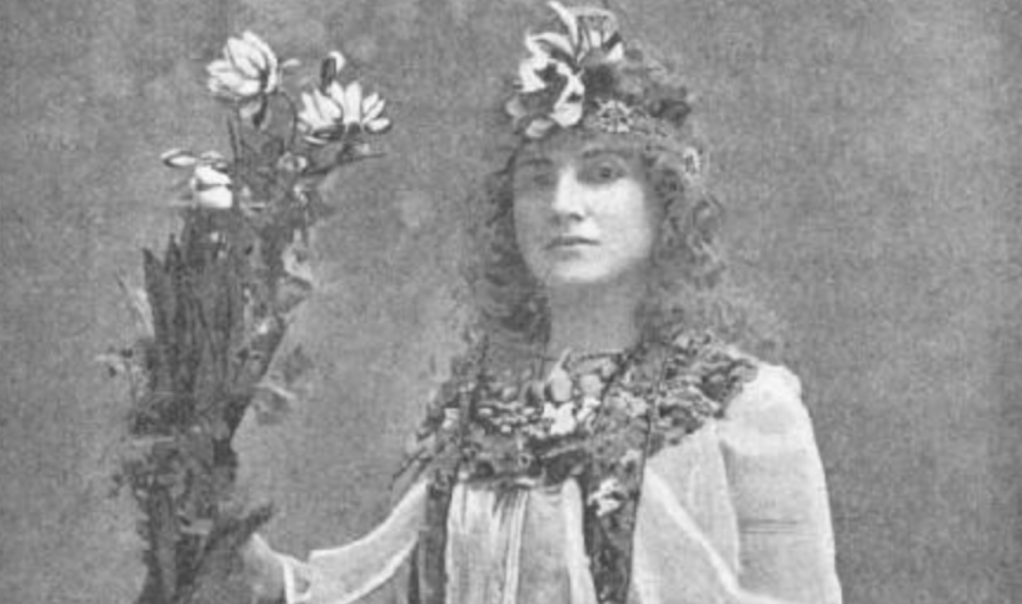
Image Source: https://www.findagrave.com/memorial/278946143/moina-mathers
 NICKELED AND DIMED