
By – Chandril Ray Chaudhuri
Abstract
Will the system of oppression persist if social inequalities are solved but not economic disparity?
A resounding no is the answer in the far-left school of thought. Whereas an activist can call themselves woke and emphasize identity politics, race, gender, sexuality, and other identifying signs, communists and deep-red theorists believe that these are only the tip of the iceberg that is economic inequality. When the same financial elite remain deep-rooted in wealth and power, any initiative that only aims at superficially polishing the social identities is simply an indication that the working population is only distracted by the very problem, that is, the class.
Introduction : Economic Disparity as the Root of Oppression
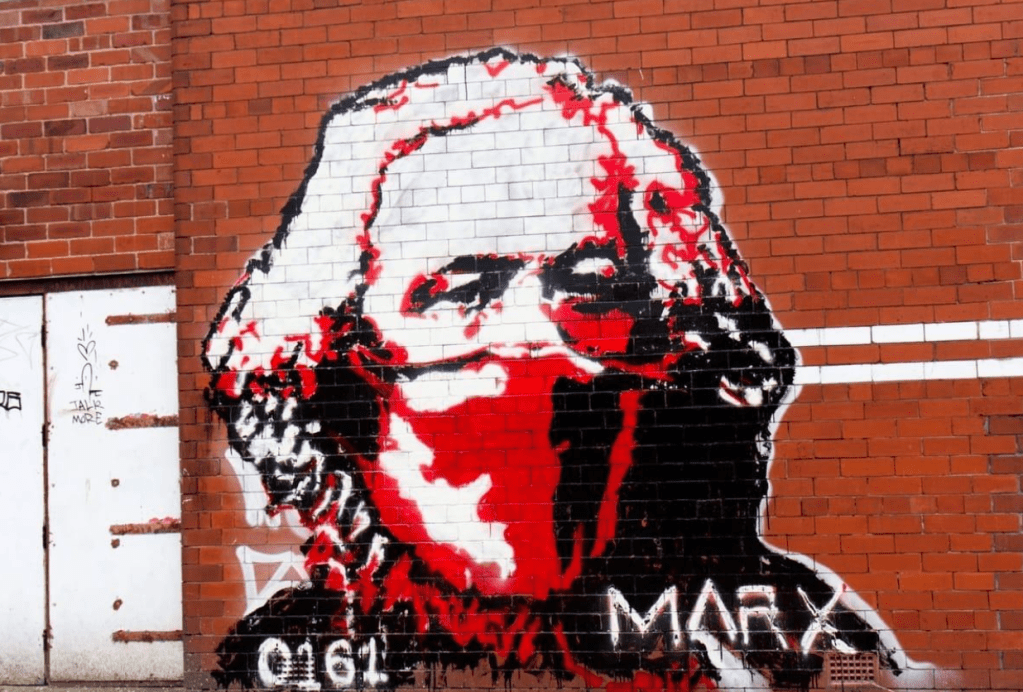
The class theory is a descendant of Marx, who is known to have once said that the history of all societies that have hitherto existed is the history of class struggles. He debated that the capitalist mode of production is too exploitative, since the proletariat sells their labour to the bourgeoisie, the owners of the means of production. When this central relationship is eliminated, then the whole system of social order falls apart. This is the reason why left-wing philosophers insist that class solidarity and class consciousness are inalienable weapons to bring the system down.
By contrast, the emphasis placed by the woke culture on micro-aggressions, white privilege and gender dysphoria are the main centres of oppression. These issues are commonly presented within a larger social justice agenda, though they seldom question how wealth is distributed or ownership of productive resources. In turn, the far left views the concept of “wokeness” as a move of identity politics with the ability to divide the working population into competing groups.
The Elite’s Role: Funding and Co-Option
Financing is one of the most vivid forms of infiltration by the economic elite in the wake of movements. The largest tech firms, hedge funds, and billionaire donors offer grants and sponsorships to nonprofits and media organisations that preach identity-based agendas. An example is the hedge fund managers who contributed a lot of funding to the organisation known as MoveOn, focusing on progressive policies that give corporations more influence.
In addition, companies also roll out campaigns of diversity and inclusion that are celebrated in the press, but in most cases, it is a marketing strategy because of the brand image, not the egalitarian motive. In a 2023 paper, it was discovered that 61 per cent of the corporate diversity programs in the United States were undertaken in order to enhance the image of the company. Such efforts are allegedly progressive, but they only tend to calm down the anger of the workers without solving the wealth disparity.
Moreover, some socialist-minded intellectuals have taken the “woke” story and interpreted identity politics as a pathway to more general liberation. But when the very intellectuals co-operate with middle-class funders, the movement becomes a diluted or sanitized form of progressive politics, usually silent on the issue of class that the far left considers to be a necessity.
State‑Sponsored Programs: PR or Policy?
Governments have often introduced state-supported programs that seem to advance social equality but serve more as publicity tools than policy changes.
Reservation Policies in India
The Indian state introduced a reservation system in education and jobs to correct historical injustices against the Scheduled Castes and the Scheduled Tribes. Although the idea itself was well-intentioned, the critics believe that the policy mostly favours the high caste members who can use the system, and that the benefits are unevenly distributed.
Affirmative Action
In the United States, university affirmative action has been periodically upheld through Supreme Court decisions, but the advantageous effects are experienced mostly by students who belong to wealthy families and have access to the best schools instead of the rest of the marginalized communities.
Social Housing Initiatives:
European governments frequently subsidise social housing, though the projects are often driven by the desire to demonstrate the renovation of the city instead of resolving the deeper issue of systematic under-investment in public services.
These programs are examples of how state action can be captured to manage images: “The state is doing its job because we are doing this” is a handy catchphrase on the part of the ruling class, which obscures the further concentration of capital.
Does Solving Social Inequalities Automatically Resolve Economic Inequality?
The far-left point of view is that the elimination of social inequalities— in anti-racism movements, LGBTQ+ movements, or gender equality— does not necessarily imply the elimination of the economic ones. “Woke” movements tend to embrace cultural and not material change, thus forming a war on identity, that can be used to ignore exploitation based on class.
As an example, the Black Lives Matter movement has already seen major cultural wins, such as the prohibition of drone policing and the adoption of restorative justice, which, in the vast majority of cases, do not change the ownership of the economy. Employees continue to sell their labour to the very capitalist employers that finance the opponents of the movement.
The far left, on the other hand, holds that once economic inequality is addressed, then many social hierarchies would automatically break up. In case the distribution of wealth is done in a more balanced manner, the line between classes will be less pronounced, and the pressing demand of identity politics will be reduced. However, it is important to note that the idea of a fully communist or fully capitalist society is near-utopian, bordering paradoxical, and believers of both economic models may only chase those ideals to create a society that functions well.
The idea of dictatorship of the proletariat by Marx presupposes that the strength of the classes is the driving force behind the further evolution of society, and the creation of a society that works for all, not just the economic elite.
The Danger of Fragmentation and Diverting Vectors
The identity, as one of the central concerns of Woke culture, may produce so-called “vectors of distraction” that dismember the common power of the working class. Class-based solidarity is watered down when activists struggle over which is right and which is not: white privilege or gender dysphoria.
The 2021 MeToo movement effectively exposed the predatory effects of sexism in one of the largest working industries in the world.
It created global awareness of gender-based discrimination and power imbalances, especially within workplaces and media industries. By amplifying women’s voices through social media, it challenged long-standing cultures of silence and demanded accountability from powerful figures previously shielded by institutional hierarchies.
However, many of its participants later engaged in what is often described as “woke capitalism,” using activism on social media as a means of profit and visibility.
Brands and influencers began to capitalise off of feminist discourse, turning political resistance into a marketing tool that generated revenue while signaling superficial moral virtue rather than structural change.
In doing so, they ended up reinforcing the very patriarchal structures brought about by capitalist greed, that the movement was originally meant to challenge.
This commercialization redirected attention from collective liberation to individual branding and consumption, transforming radical critique into marketable identity politics that sustain inequality instead of dismantling it. The movement’s moral urgency was thus diluted by economic interests, leading to accusations of “pink-washing” and “woke-washing”.
From a far-left perspective, the primary danger lies in the way identity politics can be used by the economic elite to divide marginalized groups, rendering them incapable of fighting against the capitalist core.
This is the same approach followed by the French philosopher Louis Althusser, who referred to this as an ideological state apparatus, in which institutions (schools, media, corporations) influence the consciousness in a manner that preserves the status quo.
Conclusion : Re‑imagining Solidarity – Class Consciousness Meets Intersectionality
With all these criticisms, certain organisations on the extreme left are trying to make an attempt to combine both class and identity politics into a solid framework. The intersectional concept to class analysis implies that structural oppression is economic, racial and gendered at the same time. According to such scholars as Patricia Hill Collins, the only type of revolution should be focused on both material circumstances and cultural identities.
Nevertheless, to achieve this, the movement should not be based on corporate funding that reinforces structures that it is supposed to break down. Examples of alternative models that are based on both class solidarity and intersectional justice include grassroots organising, cooperative ownership, and community land trust.
About the author
Chandril Ray Chaudhuri is an undergraduate student of law at O.P. Jindal Global University with a strong interest in critical theory, media studies, and economic politics, global and domestic. His work often deals with understanding class and resistance. He believes that socialism is an inherent mandate to studying law and that granting universal access to all aspects of governance and culture is not merely a legal issue, but the basis on which the idea of a nation exists.
Image Source : https://www.compactmag.com/article/was-marx-woke/
 NICKELED AND DIMED