
By — Nandini Pandey
Abstract
The Adivasi population of India is diverse and consists of various different groups and tribes. Despite their differences in practices and culture, they stand united on the grounding of exclusion and suppression that they have faced from society for generations. This essay examines such oppression through the works of tribal literature. By analysing two pieces of literature written by Adivasi authors about their oppression and rights, the essay establishes how such work speaks volumes about the actions of varying and developing societies and helps reveal what is generally pushed under the rug. Furthermore, the better dissemination of tribal work in recent history gives us, as readers, the opportunity to understand histories we were never taught existed.
Introduction
The diverse and large population of India encompasses in it hundreds of tribes with various cultural practices, beliefs, and customs. Adivasis, who make up about eight percent of India’s population, have lived on the subcontinent long before the Aryan invasion. Their society, whose customs were often not understood, or looked at with disdain, often maintained separation. and such independence continued into the years when the Indian subcontinent saw on its soil the largest of empires emerge. Their neighbouring non-tribal residents did not interfere in their practices and both sides followed a system of mutual respect and alienation, a system that went on until the end of the Mughal period, kingdoms preferring to leave the tribal communities to their own devices and systems.
However, an inconsistency was triggered in the earlier maintained balance with the arrival of the British. At a time when the British wanted to establish central administration, the tribals and their land suddenly came under the system of ‘law and order’. They were now required to pay taxes, and merchants could simply seize their lands to create factories under the protection of the British authorities. Thus an uneven integration was enforced, the authorities being strangers to tribal culture, and thus refusing to keep in mind their rights and accommodations.
An independent India aiming for a more unified and integrated society nevertheless followed suit, for this integration was based on the neglection of the customs of those on the margins. People had to fight against Hindi as the common language, and the scarce number of representative tribals advocated in the Constituent Assembly against the banning of alcohol, an item of religious importance to many Adivasi groups.
Despite such discussions taking place to prevent the further marginalisation of the Indian tribes, independent India did not do well in maintaining the safety and security of the tribes. Movements such as the Hinduisation of tribes began to cage tribes into systems foreign to them like the caste system, leading to an unwanted oppression. Tribals were treated almost as sub-humans, with others using them merely for labour, and ruthless torture.Though films such as ‘Aakrosh’ were monumental in depicting the kind of cruelty being inflicted, rarely were actions taken to prevent it.
In this context the following essay seeks to look at the role of tribal literature in revealing these imbalances in power. By looking at two pieces that are contrasted in terms of their authors, and style of writing, but united in their motivation, the piece expresses how over time this literature has accumulated, and that its discovery can lead to a more learned generation that may be more sympathetic of how accommodation and recognition of rights may be possible.
The Demand for Future
Jaipal Singh Munda was a sportsman, politician, and leader of the Adivasi deputation, eventually becoming one of the most articulate voices of his community. Mr. Munda gave a multitude of speeches and papers for the Adivasi cause that were only very recently collected. The strongest of these speeches was the one that he addressed to the Prime Minister of Bihar in 1939. In a straightforward manner, without hesitation, he brought out multiple grievances of his community. He encountered the matter that the legislative was not only without Adivasis, but also without those who had any knowledge of them or their needs. He spoke of equal representation of parties in District Board elections. He pointed without reluctance towards the misrepresentations spread about the Adivasi population. He spoke of the Hinduisation of his people, and against such a process resulting in many tribals not being accounted as aboriginals. He demanded that only those well versed with Adivasis be posted in excluded areas.
In each of these arguments and demands, Munda was able to cite research, or use logic to target governmental policies. Furthermore, the same was addressed in a language understood by majority, English. Thus he was able to give a large scale problem, a large scale platform to display its context. Compiling it as literature has given it the opportunity to be preserved in a more stagnant manner, such that it may be more accessible. However, there may be other pieces of movements that, though unable to reach out to the country at large, play the role of echoing with the people they speak of, invoking feelings that may create large scale impacts. These little forms of literature may not speak in the worldly understood English, but they speak in the language of the people who most understand them. These excerpts may not be a structured speech, but follow the waves and patterns that echo most with their memories and lives.
Ten Lines of History
Racane Honge Granth
(We Will Have to Compose New Texts)
Your history,
Is not etched in words,
In the pages of history
Nor were tales of your victories and your struggles
registered in tomes
Your witnesses are the trees, rivers, rocks
The spirits of your ancestors
The Sasandiri
Jaherthan
And your folksongs.
Mahadev Toppo is neither a politician, nor a leader. His work does not directly demand rights from authorities. It may not echo in the offices of authorities, but it resonates with the chords of all those tribals that may find themselves and their plights going unnoticed.
The poem, translated from the Kurukh language, speaks of the trespassing that has plagued the tribals ever since the interference with their land and culture began. Solely because they do not worship idols, or because they pass down their histories orally, their cultures and foundations are discredited, they are attempted to be included in religions they were never a part of, imposed with rules they had never heard of, deprived of their land by people they had never seen.
Using the method of personal deixis, one common to many tribal authors, where the poet speaks to the reader directly, through identifying an “I” and a “you”, Toppo speaks to his Adivasi readers from the point of view of the encroacher, triggering memories particular to them, the extent of which readers like myself can only imagine.
He speaks of the Sasandiri, the burial grounds of his tribe, Jaherthan, the sacred grove of worship, and their folksongs, the way in which they have passed down stories for eras, and it is through these things, that are so personal to himself, and his fellow people, that he fights for his tribe. He contests and claims that though there may not be pages of history he can hand down, it nevertheless stands etched and ephemeral in these spirits so sacred, so spiritual to him, and thus he establishes his full faith in them.
In ten lines, Toppo accuses the oppressor and confronts centuries of false accusations.
Conclusion
The two pieces of literature taken in this essay can be seen as contrasting. One is an address in English, the other in the Kurukh language of the Oraon tribe. One was spoken directly to the Prime Minister of Bihar, the other merely hoping to reach an audience that may understand. One is sharp and demanding, the other, more subtle in its expression.
Yet the two are united by the fact that they speak for the same cause. Their unity lies in their history that for over centuries has felt an imbalance, a suppression and an ignorance. The emerging tribal literature is helping unwind the consequences of a juxtaposed integration and exclusion, where tribes are both expected to integrate with the rest of society, but are scrutinised for their practices and rituals. Organisations like Pyara Kerkatta Foundation are helping publish works of tribal writers that go unnoticed. The compilation and publishing of the works of Jaipal Singh Munda, who has been unnoticed for his contributions in history, is an example of this.
At a time when tribal writers are being given the chances and platforms to expand, when unheard stories are finally being given the space to speak, engaging with tribal literature becomes essential if we are to reckon with the histories India has long ignored.
About the Author
Nandini Pandey is a second year student at O.P. Jindal Global University pursuing a bachelors in Law.
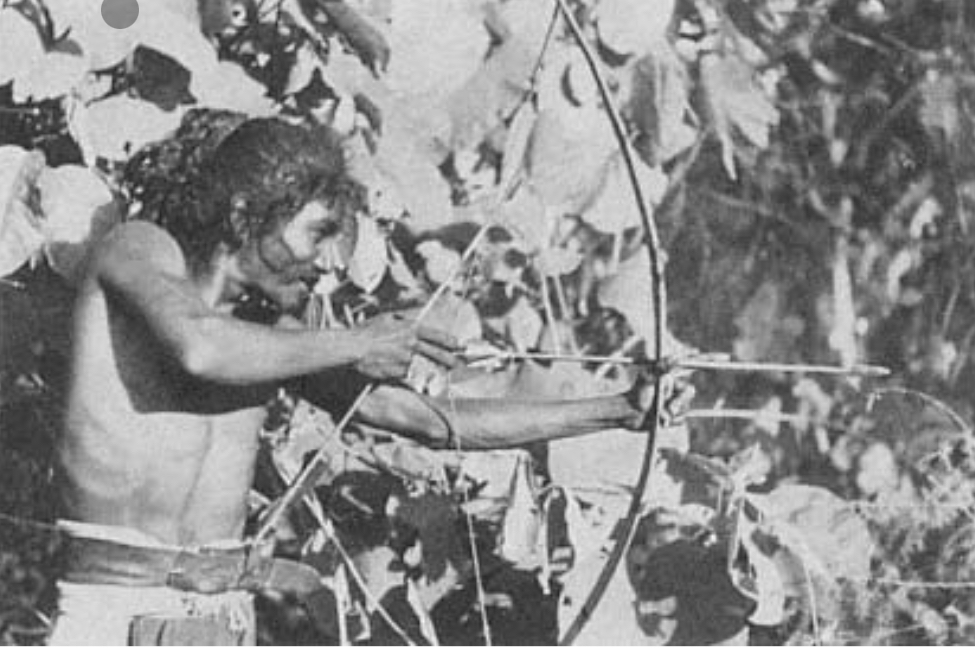
Image Source : https://publishing.cdlib.org/ucpressebooks/view?docId=ft8r29p2r8;chunk.id=d0e91;doc.view=print
 NICKELED AND DIMED