
By – Hritika Mishra
Introduction
Refugee crises are not new to South Asia. From the 1947 partition of India and Pakistan to the Rohingya today, every conflict has left behind displaced people. India, despite no formal refugee law, has hosted refugees from many countries, such as Tibet, Afghanistan, Myanmar, and Sri Lanka. Shoojit Sircar’s Madras Café is set during the Sri Lankan civil war, and while known as a political thriller, it is rooted in the history of violence and displacement in South Asia. The film depicts the violence faced by thousands of Tamil families in the 1980s as they were forced to cross the sea to India. It also invites us to consider and discuss India’s refugee policy and the implications for people who are caught in the crossfire. The film’s fictional LTF is very close to the real-life LTTE (Liberation Tigers of Tamil Eelam), and the story mirrors the Indo-Sri Lanka Accord of 1987, the intervention by the Indian Peace Keeping Force, and ultimately the assassination of Rajiv Gandhi. By fictionalizing the names while sticking closely to the real timeline, the film was able to avoid controversy while maintaining authenticity. This narrative choice, however, raises an essential question: as the film follows the conflict between the intelligence agencies and the militant group, what happened to the ordinary Tamils who faced displacement because of the same conflict? This article attempts to consider the lived realities of ordinary Tamil citizens and situates them within India’s complicated refugee policy. In doing so, it underscores how cinema can serve as a prism through which state responses to refugee crises may be understood.
The Sri Lankan Civil War and Black July
To understand the questions raised through Madras Café, it is essential to revisit the Sri Lankan civil war. This war began in 1983 due to ethnic tensions between the Sinhalese-majority government and the Tamil Minority demanding autonomy, headed by the LTTE. In July 1983, or more notably known as Black July, lasting from July 23rd to July 30th, state-sanctioned violence emerged against Tamils across Sri Lanka. Mobs, often through voter lists, targeted Tamil homes, businesses, and places of worship. Thousands of Tamils were killed, women were raped, and many Tamils were displaced. Black July not only marked a turning point in the Sri Lankan Civil War but also cemented the refugee crisis that India continues to grapple with today. India’s response to this ethnic violence was complex. India strongly condemned the violence and sent a peacekeeping force to help conduct fair provincial elections. However, these political events have been addressed by the movie. This article is an attempt to move away from the militarized narratives towards the lived realities of Tamil refugees and how these realities intersect with India’s refugee policies.
India’s Response
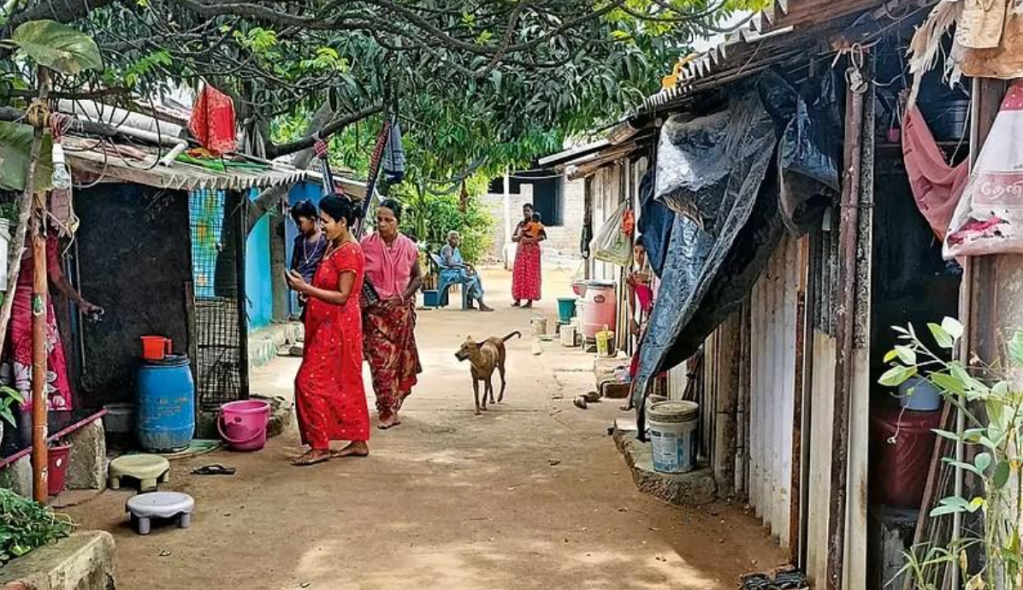
After the violence of Black July, over 300,000 Tamils fled Sri Lanka and entered India as refugees. India’s response was politically assertive as it balanced humanitarian concern with diplomatic pressure. The influx of refugees occurred in waves from 1983 to 2022. Currently, 62,000 Sri Lankan refugees are estimated to be living across 107 camps in Tamil Nadu and around 37,000 outside camps. India is not a signatory to the 1951 Refugee Convention and treats refugees as “ordinary aliens” under the Foreigners Act of 1946. Even though India has provided refuge to the Sri-Lankan Tamils, there remain several gaps. The camps in which these refugees reside are overcrowded and have severe infrastructure gaps, such as poor water, sanitation, and a lack of medical facilities. The camp residents are also required to attend mandatory roll calls and are under constant surveillance. While the non-camp refugees have more mobility, they also lack education and employment opportunities and must regularly report to the police station. These refugees are now in a legal limbo as they belong to neither India nor Sri Lanka and lack citizenship pathways, as they were excluded under the Citizenship Amendment Act, 2019.
This predicament faced by the Sri Lankan refugees in India began with the long history of statelessness imposed on Tamils within Sri Lanka itself. Beginning with the Ceylon Citizenship Act of 1948 and the Indian and Pakistani Residents Act of 1949, almost one million Indian-origin Tamils were excluded from the Sri Lankan policy. Later, through agreements such as the 1964 Sirima–Shastri Pact and the 1974 Sirimavo–Indira Agreement, it divided responsibility between Colombo and New Delhi but left hundreds of thousands in legal limbo for decades. While the 2003 Grant of Citizenship granted relief, it came too late for many refugees who had already suffered from extreme violence and displacement. When these refugees crossed the border to India, their legal status was effectively reproduced as they were given temporary camps and protection, but no pathway to secure citizenship. Madras Café reflects this ambiguity. As the film places the intelligence agencies and the geopolitical negotiations at the forefront, the refugees appear only as displaced bodies with no voice or agency. This absence of their voice tells us how cinema reflects the silence of policies even while narrating conflict. By critically analysing cinema, we can see how it both conflicts and reveals the lived realities of ordinary citizens who are impacted by the conflict.
Conclusion
The story of the Sri Lankan Tamil refugees in India depicts the balance between hospitality and hostility that India attempts to strike in its refugee policies. While India extends sanctuary to thousands of refugees from various countries, it does so with no legal framework and thus leaves the refugees in a legal limbo. Madras Café helps make this tension visible (albeit indirectly) by focusing on the militarized narrative rather than the voices of ordinary refugees. This invisibility reflects the political reality of refugeehood in India, as refugees continue to receive protection without belonging. This legal limbo severely restricts the refugees’ ability to access education, employment, and basic services while placing an additional administrative and economic burden on the host communities. At the same time, India’s approach reflects consideration of the geopolitical situation as India balances humanitarian assistance and strategic interests. Addressing these gaps would require the implementation of a formal refugee framework that would balance protection and integration of the refugees with sustainable resource allocation.
Author’s Bio
Hritika Mishra is a second-year student in the five-year integrated law programme at Jindal Global Law School. Her research interests lie in law, policy, and social justice, with a particular focus on gender rights, child and youth justice, and the role of legal systems in promoting equitable outcomes.
Image Source: https://www.outlookindia.com/national/refugee-to-illegal-migrant-journey-of-sri-lankan-tamils-to-india-magazine-304250
 NICKELED AND DIMED