
By – Siddharth Gokhale
Abstract
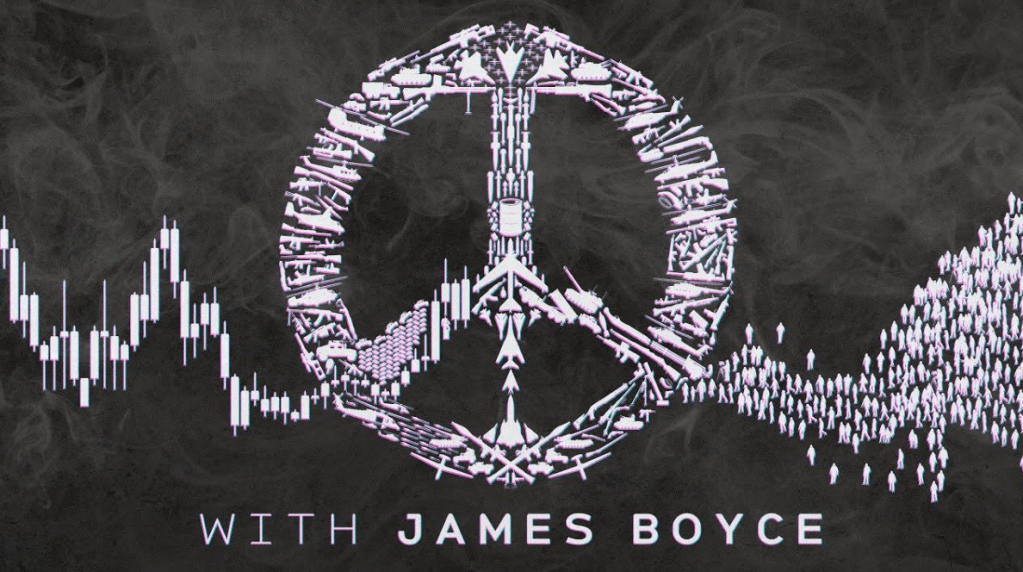
The Economics of War & Peace presents a compelling and deeply critical re-evaluation of conventional economic policy in post-war and fragile states. Its core thesis is straightforward yet profound: economic policies and analysis, often seen as neutral tools for development, are in fact powerful instruments that can either lay the foundations for lasting peace or, through negligence or competing interests, reignite the embers of violent conflict. Moving beyond a simple pro-development stance, Prof. James K. Boyce advocates for a fundamental reorientation of economics to prioritize “investment in peace” as a primary, and often overriding, objective.
The Four Dilemmas of Economic Intervention
The series dissects four major dilemmas inherent to economic intervention in post-conflict zones. The first, the humanitarian dilemma, explores the paradoxical ways that wartime aid can harm. By providing resources that are politically taxed by warlords, used as “bait” to lure back refugees, or serve as a mere “veneer” of peaceful engagement, humanitarian aid can inadvertently prolong suffering. This critique forces a re-evaluation of the simple act of giving, urging a shift from a short-term focus on immediate relief to a long-term strategy that accounts for political and social repercussions.
The second is the corruption dilemma. Prof. Boyce astutely distinguishes between petty corruption (i.e. small bribes) and grand corruption (i.e. systemic theft by elites). He argues that while the former is an unfortunate reality, it’s the latter that poses an existential threat to peace by undermining a State’s legitimacy and feeding into the grievances that cause conflict in the first place. Essentially, tolerating grand corruption for the sake of getting things done is a false economy, one that ultimately costs more in instability than it saves in efficiency.
By highlighting the problem of “odious debt” of a State, which is illegitimate debt incurred by previous authoritarian regimes, what is provided is a powerful moral and legal framework for why new governments should not be forced to repay them. The “odious debt” dilemma illustrates the tension between global financial norms and the practical need for a fresh start, arguing that debt forgiveness is not just an act of charity but a crucial tool for consolidating peace and enabling a new government to invest in its people.
Finally, the partition dilemma addresses the fraught choice of dividing a country to end a conflict. While partition may end the fighting, the peace it can create by rewarding warmongers and punishing those who sought reconciliation is inherently fragile. Indeed, the pragmatic solution of separation can sow the seeds for future conflict by entrenching divisions rather than bridging them.
The Four Obstacles to a Peace-Oriented Economics
The latter half of the series shifts from internal dilemmas to external obstacles. Prof. Boyce identifies four major barriers that prevent economic policy from serving peace. The first, competing objectives, is perhaps the most pervasive. It encompasses geopolitical rivalries (like the French-Anglo-American tensions in Rwanda), commercial interests in reconstruction contracts and the need for rapid refugee repatriation which often take precedence over the long, difficult work of building durable, sustainable peace.
The second obstacle is the faulty system of performance metrics. The administrators of humanitarian aid and loans are often judged on their ability to disburse money quickly and on-schedule, rather than on the long-term impact of their projects. This leads to a systemic bias against peace conditionalities, which tie disbursal of aid to progress on reconciliation or other peace-building commitments, because it might not meet the “money out the door” metric. This obstacle highlights the bureaucratic inertia that plagues international aid and its inability to adapt to complex, fluid environments.
The ideological biases of economists themselves are presented as a third key obstacle. Economists have fetishized “efficiency”, but the narrow economic definition of efficiency neglects crucial issues of resource distribution which lie at the very heart of conflict.
The final obstacle is the misuse of the concept of national sovereignty. The series dismantles the argument that peace conditions infringe on sovereignty, pointing out that aid itself is a massive intervention that alters power dynamics. Prof. Boyce offers a compelling counterargument: weakening the sovereignty of a corrupt ruler or warlord may, in fact, strengthen the sovereignty of the broader population. It reframes sovereignty not as an end in itself, but as a means to achieve human well-being and freedom, thereby justifying external oversight in the name of the people.
A Rethinking of Traditional Economic Thought
The series is an intellectual tour de force, effectively deconstructing the economic paradigms that have often failed post-conflict societies. Its greatest strength lies in its ability to connect abstract economic theories with their tangible, human consequences. By providing clear examples and a compelling moral vision, Prof. Boyce makes a convincing case that economics must be re-politicized and reoriented towards social and ethical outcomes.
However, a critical perspective must also acknowledge some complexities. While the series powerfully diagnoses the problems, the prescription for action remains a monumental challenge, seeing as it demands a foundational shift in mindset among international institutions. The very systems and incentives that create the problems are deeply entrenched. The series also, by necessity, focuses on top-down policy, leaving room for further discussion on the role of grassroots economic initiatives and the agency of local communities in building their own peace.
Ultimately, The Economics of War and Peace is a vital contribution to the discourse on peace building through economic policy, a must-watch for anyone in development studies, international relations, or economics. It’s a sobering reminder that there is no such thing as a neutral policy in a conflict-prone environment, and that the path to peace requires not just a change in tactics, but a change in the way we think. To truly build peace, we must first learn to think beyond the balance sheet and embrace a more holistic and humane economic vision.
About the Author
Siddharth Gokhale is a fifth-year law student from Jindal Global Law School and leads the Economics and Finance Cluster of Nickeled & Dimed. He is an avid reader of economics and is passionate about exploring the realm of international trade and investment law. He also has a keen interest in corporate restructuring.
Image Source : https://www.youtube.com/watch?v=s61gKumTrZQ&list=PLmtuEaMvhDZY58EkHg-8jLw3NGVTLJPaw&index=1&ab_channel=NewEconomicThinking
 NICKELED AND DIMED