
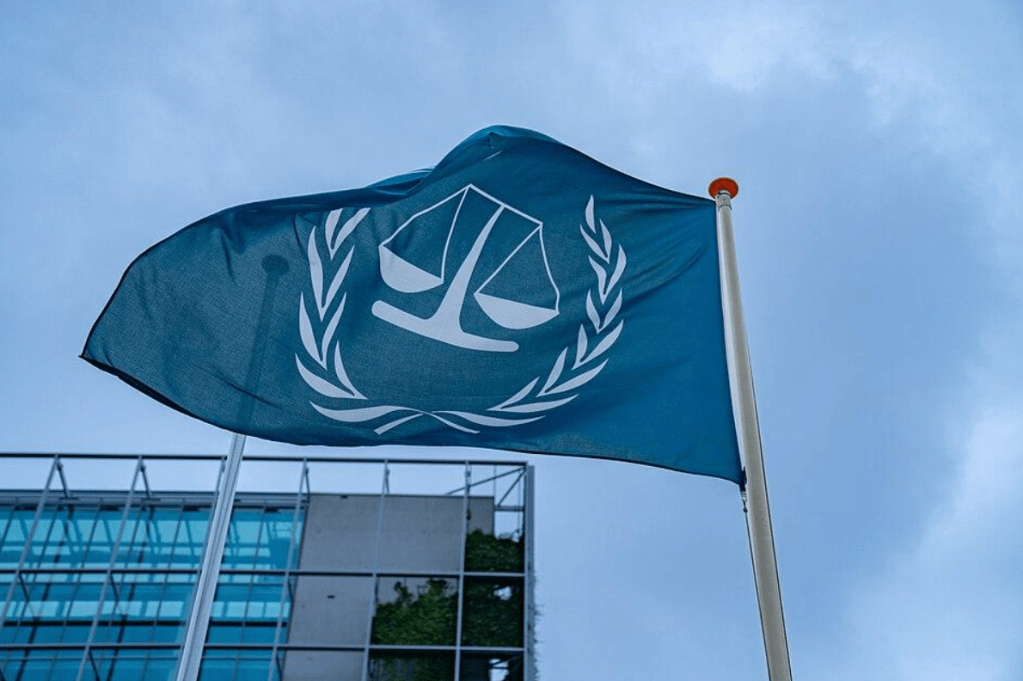
By – Simar
Abstract
This article critically analyses the landscape of international criminal justice by comparing the legal and media responses to the war crimes in the Russia-Ukraine and Israel-Palestine conflicts. While the ICC has issued arrest warrants for the leaders, such as Vladimir Putin and Benjamin Netanyahu, the reactions to both of these arrests serve as a reflection of the deep-rooted inconsistencies shaped by geopolitics. Through various international relations theories, mainly realism, liberalism and constructivism, this article will explain the contrasting actions of the states and global institutions. The article will examine key themes, namely (1) how the global justice system is selectively enforced, (2) the media’s role in shaping the moral legitimacy of international legal action, and (3) the tension between power politics and the aspirations of international law. By highlighting the stark contrast in the coverage, terminology and reactions of the conflicts, it argues that international justice remains uneven and politically contingent.
Introduction
The UN plays a pivotal role in the global order and in resolving conflicts worldwide. It is known to be the peacemaker of the world. Its framework can be divided into three important pillars. Firstly, the UN Charter, which promises peace, sovereignty, and protection of human rights. Secondly, the ICC which upholds the legal accountability of countries and prosecutes individuals for genocide, war crimes, etc. Lastly, the UNSC and ICJ play a pivotal role in enforcement and inter-state adjudication. The United Nations Foundation is based on the key theory of liberalism, which emphasises cooperation, peace and the role of international institutions to determine state behaviour. Despite this utopian architecture, in reality, the UN prefers its geopolitical interests over legal accountability, which is very evident from its response towards the Russia-Ukraine conflict and the Israel-Palestine conflict, which exposes the inconsistencies of the UN.
Selective Accountability in Action: The Case of Ukraine
On 17 March 2023, the Russian President, Vladimir Putin and Russia’s presidential commissioner for children’s rights, Maria Lvova-Belova, for war crimes of unlawful deportation of population (children) and that of unlawful transfer of population (children) from occupied areas of Ukraine to the Russian Federation, were issued a warrant of arrest from the ICC. However, due to the narrow jurisdiction of the ICC through the Rome Statute, in which both the invader and the invaded country need to be parties of the Statute for the arrest to happen, the arrest warrants against Putin were not enforceable but they served as a diplomatic blow.
There was a prompt and coordinated response from the global north to Russia. On 2 March 2022, 141 member states in the General Assembly voted in favour of a resolution condemning the actions of Russia in Ukraine. Furthermore, the US ambassador to the UN also voiced her government’s self-commitment not to veto along the lines of the code of conduct, marking a turning point in the US government’s position on veto restraint. This is a perfect example of neoliberal institutionalism, where cooperation is practised through institutions. Russia is a geopolitical adversary to the global north, and liberalism in this context is used as a veneer to perform realist activities. Here, accountability is pursued because it suits the Western strategy.
Selective Accountability in Action: The Case of Palestine
The conflict between Israel and Gaza, can be explained while examining it from the realist perspective. Realists argue that the state acts in their self-interest and that there is an anarchic structure in the international framework. Waltz’s theory of structural realism explains how states prioritise their security over everybody else. The ongoing repeated attacks in Gaza have resulted in severe civilian casualties and widespread destruction. These actions have caused serious allegations of war crimes under the Geneva Conventions. Since the start of the war the silence on the part of many ICC states has led to accusations of double standards of international justice, particularly by those states that enthusiastically engaged the ICC in the case of Ukraine.
Keeping in view the theory of realism, there is a blatant exposure of double standards in the way global institutions operated during the Russia-Ukraine conflict and the Israel-Gaza conflict. The US’s unwavering support to Israel through its veto power in the UNSC continues to shape the international community’s response to the conflict. The ICC showed a delayed response to start an investigation in Gaza as compared to the Russian war. Just like Russia, Israel is also not a signatory to the Rome Statute. This limits the authority of the ICC until and unless the jurisdiction is referred to the Security Council. Nevertheless, the ICC prosecutor filed for the arrest warrants of Prime Minister Benjamin Netanyahu and his former defence minister. This move does signify a shift in global accountability, but due to the limited jurisdiction, it undermines the legitimacy of the ICC as well. However, there was a huge geopolitical backlash regarding this move of the ICC, which further strengthens the point that politics still come in the way of the pursuit of justice.
Media Framing
International law is seen as a set of rules and norms which are inherently static but from a constructivist perspective, they are not seen as static but are shaped by social processes such as language, discourse and media narratives. Terms like war crimes, genocide, and terrorism not only derive their intensity from legal definitions but also from the media on how they are continuously framed, interpreted by powerful institutions. There is an evident contrast in the media framing of the Russia-Ukraine and Israel-Gaza conflicts. Western media have largely maintained Ukraine’s identity as a liberal democratic victim and Putin as a violator of international law. Words like “invasion,” “war crimes,” and “aggression” dominate the headlines. While the media responds to military action in Gaza using ambiguous terms like ex-clashes, crossfire etc. This selective discourse again strengthens the media’s double standards. The power to define what constitutes an aggression or legitimate defence reflects ideational power, which is the capacity to control the meaning of legality itself. Through this lens, we can see that the law is not applied, it is constructed.
Conclusion
The need for a just and accountable international order remains vital in this increasingly polarized world. Global institutions are envisioned as the pillars of global justice, yet their current functioning is deeply flawed and reveals blatant structural inequalities. The selective invocation of legal norms and the inconsistent application of international law undermine the authenticity of their moral authority. While the arrest warrants of Putin and Benjamin Netanyahu signal the theoretical accountability, there is hardly any practicality attached to the arrest warrants. In practice, the pursuit of justice is often overlooked over geopolitical interests.
International relations theory helps us to understand reality. Realism in all these contexts has explained the real motive of the state actors; it explains the inertia of the conflicts. It states that powerful states will resist the most powerful authorities that threaten their own security or strategic interests. Meanwhile, liberalism, most of the time, is being used as a mask to comply with the realist activities happening underground. While, constructivists paint the picture of media framing and illuminate how legal norms are not just enforced but created. The power to define whose human rights violations are legitimate and whose are not.
The only way to gain global trust is through consistent application of international law. The failure to hold the states equally accountable deepens the cynicism, especially in the global south. To move forward, international justice must be both legally and narratively decolonised. Reform of institutions is essential,: for example, there should be more seats at the Security Council as it will represent more diversity. Encouragement of independent media and alternative diplomatic coalitions will challenge the dominant frames, expose the legal inconsistencies and push for a conclusive global order.
About the author
Simar is a second-year B.Com. LL.B. student at Jindal Global Law School, with an academic interest spanning international law, human rights, and global justice. She is passionate about uncovering stories through legal and political narratives that often go unspoken.
Image source: https://commons.wikimedia.org/wiki/File%3AInternational_Criminal_Court_Flag_-_The_Hague.jpg
 NICKELED AND DIMED
