

By — Apoorva Lakshmi Kaipa
Abstract
In The Lunchbox (2013), a mistake by the dabbawala system in Mumbai sets in motion the lunch deliveries from a young homemaker to a widowed accountant accompanied by a set of handwritten notes. The misdelivery turns into a more intimate attachment and a journey of something deeper. The lunchbox serves a greater purpose than just being a carrier of one’s meal. It holds within it silent sentiments of nostalgia and moments of yearning. In this article, I explore the movie through the lens of archival economies through the dabbahwala system and local trains in Mumbai.
Introduction
The Lunchbox (2013), directed by Ritesh Batra, is a tender, introspective film set in Mumbai that weaves together chance, routine, and the quiet sorrows of everyday life. The movie follows a lonely housewife, Ila (Nimrat Kaur), and Mr. Fernandes (Irrfan Khan). Their lives intersect through a rare mistake in the famously efficient dabbawala system. A lunchbox delivered to the wrong address becomes a portal for connection, memory, and hope. The film explores what the city provides to its dwellers, serendipity and affection, along with a blend of the city’s social and capitalist structures.
This movie captures the simplicities and complexities of human emotion perfectly. Even though Mr. Fernandes and Ila had exchanged only two or three letters, the moment he heard that a woman and her child had died, he was instantly worried about Ila.
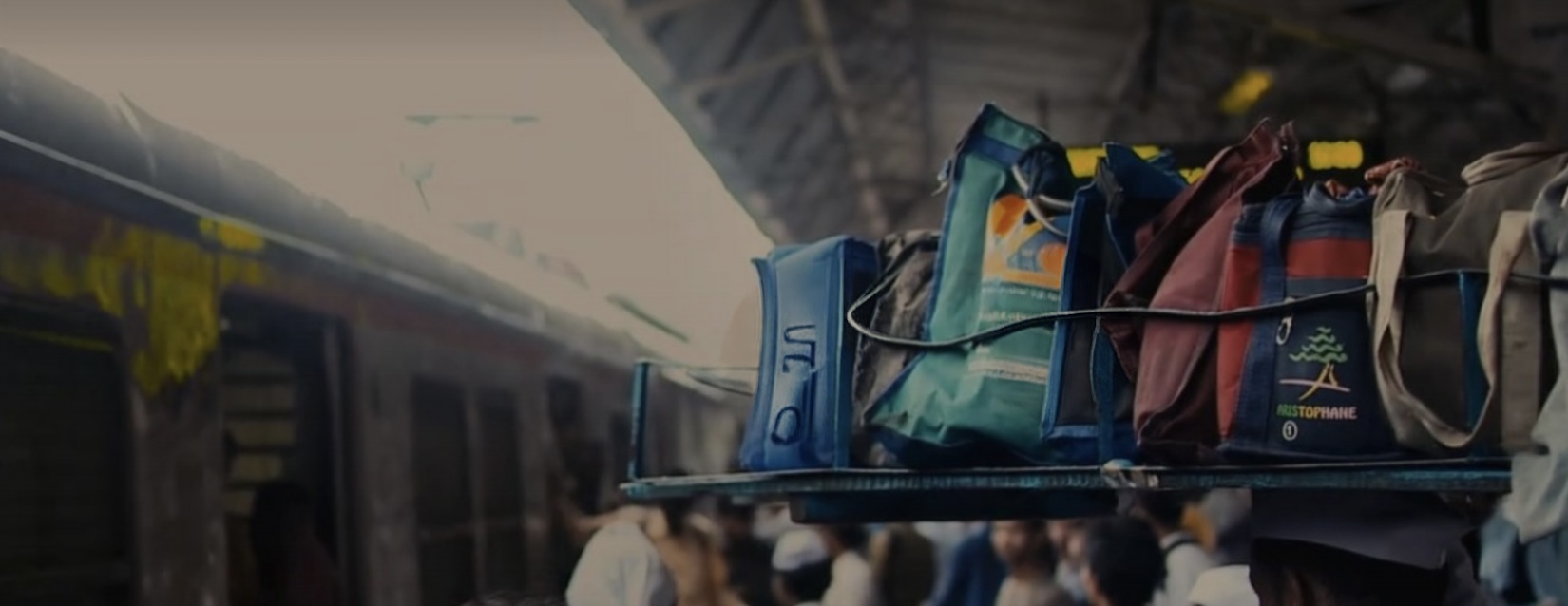
Image Source: https://www.primevideo.com/region/eu/detail/The-Lunchbox/0RV84NJTGLPXSN8M09ZOF980C1
Objects, Labour and the City
Batra’s film is deeply embedded in Mumbai’s economic infrastructure, and it uses those systems (dabbawalas, trains, lunchboxes, apartments) as vessels of memory and connection. The dabbawala system, in particular, becomes not just a delivery network but a symbol of a city’s living archive; one that records the daily routines, desires, and dependencies of its working population. Each lunchbox is a document of care, sustenance, habit, and, often, invisible emotional labour. It is a literal container of nourishment, while also being a silent bearer of longing, frustration, and joy.
The Lunchbox showcases the layers of economic structures in modern-day Mumbai, whether through the dabbahwala system or the local trains. Even the streets of Mumbai show the different economies and their histories. A moment from the movie that stood out in this respect was the scene where Shaik (Nawazuddin Siddiqui) sits on the train and cuts vegetables to save time preparing dinner at home.

Image Source: https://www.imdb.com/title/tt2350496/mediaviewer/rm3652955137/?ref_=ttmi_mi_31
This brings out a lot of unspoken truths about working-class life in the city. Here, trains are not just for commuting, but spaces where personal and economic lives blur. In that moment, the train becomes both transport and kitchen, a place where time is repurposed, where survival strategies are improvised within the rhythm of Mumbai’s relentless workday. Shaik’s simple act of chopping vegetables on the train carries a world of meaning; it archives the hidden domestic labour, the shrinking leisure in urban lives, and the adaptive choreography of the city’s workforce.
Even the visual architecture of Mumbai becomes an archive in this film. Mr. Fernandes’ reflections offer a melancholic catalogue of what remains and what has vanished: “The old houses of the boys I used to play with as a child are gone now. My old school too. But some things are still the same. The old post office, still there and the hospital where I was born and where my parents died, and my wife.” – (54:50-55:15)
This memory of space mirrors how cities evolve economically; real estate replaces heritage, gentrification erases memory, but certain institutions persist, anchoring people to their personal and economic pasts. The city changes, but certain emotional geographies never fade. In such a city, emotional connection becomes an act of archiving. Through their handwritten notes, Ila and Fernandes begin to share memories, jokes, regrets, and smells. Their relationship unfolds not through modern technology, but through an analogue, tactile mode of communication that resists erasure. In a world where we have instant messaging and digital removal, their handwritten notes become quiet acts of remembrance, permanence and care. Fernandes notes, in what I think is one of the film’s most poignant lines: “I think we forget things if we have no one to tell them to.”

Image Source: https://www.imdb.com/title/tt2350496/mediaviewer/rm560698113/?ref_=ttmi_mi_54
Conclusion
Here, storytelling becomes economic resistance, a way to preserve lived experience in a world that otherwise has no room or record for it. Storytelling here is also about remembrance, reverence and a chance to pause within one’s materially motivated lifestyle. In line with Marx’s critique of alienation, it allows Ila and Fernandes to reclaim a sense of self and connection, something often lost in the whims of capitalist life. Just as the economy archives income, expense, and production, the human heart archives what it loses and cherishes through narration. The final line that stays with the viewer, and I think sums up the film’s quiet radical optimism, is: “Sometimes even the wrong train takes us to the right destination.” This metaphor powerfully affirms the beauty of chance within rigid systems. In a city like Mumbai, where things are run like a machine, where every lunchbox is expected to arrive on time and every train follows a timetable, The Lunchbox shows us that sometimes, errors, detours, and misdeliveries can hold grace, possibility and happiness. In doing so, it reveals a truth about both emotion and economy: that the margins are often where the most meaningful things get recorded.
About the Author
Apoorva is a second-year student at JGLS majoring in business administration and law. She is an avid reader and artist, actively trying to incorporate creative fields into her everyday work.
Image Source: https://m.media-amazon.com/images/M/MV5BMjM2ODkxMzA5NV5BMl5BanBnXkFtZTgwOTYwOTYxMDE@._V1_QL75_UX595.5_.jpg
 NICKELED AND DIMED
