
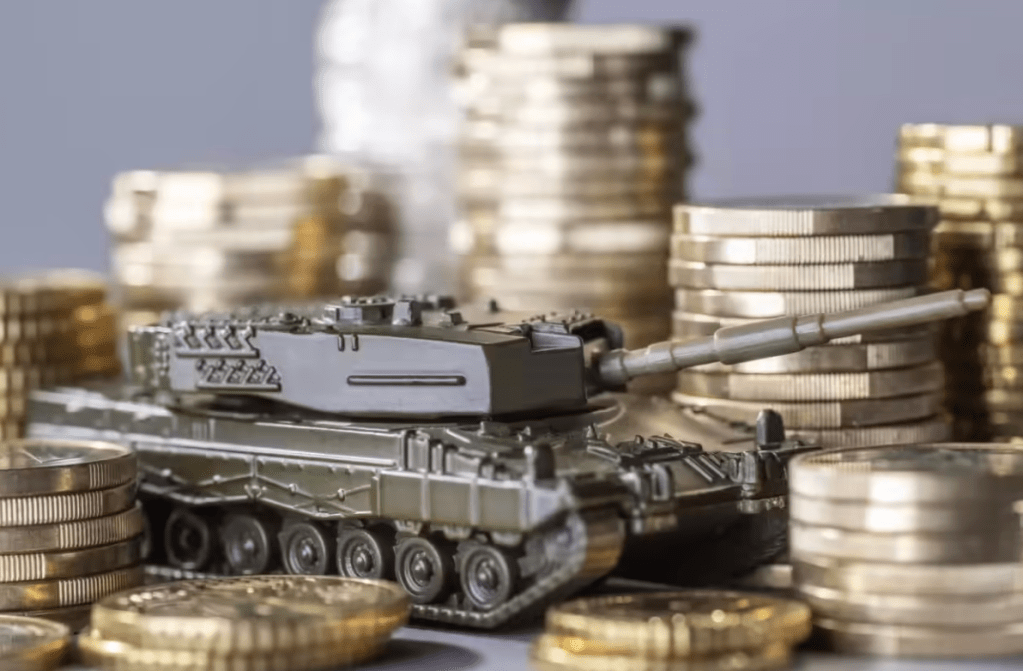
A critical examination of the allocation of resources in conflict areas
By – Soha Khan
Abstract
It is truism that the money spent on defense systems cannot be used for other needs. In conflict-ridden States, one of the biggest concerns is deciding the opportunity cost of choosing defense spending over social welfare. These are perennial policy challenges and greatly impact the economic stability and long-term development of the state. This paper analyses trade-offs between defence spending and social welfare – it draws on theoretical frameworks, looks at empirical evidence from recent times, and applies these learnings to the case study of Israel. In doing so, it attempts to highlight the importance of adequate resource allocation, especially for nations under security threats.
Introduction
In war -torn countries it is a challenge to distribute the limited state resources between defense and social welfare systems. The government often prioritises military and so integral investments such as health, education, infrastructure etc. are often sidelined. This largely impacts economic stability and social well-being. This paper analyses the trade-off between military spending and social welfare.
Theoretical Foundations: Military Spending in Economic Thought
People’s perspective on defence expenditure has evolved over the centuries. During the mercantilist period, it was believed that large standing armies were the only way to showcase the nation’s power and territorial expansion capabilities. Wars, tariffs, and trade were the only way to boost a state’s economy. The physiocrats, on the other hand, focused more on agriculture and free markets; however, they did think that military funding was important and collected funds through an efficient taxation system. Classical economists like Adam Smith and David Hume believed that defence was a necessary government function, but many warned about excessive government spending on the military instead of economic development. The 19th century started seeing military spending as a trade-off, often reducing funds available for welfare and development. This trade-off is pertinent in war-torn countries where the allocation of funds to the military sector is disproportionate.
Several case studies, especially in the Sub-Saharan African region, have shown that when military expenditure goes up, social welfare is neglected. This is also associated with increased external debt. This diverts resources from essential public services and leads to poverty among the masses, also negatively impacting key sectors like health and education. In war-torn nations, there is intense competition between military and civilian needs. Le Billon’s bibliography emphasises the political economy of war: governments spend more on defense to maintain control over their polity, but this comes at the expense of welfare programs. The budget, in many cases, is more than a financial document, it acts as a political instrument, governments make concessions to appease their coalition partners or other influential groups while cutting vital public services. International aid may help in undoing some of the negative impacts of excessive military spending, but it is insufficient to compensate for the diversion of domestic resources to defence.
These cases showcase the significant opportunity costs associated with military spending. Spending too much on defense leads to rapid debt accumulation and crowds out investment in essential development sectors, leading to a vicious trap of underdevelopment. Since progress is hampered due to essential services being underfunded, this also erodes the legitimacy of the government, and people become frustrated by the lack of basic public services.
How Israel’s defense budgets hurt public services
Israel is currently witnessing a multi-front crisis. Its tensions with Gaza and Iran have led to several unprecedented challenges. Since these conflicts are military in nature, they have profound social and economic implications. The financial toll on the nation is huge. Israel spends millions of dollars every day on its military operations and is heavily reliant on advanced missile interceptors, which further increase the financial burden.
Public defense expenditure in Israel currently accounts for 6.5% of the GDP; higher than the pre-war average of 4% and exceeding the defense spending of major global military superpowers such as Russia and the United States as a proportion of their GDP.
This significant increase in defense spending leads to cost-cutting in major public sectors, for example, healthcare, education, and social services. Israel’s budget for this year includes a major cut in spending on these sectors, showing a clear trade-off between security and social welfare. Prime Minister Benjamin Netanyahu has publicly acknowledged this, stating, “If you give to one place, you unfortunately have to take from another place.” The healthcare budget has been frozen at 2023 levels, leading to supply shortages in hospitals and reduced access to medical services for vulnerable populations. In the education sector, research funding in several universities has been cut by 18%, accelerating a brain drain in STEM fields and undermining long-term economic competitiveness. Desalination plant projects and other critical infrastructure initiatives have been delayed, resulting in water rationing and reduced quality of life in certain regions. The demand for social services is rising, particularly amongst those who have been directly affected by the conflict and have been displaced from their homes, but the demands are left unmet because of the cuts in funding. Another financial strain on the public resources is the welfare payments and the need to compensate those who have been affected by hostilities.
The country has accumulated significant debt due to its military expenditures. By the beginning of 2024, overall government debt had increased to over NIS 1.2 trillion ($336 billion), indicating a 10% rise in just six months. The budget deficit is expected to reach 4.9% of GDP by 2025, an increase from pre-war figures. The government response in this regard is dismal as raised taxes and reduced non-defense spending further constrain household budgets and limit economic growth. The lasting impact of this financial course causes significant concern, as specialists warn that the current approach jeopardizes Israel’s social and economic resilience.
Empirical evidence and the Israeli case both suggest that traditional economic models often overlook the social, political, developmental, and long-term economic consequences of military spending. Chary and Singh argue that defence expenditure should not be accounted for in isolation, but should take into account overall ramifications and should be integrated into overall economic models to understand their costs better. Le Billon’s bibliography supports this by highlighting the importance of redistributive policies and the role of developmental assistance operating simultaneously with defense expenditure. Israel’s 2025 budget highlights the ruling coalition’s priorities and political compromises, allocating funds to religious and nationalist agendas while reducing support for social welfare programs.
Studies done in the past and Israel’s predicaments point to the fact that conflict-affected countries ought to consider a balanced approach. While security is important, military fetishization can harm development and even risk prolonging conflict. If governments focus more on social welfare, they can tackle the real causes of conflict, gain public trust, and support long-term development. Israel’s 2025 experience warns of the dangers of spending too much on defense while cutting social programs.
Conclusion
Conflict-affected countries’ tendency to spend a significant amount of their resources on defense spending comes at a high opportunity cost, where money is taken away from important services like healthcare, education, and infrastructure, which may help in alleviating poverty in the future. This concern could not be more evident than in the case of Israel, as it witnesses a multi-front crisis with tensions erupting with Gaza and Iran. A more balanced approach in defense and social spending can allow it to achieve long-term peace and development. The State must show a deeper understanding of the trade-offs involved, leaning towards sustainable investment in social welfare. Policymakers need to balance their military needs with social priorities in order to deal with the complex specificities of their country.
About the Author
Soha Khan is an undergraduate student of economics and a member of the Economics and Finance cluster of Nickeled & Dimed. She has a keen interest in the intersections of gender, society, and finance and economics. She is passionate about exploring how economic systems shape social realities and how social structures, in turn, influence economic outcomes.
Image Source : https://infra.economictimes.indiatimes.com/news/economy/the-hidden-costs-of-war-impacts-on-global-development-and-humanity/122197749
 NICKELED AND DIMED