
By – Srisoniya Subramoniam
Abstract
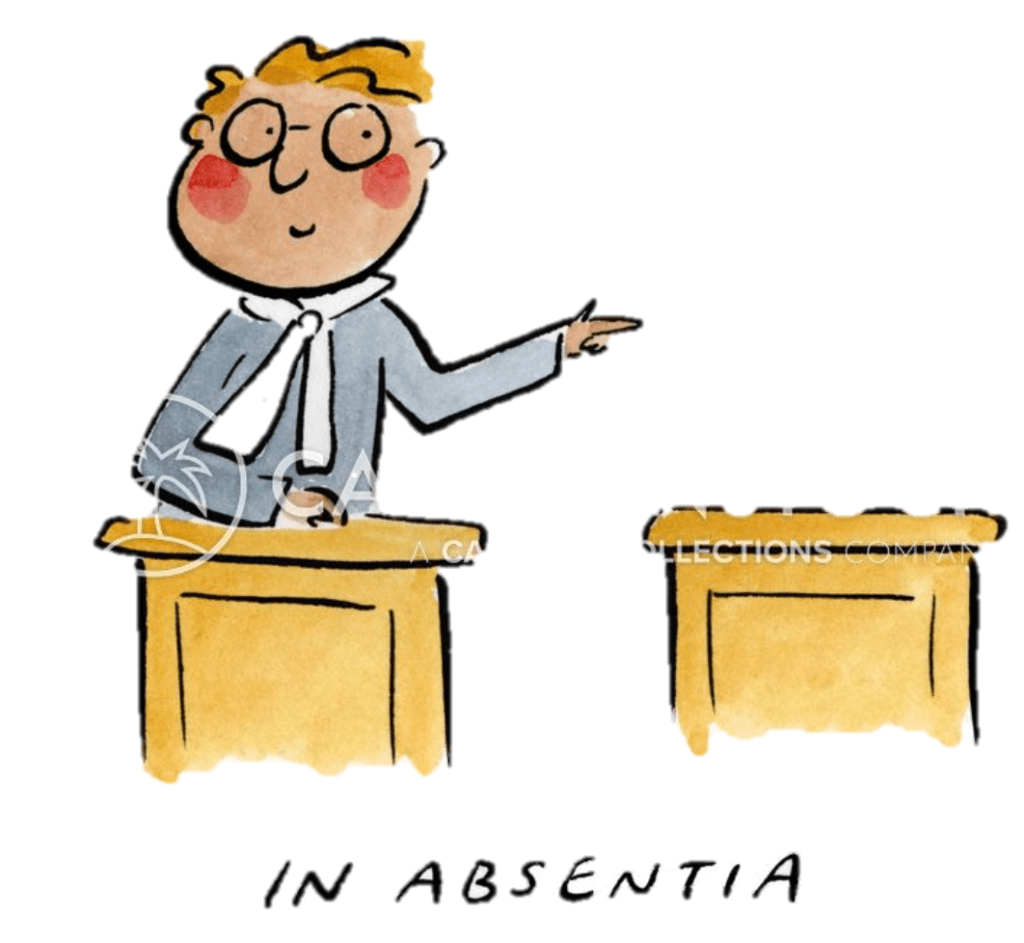
“No man shall be condemned unheard.” While an ideal justice system strives to hear both parties, giving them equal opportunities to establish their innocence, the BNSS’s (Bhartiya Nagarik Suraksha Sanhita, hereinafter, BNSS) regime simply fails to do so. Despite the core tenet of the Indian criminal justice system being a presumption of innocence rather than guilt, derived from the principles of natural justice, under the BNSS, through an enabling of ‘trial-in-absentia’ for proclaimed offenders, not every individual is entitled to a fair trial. Furthermore, such a classification seems only to raise apprehensions regarding arbitrary distinctions. BNSS, in its pursuit of expediting the criminal proceedings and safeguarding the interests of the apparent victims, seems to have failed to view the apparent accused with compassion and kindness that is required by law. This article explores whether the new developments are truly a necessity or a mere shortcut to conviction.
Introduction
The effort to decolonize the Indian legislations, which gave birth to the new BNSS, has been lopsided in ushering in a regime of victim-centric procedures and statutes, leaving the so-called ‘accused’ and ‘guilty’ to fend for themselves. It is not far from human understanding to realize the need for such a provision. In recent years, there has been an immense overburdening of trial courts with the increased delays caused by justice delivery due to absconding accused putting an arbitrary stop on the trial process. It is immoral, wherein the victim shall be doubly aggrieved – first, from the crime itself and then again, due to delayed justice, and it might seem fair to exclude the accused from the trial, but only for those unwilling to look at both ways. The article explores trial-in-absentia’s ability to balance judicial efficiency and the rights of the accused to exercise defence in proceedings, in light of the new BNSS provisions.
The article, which is based on secondary resources, adopts a comparative legal analysis of the CrPC (Code of Criminal Procedure) and BNSS (Bhartiya Nagarik Suraksha Sanhita) to examine the provisions related to trial in absentia procedures.
Unpacking the Legal Framework
S.355 of BNSS allows the trial proceedings to continue in the absence of the accused under circumstances such as disruptive or unnecessary behaviour. It also allows for courts to adjourn or try separately if the accused is unrepresented. This provision of BNSS grants arbitrary judicial discretion to determine an accused’s conduct in court as disruptive or inconsistent with the court decorum, leading to the immoral application of the law through subjective exclusions. It is also to be noted that the law does not consist within itself of any medium for appeal of such directions of the court, leaving the accused vulnerable. The legal precedents that exist have rarely addressed such issues, even if they have, they have not been implemented. The court in Maryland. Narzul Islam v State of Assam pursued their discretionary powers to establish that there should be proper communication and confirmation before a proclamation is issued, and mere return of warrants should not authorize such notices. However, to much disappointment, there has not been any amendment to this effect in the previous CrPC, nor the new BNSS.
The discretion does not stop here. The judicial process not only enforces the rigidity present in the laws, but it further solidifies it. The Delhi High Court in Sunil Tyagi v Govt. of NCT took note of the evasions present in the provisions and made suggestions to bridge these gaps to prevent offenders from misusing the procedure. The courts have always been keen to view every gap as a means of misuse instead of viewing it as the only option for the accused to safeguard their rights.
Furthermore, BNSS’s widened scope for declaring ‘proclaimed offenders’ under S.84 does not help its case as a balanced and equal law, intending to protect the rights of everyone who shall be innocent and truthful. Under the CrPC, while this classification was limited to a specific set of 19 offences given in the provision, in the newly introduced BNSS such an offence-specific stratification has been replaced by a sentence-qualifier, with the new criteria being – any offence that is punishable with imprisonment of 10 years or more, life or death.
Apart from such common concerns, there is also the problem of double punishment wherein the absconded accused is not only at a loss from not being able to defend themselves during trial, but is also simultaneously being punished under S.174 IPC for non-appearance in court. The law allows, in certain circumstances, to split the trial between the accused present and those absent. In such instances, those to be tried in absentia would be at a disadvantage, being unaware of the developments of the case and risking creating bias by recalling witnesses a second time.
The court in Jayendra Vishnu Thakur v. State of Maharashtra held that ‘the right of an accused to watch the prosecution witnesses deposing before a court of law is indisputably a valuable right’. But unfortunately, such a right has not yet been accepted as a fundamental right within the ambit of A.21 of the Constitution and therefore can only be considered as a statutory one. Although the BNSS does provide such a split trial option, it seems to exist for a mere formality, given that its application in real life appears to be ambiguous, futile, and not serving its purposes. This is predominantly due to the general assumption of the courts that any exercise of such rights by the accused shall be only to further the wrong they have committed, because in their minds, they are not accused but convicts.
The court in Gagan Thakur v State of Jharkhand is indicative of such a mindset –
“The law does not encourage abscondence…The splitting up of the cases leaves scope for many splits, depending on the number and will of absconders. This is, thus, a misuse of the process of the Court manipulated by absconders and can tend to failure of justice or its miscarriage.”
The fairness of trials and rights of the accused are therefore being compromised for the sake of prioritizing expedited trials.
Targeting ‘Certain Types of Accused’
A proclaimed offender is someone accused of an offence under any prevailing law, subsequently being called to be present in a court through an issue of a proclamation notice but not being able to do so without adopting coercive measures, and at times, despite such measures. Under the CrPC, ‘certain offences’ included offences such as S.393 IPC (attempted robbery), S.397 IPC (robbery with a deadly weapon), and S.402 IPC (assembly for committing dacoity), among others, which were used to classify Proclaimed Offenders. But in the BNSS, these crimes are no longer within the ambit of Proclaimed Offenders merely due to the sentence-based qualifier of 10 years. They were once considered serious offences sufficient to warrant absentia provisions, but now those charged under these provisions may misuse the same loophole to drag the case indefinitely. This selective exclusion creates an unwarranted hierarchy of absconders, where some get shielded from absentia trials while others don’t.
Trial-in-Absentia: A Necessary Evil?
Legal battles can be difficult for the victims, especially when they are prolonged by no fault of their own. S.356 of the BNSS allows for the prosecution of such wilful absconders and prevents the proceedings from halting owing to geographical constraints. The provision’s efficiency in handling such instances is visible in Tahawwur Rana’s case. Rana, an accused of the 26/11 attacks, had refused to attend the trials for the past decade until recently when he was taken into judicial custody after efforts to extradite him from Canada. Under such a scenario, conducting trial-in-absentia would have appeared to be fruitful and shall have been deemed to be in accordance with justice and good conscience, wherein the victims and the society would have been provided relief by attaching accountability to the wilful actions of the offender and by making sure that the absconders are not rewarded for their escape.
Conclusion
The BNSS has undoubtedly introduced the provisions in an attempt to harmonise the need for the expediency of the trials and safeguard the interests of the victims. Yet this addition has been merely a skeletal attempt at best, compromising both victim’s and the accused’s rights. The Indian jurisprudence is based on the presumption of innocence, and therefore it should not endanger the principle of ‘audi alteram partem’, where no person shall be condemned unheard, no matter the accusations against them. The law needs to take cognisance of every individual and not be swayed by public sensationalism. It needs to translate the practical inefficiencies of the provisions into amendments to safeguard the interests of both parties.
About the Author
Srisoniya Subramoniam is a second-year B.A. L.L.B. (Hons.) student at Jindal Global Law School (JGLS). She has a keen academic interest in legal scholarship, especially Intellectual Property Rights, Artificial Intelligence, International Law, and Criminal Litigation.
Image Source: https://www.cartoonstock.com/cartoon?searchID=CS605030
 NICKELED AND DIMED