

By – Apoorva Lakshmi Kaipa
Abstract
This article examines how the industrialisation of dairy has transformed a culturally sacred practice into a system marked by cruelty, pharmaceutical manipulation, and consumer deception. It will explore the intersection of bioeconomics, cultural tradition, and ethical consumption through the lens of India’s dairy industry and the emerging vegan movement. The article uncovers the dissonance between the veneration of cows in Indian society and the exploitative practices of large-scale dairy operations. It also traces how animal rights activists, journalists, and entrepreneurs have challenged these practices, catalysing a shift towards plant-based and lab-grown alternatives. By aligning economic activity with ethical and cultural values, this movement represents a potential paradigm shift in how food is produced, consumed, and understood in a rapidly changing society.
Introduction
The cow is widely regarded as the most sacred animal in India. It is revered as a symbol of motherhood, wealth, and generosity. The cow is associated with several deities in Hindu culture, like Krishna. Kamadhenu is a divine wish-fulfilling cow and is considered the mother of all cows. Cows are so sacred that killing cows for their meat is illegal in most parts of India. Once a sustainable and respectful practice, modern dairy systems routinely involve hormonal injections, premature separation of calves, and eventual slaughter of ageing animals. Parallel to this shift, a growing plant-based alternative sector has emerged, offering products that completely bypass animal involvement. This article examines the evolution of India’s dairy industry, from its cultural origins to factory-style modern operations, and highlights documented systemic abuses, while also introducing the rise of dairy alternatives.
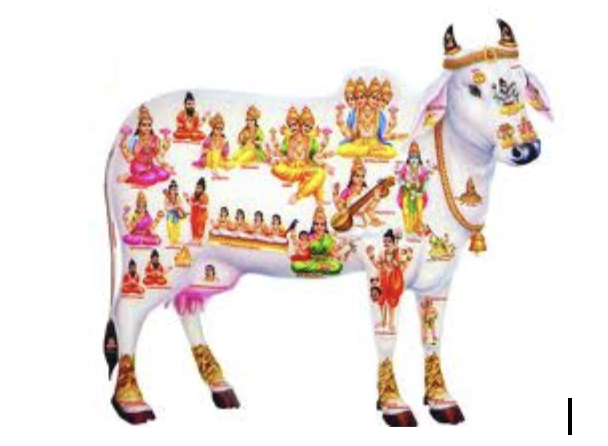
Image Source – https://sandipani.org/the-importance-of-gau-mata-the-holy-mother-cow/
Cultural Roots and Industrial Shift
In traditional Hindu Indian Society, cows have been central to cultural and religious life. Revered as “gau mata,” cows serve vital roles in rituals (e.g., Panchamrit, a sacred mixture in Hinduism made from five ingredients: milk, curd (yoghurt), honey, sugar, and ghee (clarified butter)), diets, and agrarian livelihoods. Yet, this sacred status now coexists with modern industrial systems that emphasise production over welfare. Large-scale dairy initiatives aimed at increasing milk production were introduced nationwide by the 1970s White Revolution. It was successful in increasing caloric yield and rural incomes. It also accelerated mechanisation, intensification, and industrial consolidation, creating conditions ripe for animal welfare violations such as overcrowded sheds, larger herd sizes with minimal human oversight, and economic pressure on farmers to maximise yield at any cost. These factors often lead to neglect, routine use of growth hormones, and prioritisation of production efficiency over basic animal care. What began as a small, community-based dairy transformed into a high-demand, profit-driven model.

Image Source : https://animalequality.org/news/2018/05/29/animal-equality-investigates-107-dairy-farms-8-slaughterhouses/
Welfare Violations and Consumer Deception
Anonymous investigations by Animal Equality documented routine cruelty and violations across dairy farms and slaughter sites in India. Between 2021–2022, investigators visited 27 dairy farms, six animal markets, and two slaughterhouses. Their recordings show inhumane practices across India. Cows and buffaloes were artificially inseminated, with calves often separated immediately after birth. Male calves that were deemed unproductive were either starved, sold for slaughter, or left to die. Farmers buried or stuffed carcasses of dead calves with hay, believing the smell stimulates milk production in mothers. They illegally used oxytocin to induce milk let-down, even though it’s banned. Physical abuse, including prodding, tail twisting, and beating, was enforced upon the cattle to force compliance. Further findings from late 2023 reveal that workers using hammers for “hammer slaughter,” slaughtering animals in view of others, severing throats in multiple attempts, and dragging animals by their tails, causing extreme suffering. The widespread cruelty spans all major dairy-producing states, violating India’s 1960 Prevention of Cruelty to Animals Act and slaughterhouse regulations. These violations are rarely prosecuted, with weak enforcement and a lack of inspections allowing most offenders to operate with impunity.
The dairy sector employs aggressive marketing, claiming that milk is essential for strong bones, immunity, and child development. However, these benefits are increasingly questioned, particularly in populations where lactose intolerance is common. In India, more than half the population of adults are lactose intolerant, i.e. they cannot digest milk properly, leading to digestive issues. India ranks fourth globally in antimicrobial use for livestock, and the 2018 FSSAI survey flagged antibiotic residues in packaged milk. The presence of unregulated hormones and antibiotics, such as oxytocin, a banned hormone used to boost yield, raises concerns about residues entering the human food chain. These practices could potentially contribute to antibiotic resistance, disrupt human hormonal balance and pose allergy risks. These narratives are reinforced by dairy and pharmaceutical lobbies, maintaining milk as healthy despite the mounting evidence which says otherwise, minimising known negative aspects like ethical, environmental, and health-related concerns. As investigations gain media attention, public awareness grows, prompting more critical questions about dairy production.

Image Source : https://nourishyou.in/?srsltid=AfmBOopSGkC5uonZDjz0csa4r6pwG5a77stw1fh20R0wTvd4g4PxsJpc
Rise of Alternatives in India
As awareness of dairy industry practices increases, alternatives have entered India’s markets, leveraging technology and shifting consumer attitudes. One such example is Goodmylk/ One Good. It was founded in Bengaluru by Abhay Rangan in 2017, initially delivering homemade cashew, oat, and peanut milk. Subsequent funding rounds totalled around US$800K, including a US$400K second seed in 2020, and a later US$1M extension in 2021, produced in a manufacturing facility. In December 2023, plant‑based superfood brand Nourish You (backed by Nikhil Kamath) acquired One Good, aiming to expand beyond dairy alternatives into a broader health‑food category. Products ranging from cashew and oat milk to vegan butter and curds are now available in online retailers and physical stores (e.g., Nature’s Basket) in Bengaluru and nationwide. These alternatives are higher in price than dairy. Several Indian startups and global brands have introduced plant-based milks, cheeses, and cultured meats. These include Imagine Meats (plant-based chicken/mutton) and ClearMeat (lab-grown).
Let’s see the difference between animal-based and plant-based industry models. In the Animal-Based Model, animals are repeatedly impregnated, milked, and then culled after production. The hidden costs of this model include welfare violations, environmental damage, public health risks, and consumer trust erosion. Strong marketing and cultural traditions sustain its dominance despite emerging evidence of harm. Whereas, in an alternative model, relies on industrial-scale plant processing or cell culture, eliminating direct animal exploitation. Early-stage, yet quickly growing, startups’ funding and acquisitions reflect increasing investor confidence and consumer interest. It offers a different value proposition, emphasising transparency, safety, and no harm to animals.

Image Source : https://vegandukan.com/collections/mock-meat-online
There are some broader implications for this stage of industry evolution.
To what extent are regulatory frameworks adapting? Standards around food labelling, safety, and health claims for alternatives are evolving but uneven. In India’s complex regulatory landscape, different states often have fluctuating capabilities. This becomes a problem when the safety standards vary and the lack of uniform testing and misleading labels undermine trust in both dairy and alternative industries.
Do consumers trust and accept substitutes? Traditional taste, cultural habits, and lactose tolerance variations affect uptake. Marketing and education will play vital roles in influencing these factors. The future is yet unknown. While people thought Indian palates would not be accustomed to Western food options in early India, the present generations have grown to love these flavours. Similarly, the tastes of upcoming generations with regard to alternative dairy and meat products cannot be foreseen, and the growth of the industry can only increase.
Can alternatives scale affordably? Goodmylk’s acquisition targets mainstream pricing, but replicating dairy affordability and access remains challenging.
Conclusion
India’s dairy industry currently operates on a large-scale, profit-driven model that breaks from its cultural and ethical origins. Investigative evidence shows systemic cruelty, which includes forced impregnation, calf separation, hormonal misuse, and inhumane slaughter. At the same time, a growing sector of plant-based and lab-grown dairy alternatives is emerging, backed by innovation and early consumer interest. The current dairy ecosystem enables and masks its harm, while alternatives introduce new options devoid of animal involvement. Only time can tell whether these alternatives can coexist or compete meaningfully with established systems, and how policy, market, and consumer decisions shape India’s food economy.
About the Author
Apoorva is a second-year student at JGLS majoring in business administration and law. She is an avid reader and artist, actively trying to incorporate creative fields into her everyday work.
Image Source : https://animalequality.org/blog/india-giant-steps-forward/
 NICKELED AND DIMED