
By Paridhi Jain
Abstract
Being born as a woman in today’s Afghanistan is tantamount to receiving a life sentence of profound misery under Taliban rule. This regime has systematically stripped women of fundamental rights, including access to work, education, and freedom of movement, essentially erasing their public presence. This piece briefly explores Afghanistan’s geo-political history, setting the context for the current gender-based persecution by linking past conflicts and the influence of foreign powers to the resurgence of the Taliban. This historical perspective is crucial for understanding the severity and systemic nature of the oppression faced by Afghan women today. In doing so, I ultimately highlight the response this situation has received by the international community, particularly international judicial bodies like the International Criminal Court and the International Court of Justice. This article underscores the challenges of leveraging international law against regimes like the Taliban and highlights the dire need for effective global mechanisms to protect human rights in Afghanistan.
Introduction
Afghanistan, a nation marked by its rugged mountains and rich tapestry of tribal affiliations, has long been a geopolitical chessboard where great powers and local factions have vied for dominance. The consequences of these power struggles have been dire for its people, who have endured a relentless cycle of violence and upheaval. As the backdrop for some of the most significant events in recent history—from the Soviet invasion of 1979 to the rise and fall of the Taliban, and the subsequent two-decade-long NATO intervention—Afghanistan’s socio-political landscape has been perpetually fraught with conflict and instability.
This instability has bred a profound human rights crisis, one that has evolved through various regimes, each leaving its legacy of violence and repression. The scars of these conflicts are etched deeply into the fabric of Afghan society. Under the Democratic Republic of Afghanistan, and later, the Islamic State and the first tenure of the Taliban, widespread human rights violations were the norm rather than the exception. These ranged from extrajudicial killings and torture to systemic restrictions on the rights of women and ethnic minorities, creating an environment where fear and oppression ruled.
The US-led invasion in 2001, framed as a response to global terrorism, brought with it promises of democracy and human rights. However, these promises were often overshadowed by the harsh realities of military occupation and cultural misunderstandings, further complicating an already complex human rights landscape. Despite efforts to instill democratic values, the withdrawal of NATO forces in 2021 saw the swift resurgence of the Taliban, who once again imposed their strict interpretation of Sharia law, undoing years of slow progress, particularly in the areas of women’s and minority rights.
As the current situation unfolds, the human rights crisis in Afghanistan remains as acute as ever, marked by an absence of security, the erosion of basic freedoms, and a judiciary crippled by bias and inefficacy. The international community’s response, though well-intentioned, has often been criticized for its inconsistency and political overtones, highlighting the complexity of advocating for human rights in a region where geopolitical interests frequently intersect.
History
Afghanistan’s geopolitical history is marked by its strategic location at the crossroads of Central and South Asia, making it a focal point for empires and global powers for centuries. Historically known as the “graveyard of empires,” Afghanistan has been invaded and contested by the Mauryans, Greeks under Alexander the Great, Kushans, Arabs, Mongols, and Mughals, each leaving behind a distinct cultural imprint.
In the 19th century, Afghanistan became a buffer state in the “Great Game” between the British and Russian Empires, both seeking influence in Central Asia. The British launched three Anglo-Afghan Wars (1839–42, 1878–80, and 1919), but despite temporary control, they failed to fully subjugate the fiercely independent tribal society. Afghanistan finally gained full independence from British influence in 1919 under King Amanullah Khan.
The Cold War brought renewed interest, and in 1979, the Soviet Union invaded Afghanistan to support a communist government facing internal rebellion. The United States, Pakistan, and others supported Afghan mujahideen fighters, turning the country into a proxy battleground. After a decade-long war, the Soviets withdrew in 1989, leading to civil war and the rise of the Taliban in the 1990s, who established a theocratic regime.
Following the 9/11 attacks, the U.S. invaded Afghanistan in 2001 to dismantle al-Qaeda and remove the Taliban from power, ushering in two decades of Western military presence and nation-building efforts. Despite international support, the Afghan government struggled with corruption and insurgency. In 2021, the U.S. withdrew, and the Taliban swiftly regained control.
Today, Afghanistan remains geopolitically significant, bordered by Iran, Pakistan, China, and the Central Asian republics. Its stability is of interest to regional and global powers, yet its future remains uncertain under renewed Taliban rule, amid humanitarian crises and international isolation.
Current Human Rights Landscape in Afghanistan
The current human rights situation in Afghanistan remains dire, especially after the Taliban’s takeover in August 2021. The UN Mission in Afghanistan (UNAMA) has reported a significant erosion of basic human rights across the country. The Taliban have been responsible for extrajudicial killings, torture, arbitrary arrests, and detentions. Women and girls, in particular, have faced severe restrictions on their rights.
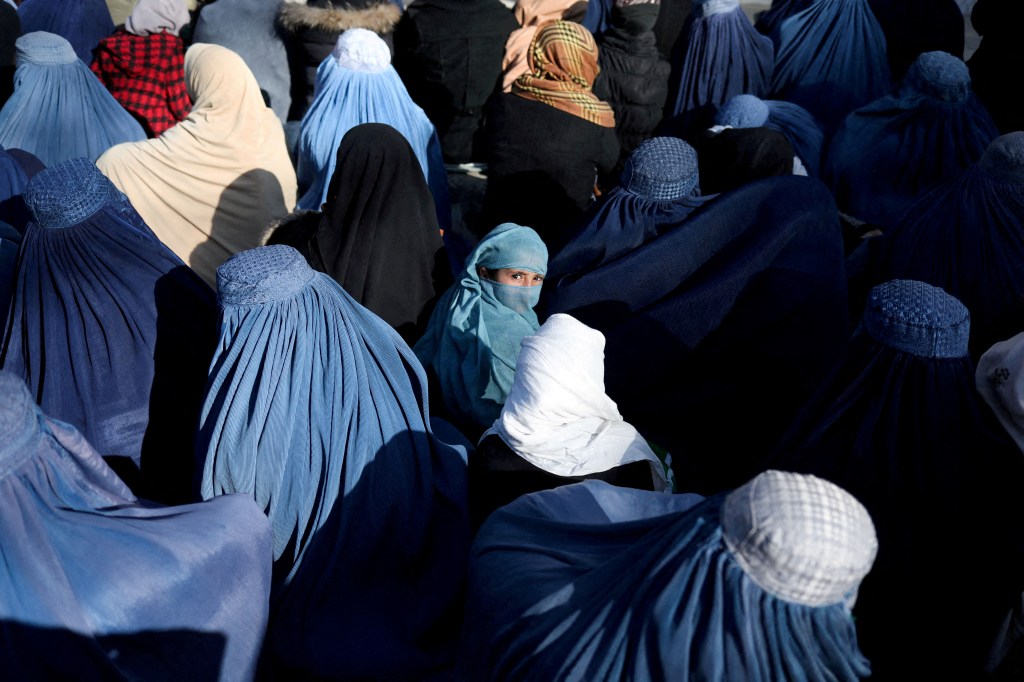
Since the Taliban returned to power, they have systematically oppressed women through restrictive decrees. The Taliban have imposed strict dress codes, limited women’s access to education and employment, and restricted their freedom of movement. According to the UN, the Taliban’s policies have effectively erased women from public life. For example, in December 2022, the Taliban banned women from attending universities and working for non-governmental organizations (NGOs). In April 2023, the Taliban extended this ban to women working for the United Nations. The Taliban’s policies have disproportionately affected women and girls. They have restricted women’s access to education, employment, and participation in public life. Specifically, girls are banned from attending secondary schools and universities, depriving them of completing their basic education. This has long-term implications for the development of the country, as education is a fundamental human right and key to national progress.
Moreover, the Taliban have introduced new laws that further limit women’s rights. For instance, the “vice and virtue” laws ban women’s voices and faces in public, effectively silencing and invisibilizing them in society. These measures have led to a significant regression in the status of women, undoing the progress made in recent years.
These restrictions have had a profound impact on the lives of Afghan women and girls. According to local sources in Afghanistan, the Taliban have imprisoned Afghan women and girls inside their homes, effectively making them the largest imprisoned population in the world. The closure of girls’ schools above the sixth grade and universities has left more than one million girls and women deprived of education for the third consecutive year. This has not only affected their personal development but also had a significant economic impact. US Special Envoy Rina Amiri highlighted that the Taliban’s restrictive measures on women and girls are costing Afghanistan over $1 billion annually.
The situation is further exacerbated by the ongoing conflict and the lack of a functioning judicial system. The rule of law is weak, and impunity is widespread. This has led to a climate of fear and insecurity, where human rights defenders and ordinary citizens are unable to seek justice for the abuses they face.
Response by the international community
The international community has responded to the human rights crisis in Afghanistan in various ways. The UK, for instance, evacuated over 15,000 people from Afghanistan between August 15 and August 29, 2021, including British nationals, Afghan staff who had worked with the UK, and other vulnerable individuals. The UN Security Council passed Resolution 2593 in August 2021, urging the Taliban to provide safe passage for foreign nationals and eligible Afghans who wish to leave.
However, the response has not been without criticism. Some argue that Western countries, including the US, have engaged in political manipulation under the pretext of human rights, while ignoring their own human rights issues at home. The US has been accused of trampling on Afghan human rights during its military operations, including the seizure of Afghanistan’s central bank assets, which has worsened the humanitarian crisis in the country. There have also been calls for NATO to investigate war crimes committed by its forces in Afghanistan.
Despite these criticisms, there have been efforts to address the human rights situation. The UN and other international organizations continue to monitor and report on human rights abuses in Afghanistan. There are also calls for the International Criminal Court (ICC) to investigate war crimes committed by all parties involved in the conflict. The German Foreign Ministry has called on the Taliban to reopen schools and universities for girls, highlighting the importance of education for women and girls.
Conclusion
The human rights crisis in Afghanistan is a complex and multifaceted issue with deep historical roots. The current situation, marked by severe restrictions on basic freedoms and widespread violence, demands urgent attention and action. While the international community has taken some steps to address the crisis, more needs to be done to ensure that human rights are respected and protected in Afghanistan.
Addressing the human rights crisis in Afghanistan requires a comprehensive approach that includes political, social, and economic measures. It is crucial to support the development of a functioning judicial system, promote the rule of law, and ensure that human rights defenders and ordinary citizens can seek justice for the abuses they face. The international community must also work together to provide humanitarian assistance and support the rebuilding of Afghanistan’s infrastructure.
Ultimately, the protection of human rights in Afghanistan is not only a moral imperative but also a necessary step towards achieving lasting peace and stability in the region. It is essential that all parties involved in the conflict, as well as the international community, take concrete and sustained action to address the human rights crisis and work towards a better future for the people of Afghanistan.
Author’s Bio: Paridhi Jain is a third-year law student at JGLS with a keen interest in Human rights law, Investment law, and International Criminal Law.
Image Source: Taliban say female Afghan TV presenters must cover face on air | Reuters
 NICKELED AND DIMED