
By Prof. Tridivesh Singh Maini
Introduction
The Chief Minister of Pakistan’s Punjab province Maryam Nawaz in a message on the festival of Baisakhi said, “Baisakhi is a beautiful cultural festival of Punjab. The wheat harvest heralds the message of joys of ‘Baisakhi’ festivity. The Baisakhi festival pays back the fruit of the labour of hardworking farmer”.
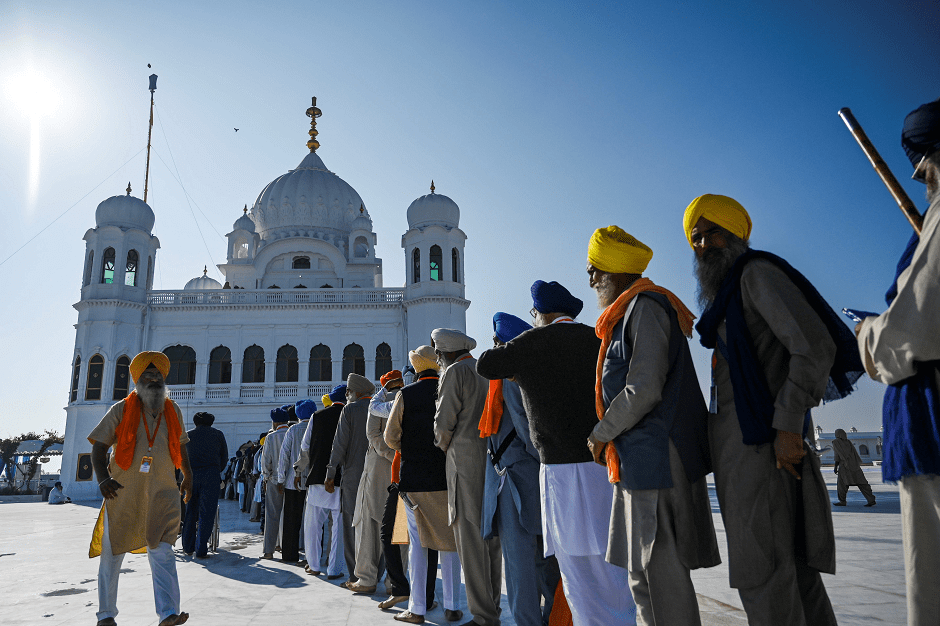
Maryam Nawaz also congratulated the Sikh community in different parts of the world on this occasion. For Sikhs, Baisakhi is not just a harvest festival. It has immense spiritual significance, since the Khalsa was founded on the day of Baisakhi in 1699 by the 10th Guru of the Sikhs, Guru Gobind Singh. Every year, Sikh pilgrims from India and other parts of the world visit Pakistan on Baisakhi, and other important religious occasions, to pay obeisance at historic religious shrines and commemorate these occasions. This year, Pakistan issued the highest number of visas, 6,500 visas, to Sikh pilgrims for Baisakhi celebrations.
The first woman CM of Pakistan Punjab also referred to her visit to Kartarpur (Narowal, Pakistan) — last year in April 2024 — where she had addressed Sikh pilgrims and had called for better ties between India and Pakistan. Maryam Nawaz said “The joy on the eve of wheat harvest during the Baisakhi festival in Kartarpur last year has still remained part of my pleasant memories”.
During her address to Sikh pilgrims from India at Kartarpur last year, Maryam Nawaz had pitched for better ties between India and Pakistan, referred to the efforts of her father, former Pakistan PM Nawaz Sharif, in improving ties between both countries, and his role in the “foundation” of the Kartarpur Corridor in 2013. The corridor was ultimately inaugurated in 2019.
At the Punjab Culture Day event, on April 17, 2025, Maryam Nawaz re-invoked her Punjabi identity and highlighted the fact that Punjabis must take pride in their language. This came a day after the rabble rousing speech of Pakistan Army Chief Asim Munir which was made to a crowd of overseas Pakistanis. During his speech, the Army Chief said, “different from Hindus in every possible aspect of life. Our religion is different. Our customs are different. Our traditions are different. Our thoughts are different. Our ambitions are different”.
This is in stark contrast to Maryam Nawaz’s pitch for better ties between India and Pakistan in general and both Punjab’s in particular, where there is a focus on commonalities.
India-Pakistan ties over the past decade
While tensions between India and Pakistan have only increased over the past decade, some important developments have taken place. First, is the inauguration in 2019 of the Kartarpur Religious Corridor, which connects Dera Baba Nanak (Punjab, India) with Darbar Sahib, Kartarpur (Narowal district, Pakistan). The second is the ceasefire between both countries across the Line of Control (LOC) in March 2021.
There have also been calls for resumption of trade via the Wagah-Attari land-crossing, which was ended by Pakistan after the revocation of Article 370 in Jammu and Kashmir by India. Sections of the political class, chambers of commerce and large sections of civil society in Punjab (India) have been forcefully pitching for resumption of trade, Pakistan’s business community has also been making similar demands.
Given the tensions, resumption of trade in the imminent future seems unlikely in the short run. The two biggest opportunities were April 2021 during the covid-19 pandemic and 2022 – after Pakistan was impacted by floods. Trade between both countries is carrying on via third destinations like Singapore and Dubai, which is logistically inconvenient.
Despite a setback in trade, people to people links have carried on. Apart from Sikh pilgrims visiting Pakistan, on important religious occasions – the latest being Baisakhi — there have been cultural events which have brought together Punjabi poets, writers and artists from both sides. Members of divided families from both sides have also been reunited at the Kartarpur Religious Corridor, thanks to the efforts of civil society.
For a very long time, the Punjabi language and culture which had the potential of being the bridge at least between both Punjab’s has been relegated to Pakistan. Maryam Nawaz is the first leader who has repeatedly said that she is proud of her Punjabi heritage, calling herself a ‘blue-blooded Punjabi’ and she has also stated that Punjabis should be proud in speaking their own language. The other important step she has taken is the decision that Punjabi be taught in schools in Punjab. Apart from this, the Pakistan Punjab CM also called for cooperation with the Indian state of Punjab to deal with the problem of smog.
Conclusion
Here it would be important to mention that between 2004 and 2014, both Punjabs have sought to emerge as bridges between both countries. While it is true that tensions at the national level have risen over the past decade, governments of both Punjabs need to explore cooperation in areas such as environment and agriculture – where they can meaningfully engage in the current landscape.
The India-Pakistan bilateral relationship is in deep freeze, but the emphasis on Punjabiat (common Punjabi identity) and other statements pertaining to better ties between both countries in general and Punjabs in particular, by Maryam Nawaz need to be viewed positively. It is important for civil society in both countries to think pragmatically of concrete areas for engagement within the current constraints.
Author’s Bio: Prof. Tridivesh Singh Maini is an Assistant Professor at the Jindal School of International Affairs. He was also a Public Policy Scholar with The Hindu Centre for Politics and Public Policy and Asia Society India-Pakistan Regional Young Leaders Initiative. He was also a former South Asian Voices (SAV) Visiting Fellow (Winter 2016) with the Stimson Centre, Washington DC.
Image Source: More than 8,000 Sikh pilgrims to visit Pakistan: Fawad
 NICKELED AND DIMED