
By Niyati Mishra
Abstract
Although the facade of influencer culture lies in glamorous hauls, shopping and materialism that may seem justifiable, underneath it all rests a compounding story about overconsumption, impulsive buying and its effect on return economics. This is a story about more than just shopping or a trend, this is a reflection of the way people interact with the idea of obtaining more. The impact is significant: brands partnering with creators to sell more; a rise in affiliate marketing; commission economics; the boom of fast fashion with giants like Shein releasing over 10,000 items on their website per day, leading to an exorbitant amount of waste.
Introduction to Hauls
Currently, there exists a wide array of different types of haul content. But what really constitutes a “haul”? An indispensable part of flex culture, the purpose of a haul is to showcase different types of purchases that you have made on a macro scale while offering a tutorial as to how they should be worn, how they would work, thereby fueling the consumer’s curiosity towards the next shiny new thing. These are typically displayed in short form content or shorter long form content of under 20 minutes, more likely to be set in an informal location. Haul culture gained its traction through 2000’s makeup and fashion content and thereafter, spread like wildfire for all types of lifestyle content, such as gaming, beauty etc. What likely makes these hauls attractive for consumers is that they represent something that the average person cannot attain in their lifetime; these goods are likely inaccessible, creating an itch in the consumer to further obtain them, igniting their materialistic tendencies. The aspirational undertone of hauls is most evident in their younger demographic – people wish to have the money to spend on these hauls and want to work because of it. Besides, they also offer good value for entertainment.
What hauls also do is go out of their way to provide exposure to new brands, increasing their sales and profit margins. If such is the case, why is there criticism surrounding the ideas of “hauls” but not shopping? Because it’s not a matter of buying—it’s a matter of how much you’re buying. Haul culture is perfectly able to capture that intersection between money, media and the ideal way of living.
The Psychological Appeal of Hauls
Part of the reason behind social media’s obsession with subcultures are that it fuels shopping addictions with a new thing that can be on your wishlist every day. It is also why we are so obsessed with hauls in the first place. It’s not solely the fault of the creators making these haul videos—it’s also the fault of the consumer continuing to buy into them. Human beings have this natural tendency wherein they naturally seek to increase their resources. It is the scarcity mindset, where nothing is ever enough, that plays a role here because people tend to become numb to the quantity that they’re purchasing when they’re blinded by the excessive, sudden, but short-lived satisfaction that comes therewith.
Purchasing decisions are made on a variety of factors, including ethics and moral values, price, and accessibility. Every little detail influences the consumer’s purchase. Store layouts try to guide the customer to the most desirable items, the cheapest goods are placed by checkout to influence last minute impulses, ambience is created through perfect infrastructure, lighting and music and market demand is developed by creating a false sense of scarcity, that a product is going to run out soon or a new limited edition has been released. It is, after all, in their best interests to guide the customer to spend as much money as they can and foster this cycle of constantly buying more than what you need, which reveals the impact that retail positioning tends to have on consumer behaviour, and the average consumer’s bedroom consequently becoming just a changing room. This fosters behaviours such as “wardrobing” – wherein you’re buying items just for one use, never to touch them again; “bracketing” – overordering because of uncertainty of fit both in terms of style and colour, and “staging” – only buying to showcase products and returning them. These behaviours have become a key part of consumption in the digital economy.
Economic Consequences
The economic consequence of these trends in consumption manifests primarily in skewed return rates, which have spiked to an average of 30-40%, with the fashion industry being the greatest contributor. This can be blamed entirely on the upsurge of online shopping, given that in-store shopping return rates remain between 8-10%. This leads to a complete logistical nightmare for companies. Every time we process a return, brands have to restock, re-clean, re-package and return to racks with added shipping costs that they can’t get compensated for. And these clothes, for the most part, don’t even end up back on the racks. Returns tend to cost retailers about 15-30% of the item’s actual price. To combat this, companies like Zara in the United States have started charging a marginal return fee such as that of $1.95, to force consumers to think twice about a purchase and a return. Other companies have started to opt out of free shipping perks as a resolution mechanism. But there also exists a similar impact on small businesses. While giants like Shein, Amazon, Temu and Zara can deal with the fluctuation of these logistical costs and their upsurge, smaller businesses don’t have this option. They normally operate with a limited order value, inventory and storage which means an even slimmer profit margin and a lower chance of being cash flow positive. So, a return for them is exponentially worse because they lack the capital to bounce back from this. They don’t have the option of bulk orders, which reduce restocking and repackaging fees, and their labour costs tend to be higher because major companies are more likely to buy into cheap and quick labour with sustainability taking a backseat. A return is just a means to disrupt the stock they hold, either leading to them selling out too often or having too much inventory that they don’t know what to do with. This is then much more likely to hike up prices for any future customer. Further, economies of scale allow these larger retailers to reduce their per-unit costs through these processes, which small businesses are disproportionately affected by. They have to face these higher costs to store inventory, restock and repackage. Because of the sheer size of these businesses, larger companies easily and effectively absorb these losses while smaller retailers have to raise their prices or limit the number of returns per order.
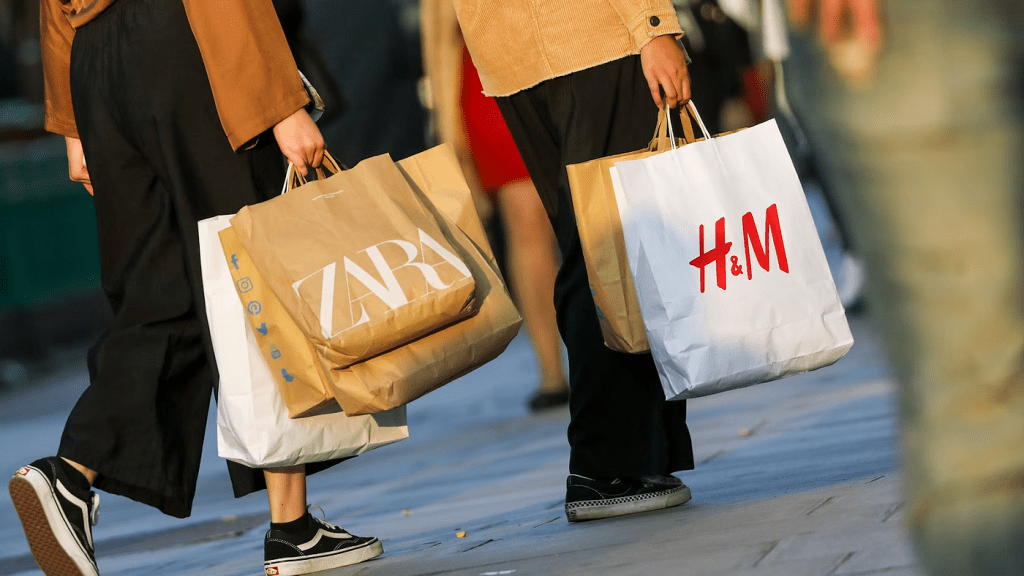
But to capture this market for a big, capital intensive company is simple because they target the affordability of fast fashion, characterised by international outsourcing, short term contracts and rapid production and distribution cycles. The fast fashion market was valued at $33 billion in 2022 and is expected to reach 50 billion by 2027. This shows that consumers tend to prefer trends, most likely to be forgotten in time, irrespective of the quality of what they’re buying. This preference is served by fast-fashion giants working like a washing machine, pumping out new designs in a matter of a few days, getting the latest on colour and style trends and rolling out 5 different versions of the same piece, faster than a traditional atelier can even roll out a design. The room for any competition is simply limited. As previously mentioned, this model also relies on what is more commonly referred to as “sweatshop” labour from countries like Afghanistan or Bangladesh where there exist dismally low living wages and inhumane working conditions and where labour laws are particularly weak, and thus, hard to enforce.
Consumers go out of their way to justify these purchases through the cost per wear rationale, thinking that if they wear a $100 bag 100 times, that’s just $1 spent every time it’s worn, and they go ahead and collect 25 of these bags. But overconsumption beyond what is necessary and desirable (read: hoarding) is an issue that exists in most developed and even relatively wealthier, developing countries because the 1% has the money to buy into this mechanism of overspending on the needless.
Consumerism and Wealth Inequality
This excessive consumerism is also a huge reason for why over 77% of US citizens are currently in debt. A large part of the population is driven by a load of credit card debt and an over-reliance on loans, delayed or compounding, and rarely ever paid back. This merely fuels higher interest rates, bad credit habits and ultimately, perpetuates poverty because consumers are so focused on repaying their debt back to improve their credit scores. “Consequently, lenders increase their credit interest rates, and frequent shoppers are still incentivised to overspend, leading to a vicious cycle. According to the Federal Reserve, over 45% of the population carries credit card balances month-to-month, perpetuating financial strain and limiting future financial growth.
Because of this endless cycle that consumers are chasing, companies bank on the chance to mass produce to make more money. However, most of these harms fall on developing nations that supply this labour or raw material, who are made to bear the commensurately mounting social and economic cost against the lower costs provided to manufacturers to retain their businesses. Companies are then incentivised to capitalise on these benefits at the expense of workers already living in poor conditions, further exacerbating income and wealth inequalities and pre-existing systematic disadvantages. This all happens while wealth is still being hoarded by the rich and the profits also return to them.
Conclusion
While it is impossible to be completely sustainable, environmentally or economically, in a capitalist society, being more aware of what you buy is a good first step towards a more conscious consumerist lifestyle. Addressing the imbalance caused by haul culture requires enforcing ethical labour practices, equitable taxation and special, specific regulatory measures to ensure a fairer distribution of wealth and mitigate the harms of overconsumption.
About the Author: Niyati Mishra is a first-year law student at Jindal Global Law School and a member of the Economics and Finance cluster at Nickeled and Dimed. She is interested in Mergers and Acquisitions, Private Equity and Corporate Restructuring, and is keen to explore the intersections between law and finance and navigate corporate legal frameworks.
Image Source: Fast & Fabulous: The Fast-Fashion Obsession among College Students | by Yi Lin | Medium
 NICKELED AND DIMED