
By Anushka S
Abstract
Soaring under the SKY, Gujarat’s farmers are turning sunshine into income. The Suryashakti Kisan Yojana transforms agriculture with solar power, blending sustainability with financial freedom. By harnessing renewable energy, farmers reap double benefits—daytime electricity and extra earnings—proving that when the sun shines, everyone wins.
Introduction
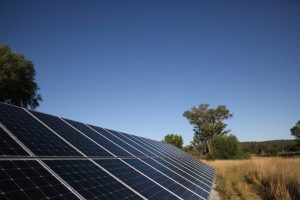
The Suryashakti Kisan Yojana (SKY) introduced by the Gujarat State’s Power Sector in 2018 is a substantive initiative towards solar energy provision in the agricultural sector. The policy presents an opportunity for farmers to earn additional income, while encouraging environmental stewardship in rural areas. It helps farmers set up solar panels at subsidized rates that generate electricity that can be used for consumption. Any surplus electricity can be sold back to the government via grid. SKY aligns with India’s broader renewable energy goals, contributing to energy independence and sustainability in agriculture while promoting both decentralized renewable energy and livelihood technology. This article will analyse the policy, evaluating its overall effectiveness and implementation .
Aims
One of the primary aims of SKY (the policy is becoming repetitive) was to set up feeders. Electricity feeders are the power lines through which electricity is transmitted in power systems. These feeders transmit power from the generating station or substation to the distribution points. As farmers are given the option to sell the additional electricity generated, these feeders must be bidirectional so that electricity can be sent back to the main grid. The Gujarat government in 2018 aimed to set up at least 137 feeders, covering 33 districts and 12,400 farmers. By doing so, the government guarantees 12 hours of power supply during the daytime with Grid support. The Gujarat Power Department states that “60 % subsidy on the cost of Projects will be given by the State and Central Governments, 35% of the Project cost will be provided to him (farmer) through a loan with the interest rates of 4.5% to 6% and remaining 5% of the Project cost will be borne by Farmers. The total duration of the Scheme is 25 years which is split between 7 years and 18 years.” As per the Scheme, the Farmers will get a per unit rate of Rs 7 (Rs 3.5 by GUVNL + Rs 3.5 by State Govt.) for the first 7 years, and succeeding 18 years, farmers will get the rate of Rs 3.5 for each unit sold.
The state government introduced this pilot project to reduce the financial burden from subsidizing electricity for farmers. In 2018, farmers in Gujarat paid only 50 paise per unit for irrigation power, while the government incurred an annual expenditure of approximately Rs 4,500-5,000 crore in subsidies. By implementing the Suryashakti Kisan Yojana (SKY), these costs are expected to decrease substantially over time.
Methods
SKY employs three-phase bidirectional energy meters with RS-485 communication (using differential signaling for noise reduction and long-distance reliability). These meters include solar generation meters (measuring solar energy produced), consumption meters (tracking energy used by pumps), and net meters (monitoring energy exchanged with the grid). Farmhouse connections use single-phase unidirectional meters. An IoT device integrates all meters, supports GPRS, GSM, Wi-Fi, or Ethernet, and features local storage via SD card. The secure, weatherproof design ensures theft prevention and outdoor usability, with ready-made wiring for easy setup. Future updates may enable inverter functions for equipment management. The Watchdog Device helps manage electricity distribution for Gujarat farmers, ensuring fair power allocation. Farmers receive 3-phase power for 8 hours daily, switching to 1-phase power afterward. SKY program participants get 12 hours of 3-phase power during the day and 1-phase at night, provided at least 70% of farmers join. The device enables remote scheduling and allows non-SKY farmers to share power during the day and night if supply permits.
Electric tube wells are vital for Gujarat farmers as they enable reliable access to groundwater, especially in arid regions like North Gujarat, Saurashtra, and Kutch, where surface water is scarce. These tubewells make irrigation more affordable, particularly since Gujarat shifted to a flat tariff system that allows farmers to pump water at predictable, low costs, essential for smallholder farmers. Electric tubewells have also fostered groundwater markets, where farmers with tubewells sell water to those without improving irrigation access across communities. Hence, one of the methods incorporated in SKY was to power electric tubewells with solar energy.
Achievements
Since 2020, 91 feeders have been solarized, covering 4,171 farmers across different DISCOMs in the state. The scheme was financed through a 30% capital subsidy, 65% as a loan (partly backed by NABARD’s Rural Infrastructure Development Fund), and a 5% down payment by the farmers. The program uses net metering, allowing farmers to supply solar-generated energy to the grid and draw electricity as needed. Net energy evacuated to the grid is paid to the farmers at Rs. 3.50 per kWh by the DISCOMs as a feed-in tariff (FiT), and another Rs. 3.50 per kWh as an evacuation-based incentive (EBI) from the government. This EBI, capped at 1,000 kWh per HP per year, helps farmers repay their loans and is available for the first seven years of the program.
Many farmers have unmetered connections in Gujarat ,implying that they don’t pay for the actual electricity they use but instead pay a flat rate, which is much lower than the cost of providing the electricity. Under the SKY scheme, both metered and unmetered farmers can choose to join a system where they contribute just 5% of the cost of solar equipment, in exchange for receiving benefits from selling excess solar energy back to the grid. For farmers with metered tubewells, joining SKY was an easy choice because they already paid for energy based on their consumption. However, unmetered farmers faced a tougher decision because if they joined SKY, they would lose a huge yearly subsidy ($2468) and have to switch to paying for the actual amount of electricity they use. Despite this challenge, 66-69% of both metered and unmetered farmers signed up for SKY, suggesting a strong interest in the scheme across different regions.
Before SKY, there was debate about whether unmetered farmers used more power or if their supposed high usage was a cover for electricity theft and inefficiencies in the system. Now, with SKY, the data shows that unmetered farmers are indeed using a lot more power—about 2.55 times more than metered farmers. There is a change that is being observed as the scheme is leading to an adjustment in energy usage patterns. Unmetered farmers who joined the scheme began to show reduced consumption, moving closer to the levels of metered SKY participants. This trend suggests that as SKY continues, farmers may adapt to using energy more efficiently to maximize profits from selling surplus solar power.
Challenges
The effectiveness of the SKY program has not been uniform across all regions. The onboarding rates for farmers in areas served by companies such as PGVCL and UGVCL are significantly more impactful than those in DGVCL and MGVCL. This suggests that the benefits of the program vary by region, and farmers in some areas may experience greater advantages than others. Such disparities highlight the importance of regional contexts in evaluating the program’s success and the necessity of tailoring interventions to meet the specific needs and conditions of different farmer communities. Also, Farmers who own tubewells often sell water to those without, creating a local market that increases irrigation access for nearby farmers. This system has made water distribution more equitable and strengthened the resilience of the farming community, particularly in water-scarce areas. Hence, farmers do make significant money from selling water. Due to this, the potential gains for farmers who were previously on flat tariffs might be overestimated. While they can generate income from selling excess energy produced by their solar systems, some farmers may earn more from selling water than from energy sales. This possibility suggests that the full range of financial benefits these farmers enjoy from the program may not be fully acknowledged. By not considering all sources of income, there is a risk of misjudging the overall advantages of the SKY program for certain categories of farmers.
Conclusion
SKY has met or even exceeded its goals, including providing reliable daytime power to farmers, reducing the government’s subsidy burden, promoting solar energy, lowering distribution losses, and providing farmers with an extra income source. It has also managed to implement metering for previously unmetered tubewells, a task that has been challenging for decades. SKY, therefore, stands as a model for sustainable agriculture that could be adopted by other Indian states and countries facing similar energy and water management challenges. In addition to these successes, SKY has fostered greater energy independence for farmers by enabling them to produce their power, reducing their reliance on the grid. By incentivizing farmers to switch to solar, SKY also contributes to a reduction in carbon emissions, aligning with national and global climate goals. The program’s design, which includes a modest upfront investment from farmers, has encouraged widespread participation while making solar energy adoption more accessible and sustainable for small-scale farmers. SKY’s multipronged approach shows the transformative potential of combining clean energy with targeted agricultural support, paving the way for enhanced productivity, income stability, and resource conservation in India’s agricultural sector.
Author’s Bio: Anushka S is a second-year student at Jindal School of International Affairs, pursuing a Bachelor’s in Political Science (Hons.). Her research interests include the intersection of religious studies and political theory, public policy, social welfare, and developmental growth.
Image Source: Gujarat government launches SKY scheme for farmers to generate solar power – Renewable Watch
 NICKELED AND DIMED