By Aditi Lazarus
Abstract
This article explores the historical evolution of blackface minstrelsy, tracing its roots from medieval European religious plays to its peak in 19th-century American minstrel shows. Through the use of racialized makeup, blackface performances distorted Black identity and reinforced harmful stereotypes that justified racial hierarchies and systemic violence. By analyzing the role of visual culture in shaping racial perceptions, this article highlights how blackface continues to influence societal norms and cultural expressions. The enduring legacy of blackface underscores the importance of addressing these racialized portrayals to challenge ongoing inequality.
Introduction
“The negro is a very original being. While he lives and moves amidst a White civilization, everything that he touches is reinterpreted for his own use… His interpretation has been adopted by the White man instead and then reinterpreted.” Staged in mid-nineteenth century minstrel shows, blackface codified racialized identities through aesthetic means for entertainment and comedic purposes to a predominantly White audience. Here, White men darkened their skin with black paint and other mediums to reconceptualize, or rather, to distort the true experiences of the black race in the American National Opera. In this context, it is crucial to dissect the historical role of make-up aesthetics in imitating black visual culture and its contribution to the construction of blackface.
Medieval European Theatres
From the medieval period, the guild records show that the devils in the English religious dramas were depicted as being black. The author of Black Face, Maligned Race, Anthony Gerard Barthelemy, reveals that the performers playing the souls of damned in many medieval plays were either painted or costumed in black. He additionally mentions that Lucifer and the other angels were depicted as black, symbolizing sin and spiritual degradation as they fell from heaven. Such religious imagery was enhanced through the use of oils like bitumen and the tones derived from coal soot. These, along with black garments, were employed to convey the blackness of the soul in medieval guild performances. Therefore, this conjunction between blackness and spiritual subjugation existed and was exhibited before the theatrical culture of blackface in the mid-nineteenth century established itself.
Following the medieval period, blackface in Shakespearean England also gained traction, as racial makeup and prosthetics came to the forefront to characterize Africans, Moors and Turks in plays. The archival works of scholars such as Imtiaz Habib suggest that London in those times was much more diverse than it was previously thought to be, giving Shakespeare the opportunity to integrate his re-imaginings of people into his theatrical creations. One contemporary drawing, Henry Peacham’s Titus Andronicus of Aaron the Moor, portrays the character as the Black villain of the tragedy. Along with a Black afro wig fixed with a headband, his drawing also shows the performer to be a White actor in black makeup. This employment of Black racial prosthetics influenced the colonial American stage where characters in Shakespearean plays like Othello inspired the surge of White actors in black makeup in other plays such as Isaac Bickerstaff’s comedic The Padlock (1768) and Thomas Morton’s tragic The Slave (1816).
This evolution in black visual symbolism can be traced from spiritual debasement in religious plays during medieval times to the satirical ridicule of Blackness in later theatrical portrayals, reflecting a complex history of racial stereotyping and the commodification of Black identity for entertainment. Over time, these roots of racial caricature in English medieval theatrical traditions paved the way for the birth of the blackface minstrel show in America.
The Blackface Minstrelsy
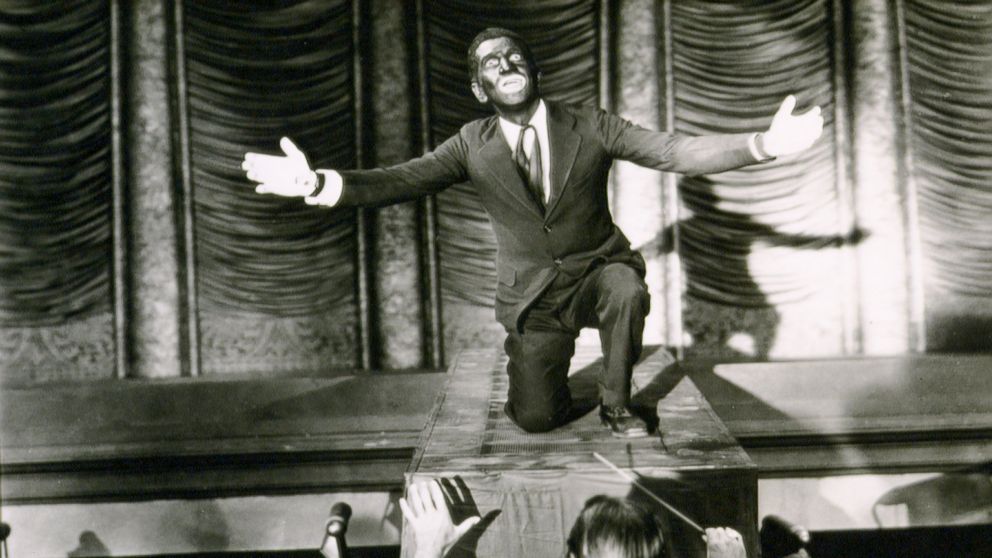
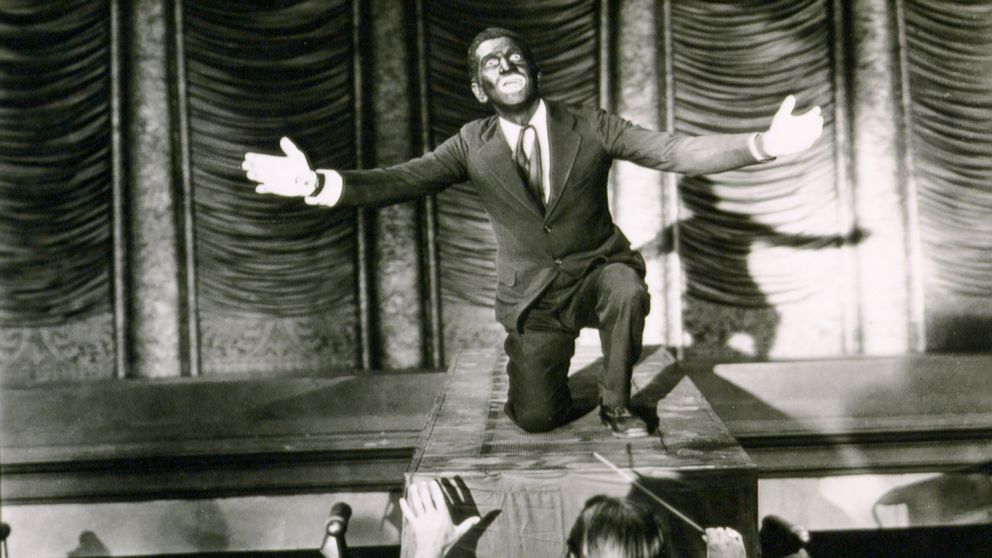
The colonial era invented, reinforced and structured the notion of ‘race’ in occupied regions. However, satirizing and caricaturing the experiences of the Black race in the minstrel theatres further validated the systematic violence they faced in the form of Jim Crow laws, lynching, harassment and segregation, especially afterthe demise of institutionalized slavery following the victory of Union forces during the civil war. The first popularly known blackface character Jim Crow was developed by Thomas Dartmouth Rice in 1830, who later came to be known as the Father of Minstrelsy. These White performers would blacken their face with burnt cork, shoe polish, or black paint, to enact a set of stereotypes about Africans on Southern plantations: hypersexual, dumb, lazy, ignorant, and prone to thievery.
Robert Toll, a renowned political scientist, further discerns the exaggerated emphasis put on the “negro pecularities” in the shows which highlighted the backwardness of the Black people. The minstrels grotesquely caricatured their physical appearance, manners of speech, and cultural practices, to entrench the physical difference between blackness and whiteness. Black people were portrayed to have bulging eyes, flat noses, gaping mouths with a thick set of lips, and gigantic feet with elongated heels, along with tattered clothing. This was intended to emulate the savagery and the un-humanness of the African Americans, exploiting the Black body, as viewed by the White Americans. Besides presenting them as physically inferior, minstrels would also contribute to the cultural devaluation of Black people by depicting their intellect and emotional capacity as primitive and lacking in comparison to that of whites. Black characters were presented to be immersed in music, dance, food, and African folklore, to portray them as irresponsible, indulgent and mentally childlike in popular songs such as Dan Lewis’ “Moses cart Dem Melon Down” and J. H. Wood’s “Close Dem Windows”. They were additionally characterized to have a broken and perverse type of English to portray them as simple and uncivilized. This depiction was constructed to stand in contrast to the superior attributes of White Americans—responsibility, hard work, and self control. The visual and linguistic distortion not only reinforced racial hierarchies but also served as a tool of cultural domination, shaping public perception to justify the systemic exclusion of Black individuals from intellectual, social, and political spheres.
Eventually, these performances gained momentum in Northern and Midwestern cities. As racial hostility grew following emancipation, the demands of the African Americans rose to acquire full citizenship, including the right to vote. The minstrel in the form of new media gained traction through radio, television and theatres, amplifying White racial animus against the Black. This evolution of blackface—from medieval religious imagery to postbellum performances—has continuously denigrated Black identities and reinforced the dominance of White racial narratives in American theater and culture.
Conclusion
In essence, Blackface minstrelsy transcended mere entertainment—it served as a tool for distorting and erasing Black Identity to placate White audiences. From its origins in medieval religious dramas to its prominence in American minstrel shows, these performances reinforced dehumanizing stereotypes, perpetuating racial hierarchies that justified both exclusion and violence. Although times have evolved, the legacy of blackface endures in makeup and visual culture, continuing to shape perceptions of Black race today. This history highlights the need to confront and challenge these racialized portrayals, as they remain entrenched in cultural expressions and societal structures, perpetuating inequality.
About the Author
Aditi Lazarus is a second year B.A. Diplomacy and Foreign Policy student at O. P. Jindal Global University. She has a strong affinity for researching art, literature, politics and economics.
Image Source : https://s.abcnews.com/images/Entertainment/jazz-singer-03-gty-jef-171002_16x9_992.jpg
 NICKELED AND DIMED