
By Rufaid Imtiaz
Abstract:
Widespread displacements have been caused by the construction of large dams in India. Considering the historical and geographical setup, majorly the people belonging to tribal communities are affected by such change. There have been promises made and attempts made to formulate a framework legally, to deal with such an issue, however, it has always turned south for the government. Due to a lack of proper consultation from the affected groups, the policies have rendered no good. The displaced communities have been marginalized intersectional, leaving them with almost no recourse. In this paper, to better our understanding of the issue flagged, we will also take into consideration the Narmada Bachao Andolan case.
Introducing the leviathan:
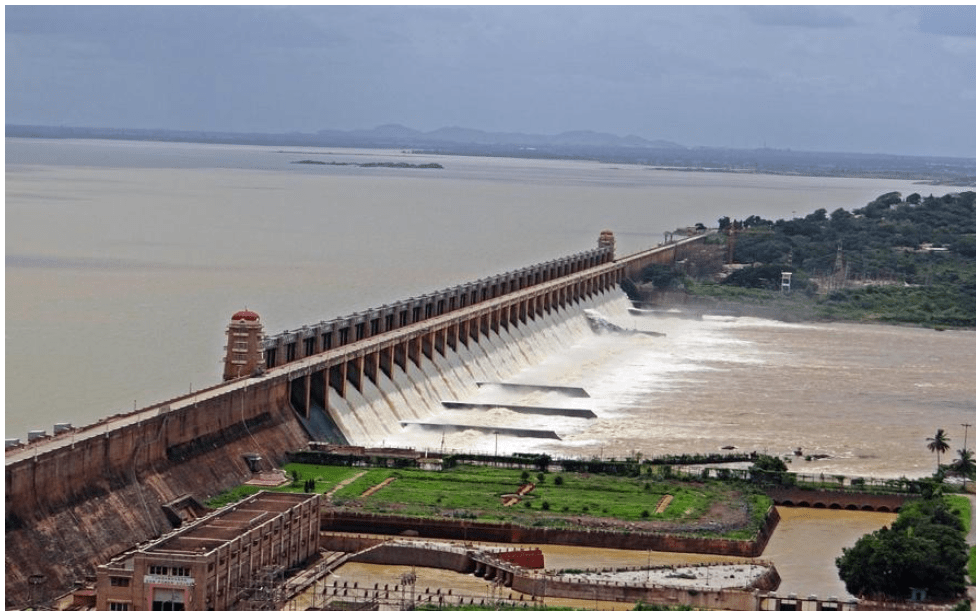
There has been a significant quantum of relegation due to the construction of large dams in India. Millions of people have faced devastating effects on their lives and livelihoods. Despite such an impact, the government has majorly failed to address the consequences that such change brings, including rehabilitation after the displacements caused. The individuals are treated as if they are deportees of war with no rights or honor. The impoverished pastoral residents with almost no means of growth are set examples of the unsympathetic gesture of the state towards the displaced individuals.
The individuals are usually the ones belonging to the vulnerable parts of the society. It has often been noticed that these individuals face intersectional discrimination, as they usually belong to ethnical groups, which account for almost 8% of India’s population, and if we talk about the displaced population, it goes to 40%. The displacements not only cause losses concerning livelihood, but also social networks, family structures, and artistic identity. It is demeaning and ruinous for the displaced communities to be arbitrarily unheard. As flagged already, the relegation causes intersectional discrimination. Women, managing household warrant support are impacted majorly.
Unfortunately, the ones affected are left emotionally fragile and vulnerable due to a lack of social safety schemes and government programs. People are forced to leave their homes, impacting their livelihood due to construction, which in turn is reciprocated by inadequate fiscal remuneration to support the loss. Over the years, the government has made pledges, however, they have turned out to be empty in performance. There have been instances showcased where immense damage has been caused not only to the people but also the environment, several constructed have shown washing bare 20 of designated areas.
Policy Framework for Rehabilitation and Resettlement:
Since the 1950s, there has been a significant amount of land being acquired by the Government of India to construct power, irrigation, and heavy diligence systems. Back then, unfortunately, there were limits to unacceptable laws with regard to the displacement of people under the system. It eventually led to protests from affected people, groups, and environmental organizations, which sometimes turned violent. To address the issue, the government finally decided to establish a resettlement and recovery strategy by repealing the 2003 obsolete policy on the subject matter.
However, there were still no guidelines established to take up relegation backup matters. As a result, the Indian government brought the Land Acquisition and Resettlement and Rehabilitation (LARR) Act, in 2013, with an aim to offer resettlement and recuperation more comprehensively at land acquisitions. The act aims to provide a safety wall to the ones affected by such acquisition, leaving them with a backup or an alternative. It is also significant to note that the act goes further to describe the reasons for which the government can acquire land, including the definition of “public purpose” (often used). Notwithstanding the laws in place, there have been struggles on both ends with respect to the evaluation of the cost and benefit of such demolition. The LARR Act has been used with a bias, leaving the affected groups on the weaker side.
In 2004, the government developed a draft national policy on Resettlement and Rehabilitation for families affected, which was later followed by a more enhanced policy in 2005, named the Draught National Development, Displacement, and Rehabilitation Policy. The policy aimed to provide compensation in the form of land for land. However, in 2007, the policy was revoked by the National Rehabilitation and Resettlement Strategy. The affected families being displaced only in the Sardar Sarovar dam construction were granted land as compensation, which was then challenged. States like Madhya Pradesh have favored monetary compensation over and above land reimbursement. The policy framework has often kept the tribals/ the affected groups out of the discussion before the implementation and amendment of such policies. To further our understanding of the subject matter, let us take the case study of Narmada Controversy.
Evaluating the Role of Law in the Narmada Controversy:
Large-scale displacements were caused by the construction of Sardar Sarovar Dam, which raised questions against the actions of the state, leading to legal battles, further culminating in the case, Narmada Bachao Andolan v. Union of India (2000), in the Supreme Court. Tension arose between the affected communities after the Supreme Court ruled in this case, where they stated development and public interest of significance in ruling the continuation of the project. Although they also emphasized on rehabilitation and resettlement of the tribal groups being affected, however, it can be easily interpreted that the objectives of development were given priority over and above the rights and constitutional protections awarded to the affected tribal population.
Scholars have critiqued the stance taken on the Narmada Valley case, as it advances the limitation that Indian laws have in protecting legal rights when hit by development projects on such a large scale. There are legal mechanisms in place such as the Forest Rights Act and Land Acquisition laws, however, their application has always been a matter of question. In cases like Narmada Bachao, these laws have acted as sword without blade, failing to ensure the rights of tribal communities are being protected. The struggle has caused a counter-hegemonic impact on the moral and cultural rights of the tribals as well, leading them unheard.
Conclusion:
As established above, the struggle persists. The recourse available to the affected tribals has proved to be insufficient. Even the efforts of the government have borne no fruit for the marginalized group. The laws have done no good, and it can easily be seen from what the apex court had pointed out in the Narmada Valley case. The tussle between development for “overall good” has always been mediated with the rights of the affected group by suppressing them. As a result, they have been left to live at the mercy of whatever is available and can be provided. Overall development has been rocked upon the rights of the tribal communities leaving them with no choice.
Author’s Bio:
Rufaid Imtiaz is a fifth-year law student at O.P. Jindal Global University. He has a keen interest in law and its intersection with other subjects including religion, history, and political science. He enjoys writing on law and politically lineated issues.
Image Source: https://images.app.goo.gl/5JK7VjM8BmXRXWa28
 NICKELED AND DIMED