
By Gurnaaz Kaur
Abstract:
This article aims to talk about the complexities hidden underneath the layers of clothing and highlight the symbolic representation of clothes. It explains how fashion diplomacy, is used to convey the power of designing. The article uses traditional historical examples and several modern-day examples to prove that designs play a pivotal role in moulding global images.
Introduction
Far beyond the realm of mere aesthetics, the global fashion industry is seen as an art form, that has become an integral component of cultural diplomacy, wielding soft power with every stitch and seam. At the forefront of this sartorial statecraft are international designers, whose creations surpass borders and speak volumes about cultural identity, values, and aspirations.
Fashion diplomacy flows back to hundreds of years, to even before Gandhi’s infamous khaki, when fashion dolls were exchanged between the rulers of French and Piemontese royal courts back in the sixteenth century. Fashion isn’t merely about fabrics, but it designs the narrative of nations and cultures in the international arena. In fact, the diplomatic potential of the fashion industry is amplified by its global reach. A country with a strong and renowned fashion base can mould its economic standing and cultural prestige.
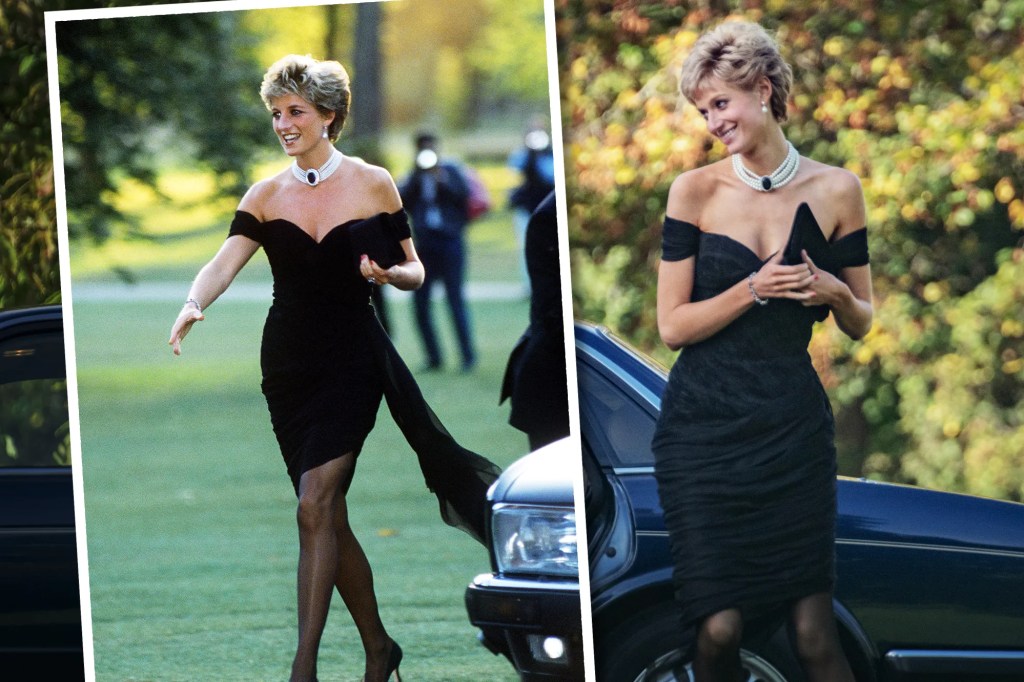
Diplomats often use fashion to send tongue-in-cheek messages and depict their political stand symbolically. Alongside which, fashion also holds a cultural importance. During her 2020 visit to India, Ivanka Trump wore Indian designer Anita Dongre’s design, which was seen as a subtle yet humble sign of respect. Sometimes, situations may become contentious, as seen when former Canadian Prime Minister Justin Trudeau’s socks caught attention in 2017, flashing rainbow colours and the phrase ‘Eid Mubarak,’ the socks sparked controversy and offended certain segments of society. Or be it Princess Diana’s show stopping ‘revenge dress’ back in 1994 the day when Prince Charles confessed on national television that he had been unfaithful to her, fashion has always been a language in itself. This article examines the role of fashion as a tool of cultural diplomacy and soft power. Through historical and modern examples, it highlights how design shapes global perceptions and conveys political and cultural messages. The analysis integrates various case studies to showcase the interplay between fashion, identity, and diplomacy.
FASHION DIPLOMACY
Fashion is much more than fitting in the aesthetic realms, with fashion diplomacy being used to communicate coded messages and sometimes, even as a cheeky form of confrontation. Being a form of manifestation of soft power, it penetrates deep into the realms of culture and international relations. The duo of fashion and diplomacy must be looked at with a few examples.
In today’s world, designs are crafted to connect with a global audience, with designers taking on the significant role of cultural ambassadors for their nations. Very evidently, fashion choices play a definite role in cultural diplomacy. A ripple of attention swept through the crowd to Cate Blanchett, who wore a dress inspired by the Palestinian flag on the Cannes red carpet, openly showcasing and voicing her political and social inclinations. Congresswoman. Alexandria Ocasio Cortez also made a bold statement when she wore a gown with the statement “tax the rich” at her very first Met Gala.
The pioneer of fashion diplomacy, Queen Elizabeth was once quoted saying that she could never wear beige, because then nobody would know who she was, making her indistinguishable. This not only shows the psychology behind colours, and how people are perceived based on the colours they wear, but also how messages are interpreted and perceptions are shaped through the fashion choices diplomats make.
Soft power can be called a precious currency, which is influenced by fashion, that projects a shared cultural identity on global stages. Unlike traditional forms of power, which rely on economic or military might, soft power works through attraction and persuasion, shaping the lens through which a nation is looked at by the world. The visual impact of fashion can convey complex ideas and sentiments that might be lost in translation through other forms of cultural exchange, and over the years, fashion’s influence on soft power has only intensified.
Fashion diplomacy extends beyond mere clothing, to being a canvas in itself and including intricate details like Jewellery, which has become a powerful tool in navigating political conversations. A striking example of this would be President Trump’s working visit to Britain, that made the headlines for rather unusual reasons, where the queen was seen wearing an interesting trio of brooches. On the first day of his visit, the Queen wore a simple green brooch given to her by the Obamas. On the second day, she wore a brooch given to her by the Canadians, a country Trump disparaged. And, for the last day, she chose a brooch the Queen Mother wore to the funeral of her father, King George VI. Given that her role does not allow her to openly influence foreign policy, a subtle accessory like a brooch could communicate her disapproval of President Trump and his administration.
After imposing sanctions on Iraq following the Gulf War, a poem appeared in the Baghdad Press referring to the Secretary of State Madeleine Albright as an “unparalleled serpent”. During her next meeting with Iraqi leaders, Albright reclaimed the serpent image in retaliation with an elegant pin. In her book, Read My Pins, the Secretary of State explains how she used her accessories as a diplomatic tool during the years she served under the administration of Clinton. Albright emphasised using emotional appeals to ‘pull on the heartstrings of people’ to facilitate communisations back to their capitals. She also stated in an interview with the Smithsonian magazine that the Russians had planted a listening device or a ‘bug’ in a conference room near her office, and so, she wore a ‘bug’ brooch to deliver a strong message, through subtle symbolism.
CULTURAL TOOL
Clothes are not merely strands of fabrics put together, but they carry stories. Be it an embellished lehenga in a glamorous Indian wedding that symbolises prosperity and marital bliss or a white piece of clothing put on to honor the purity of the deceased person’s soul, it all stems from a unique story. By incorporating khadi into haute couture, this humble cloth is transformed into a symbol of resilience, showcasing India’s long-standing identity.
Japanese designer Issey Miyake was renowned for his innovative use of traditional Japanese techniques, such as pleating and origami, in his designs. His work not only revolutionised fashion but also introduced Japanese culture to a global audience, by combining Eastern and Western elements in his work. Similarly, Indian designer, Sabyasachi Mukherjee, hailed as the ‘wizard’ of fashion, has used traditional Indian textiles and embroidery techniques to bring Indian artisanship to the forefront of global runways. Sabyasachi’s recent collaborations with globally renowned brands like Estée Lauder and Disney turned many heads, bringing out pieces of intrinsic beauty. His collaboration with Christian Louboutin in 2015, which featured intricately embroidered shoes and bags was also a masterclass in cultural fusion. Alongside this, Dior’s Fall 2023 collection, designed by Maria Grazia Chiuri, was also heavily influenced by Indian textiles and craftsmanship, showcasing the impact of Indian culture globally.
Paris, the fashion capital of the world, is not just a hub for haute couture but a symbol of French culture, elegance, and sophistication. French designers like Coco Chanel and Christian Dior have not only defined global fashion trends but have also shaped the world’s perception of France as a centre of culture and creativity. This influence extends beyond fashion, contributing to France’s global cultural influence and its ability to shape international norms and values.
Moreover, places that are the ‘hubs’ of luxury brands, exert a significant influence over the global fashion stage. For example, Swiss luxury brands, particularly in watchmaking, are globally recognized for setting the highest standards of precision and luxury, they exemplify Switzerland’s reputation for unique craftsmanship and quality, solidifying the country’s influence in the global market. In Italy, luxury brands such as Gucci, Prada, Armani, Dolce & Gabbana, and Ferrari are more than just symbols of high-end fashion and automotive excellence and are ambassadors that leverage Italy’s rich heritage in art, craftsmanship, and design. Italian fashion weeks, especially in Milan, are pivotal global events that draw international attention to Italian creativity, further promoting the Italian lifestyle and cultural influence worldwide. France, with iconic luxury brands like Hermès, and Dior, is almost synonymous with elegance and sophistication, with Paris standing in the epicentre of luxury. The “Made in France” label is not just a mark of quality; it’s a symbol of France’s long-standing tradition in style and heritage, which significantly enhances the country’s soft power and global cultural influence.
Designers are seen as cultural intermediaries, evident in the rise of Korean fashion, often referred to as K-fashion, which is a testament to the power of fashion as a tool of soft power. Korean designers, such as Lie Sang Bong and Kim Seo Ryong, have gained international recognition for their unique designs that blend traditional Korean elements with modern aesthetics. The global popularity of K-fashion, fueled by the Korean Wave or ‘Hallyu’, has not only boosted Korea’s fashion industry but also enhanced its cultural influence on the global stage as a trendsetting cultural powerhouse.
Over the years, made-to-measure clothing has heavily deteriorated and been replaced by American ready-to-wear. Thus, various diplomats have often encouraged the organisation of prestigious promotional events in order to attract the interest of authorities in the targeted countries. Media events that stay in the limelight, like the grand Ambani wedding this year showcased celebrities like Kim Kardashian, John Cena, Nick Jonas and others from around the globe decked up in Indian attires, embracing the country’s diverse culture. This puts forth the country’s growing cultural influence and clutch on the global scale.
Conclusion:
Fashion diplomacy holds a profound and far-reaching impact on the global scale. By blending modern innovation with traditional craftsmanship, fashion turns out to be a key instrument in soft power. Alongside that, fashion also profoundly impacts cultural diplomacy as a whole, evident through the example of Queen Elizabeth, Secretary Albright and the entire luxury brand market. Therefore, we can conclude that in an increasingly interconnected world, the role of fashion in diplomacy will continue to grow, serving as a vital tool in the art of international relations, shaping perceptions and fostering cross-cultural understanding.
About the author:
Gurnaaz Kaur is a second year law student at Jindal Global Law School, with a keen interest in International Relations and South Asian Studies.
Image Source: https://www.vanityfair.com/hollywood/2022/10/the-crown-season-5-princess-diana-photo
 NICKELED AND DIMED