
By Anushka S
Abstract:
India’s Mid-Day Meal Scheme was designed to nourish schoolchildren’s bodies and futures. However, beneath its well-meaning structure, the scheme grapples with deep-rooted challenges—from student exclusion, shortcomings in meeting nutritional requirements, and inefficiencies in fund management. This essay delves into the gaps that hinder its true potential, uncovering the complexities behind its nutritional and logistical hurdles. With strategic reforms and a renewed focus on community-driven action, this scheme can transform India’s educational landscape and nourish an entire generation.
Introduction:
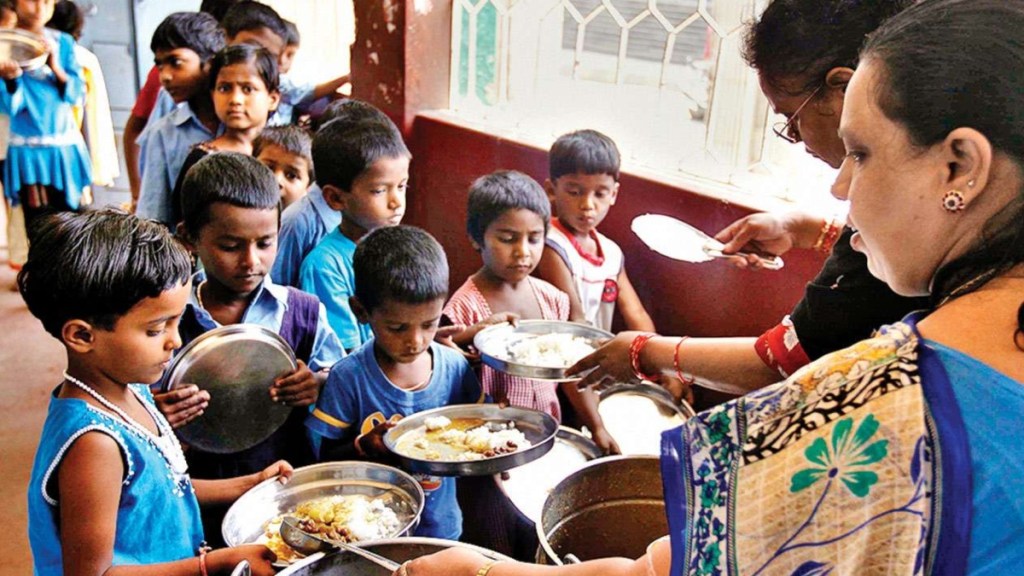
The Mid-Day Meal Scheme (MDMS), now rebranded as the Pradhan Mantri Poshan Shakti Nirman (PM POSHAN) Scheme, was launched in India on August 15, 1995, to improve child nutrition, boost school enrollment, and reduce dropout rates in government and government-aided primary schools. While this initiative has made significant strides in providing meals to millions of children, persistent issues continue to undermine its objectives. This essay will examine these gaps and explore the steps taken under PM POSHAN to address these challenges.
The Extent of Nutritional Gaps:
Despite the best intentions of the scheme, there are substantial gaps in its ability to meet the nutritional needs of schoolchildren. A study of 162 samples from regions serving about 28 million children revealed that 79 did not meet the prescribed standards of the Centre’s Supplementary Nutrition Programme. The Programme mandates that meals for children aged six months to three years contain at least 500 kilocalories (kcal) and 12-15 grams of protein, while meals for malnourished children aged six months to six years should provide 800 kcal and 20-25 grams of protein. Yet, across various states and union territories, most meals failed to meet these standards. In Odisha, for example, there was a 396 kcal shortfall in calorie intake and significant deficits in protein, fat, and essential vitamins and minerals.
These nutritional deficiencies are compounded by a lack of adequate infrastructure for meal preparation. Essential components such as water supply, kitchens, storage, and qualified staff are often lacking, leading to poor meal quality. Even though the government sets standards, the conditions in which meals are prepared significantly affect their nutritional value. The challenge of monitoring and ensuring consistency in meal delivery is further exacerbated by the inability of officials to regularly visit every school. Reports from Madhya Pradesh, for example, indicate that some schools served poor-quality meals, like sweet daliya (porridge), far less frequently than required.
These issues are concerning, particularly in light of alarming statistics on malnutrition. A study of adolescent schoolgirls in India found that 55.6% were malnourished, with 47.0% underweight, 5.9% overweight, and 2.7% obese. This statistic illustrates the ongoing problem of malnutrition, even in the face of the MDMS, and signals the need for more effective implementation and improved meal quality.
Inadequate Inclusion and Coverage Gaps:
Another significant issue affecting the success of the scheme is the inadequate inclusion of students. Recent estimates (2019) highlight a 25% disparity between the number of students enrolled in government schools and those benefiting from the Mid-Day Meal Scheme. Data from the Ministry of Human Resource Development reveals a gap of nearly 3 crore students between 2016-17 and 2018-19. For example, in 2016-17, approximately 13 crore students were enrolled, but only 9.8 crore students received meals under the scheme. As of 2018-19, coverage rates varied significantly across states. Eight states showed coverage rates between 60% and 80%, with smaller states generally outperforming larger ones. Populous states like Rajasthan and Uttarakhand, where coverage rates are significantly low. In contrast, the northeastern states, along with Chhattisgarh and Jharkhand, demonstrated the highest coverage rates. These disparities reflect a failure to meet the scheme’s objective of providing coverage to all school-going children in India.
Inadequate Management of Funds:
In addition to issues with coverage, another gap lies in the management of funds. The cost of food grains is met through the Food Corporation of India (FCI), while the costs of cooking and engaging cooks-cum-helpers (CCHs) are shared between the central and state governments. Despite this sharing arrangement, 42% of states have reported spending beyond their stipulated share, indicating potential inefficiencies in budget management. These financial inefficiencies further hinder the program’s ability to provide consistent, high-quality meals across schools, exacerbating the overall challenges the scheme faces.
Solutions and Improvements:
To address these deficiencies, the scheme was revamped in 2021 as the PM POSHAN (Poshan Shakti Nirman) Scheme. This version of the program aims to improve both nutrition and enrollment by focusing on community involvement and the incorporation of additional educational tools. One such tool is the School Nutrition Gardens, which gives children hands-on experience in gardening while also providing fresh, locally grown produce that contributes to the nutritional value of their meals. These gardens not only help address micronutrient deficiencies but also serve as an engaging learning experience for students.
The involvement of local communities is another key aspect of PM POSHAN’s strategy. One notable initiative is “Tithi Bhojan,” which encourages families to contribute ingredients or funds to provide meals for the entire school in celebration of a child’s birthday or special occasion. This fosters community engagement, strengthens social bonds, and supplements the program’s resources. Additionally, local community members can play an important role in monitoring food quality and ensuring that meals meet the nutritional standards set by the program.
State governments also partner with NGOs like Akshaya Patra to extend the reach and efficiency of the scheme. Once an NGO is selected, it is tasked with setting up and operating kitchens, ensuring the daily preparation and distribution of meals, and managing operational costs. These NGOs play a critical role in addressing logistical and infrastructural challenges by leveraging their experience and resources. Their involvement can improve meal consistency, ensure meals meet nutritional standards, and extend coverage, especially to remote or underserved areas. By working alongside local communities, NGOs also help monitor food quality and reinforce nutritional standards. This collaboration helps to directly address the nutritional gaps identified in the scheme, particularly in areas where meals fail to meet the prescribed calorie and protein requirements. Established NGOs, with their specialized knowledge in large-scale meal distribution, can ensure that these nutritional standards are consistently met across schools. Furthermore, NGOs can assist in managing resources more efficiently, helping to reduce financial inefficiencies and improve fund allocation, ensuring that funds are used optimally for meal preparation and logistics.
In addition to the involvement of NGOs, district officials play a vital role in addressing several of the scheme’s challenges, particularly those related to coverage, logistical issues, and fund management. District-level officials such as the Director or Additional Director of School Education and Literacy oversee the implementation of the scheme at the district level. These officials are responsible for issuing instructions to subordinate offices, conducting review meetings, and taking action against non-compliance. They ensure the timely release of funds and monitor the program’s progress to ensure meals are served to all eligible children.
Sub-divisional school Education Officers, at the sub-division level, directly oversee the preparation and delivery of meals, ensuring that cooked meals are served to all children, addressing implementation challenges, and ensuring that reporting requirements are met. These officials also play a crucial role in resolving complaints, monitoring food safety, and ensuring the timely allocation of food grains and funds. By strengthening the oversight and monitoring efforts at the district and sub-district levels, these officials can help ensure that both the logistical and financial aspects of the scheme are handled efficiently, reducing wastage and improving the consistency of meal delivery across schools.
Conclusion:
The Mid-Day Meal Scheme, now operating under the PM POSHAN initiative, holds the potential to transform child nutrition and education in India. However, the scheme’s effectiveness is still limited by challenges such as inconsistent meal quality, inadequate coverage, financial mismanagement, and logistical inefficiencies. These issues underscore that the solution goes beyond structural changes—it requires addressing the core operational hurdles. By focusing on equitable coverage, enhancing monitoring systems, and fostering community engagement, PM POSHAN can evolve into a truly transformative program. The path to success lies in a collaborative, multi-faceted approach that not only aims to provide meals but ensures that they nourish every child, with resources allocated effectively to create a lasting impact on the health and education of future generations.
Author’s Bio:
Anushka S is a second-year student at Jindal School of International Affairs, pursuing her Bachelor’s in Political Science (Hons.). Her research interests include the intersection of religious studies and political theory, public policy, social welfare, and developmental growth.
Image Source: Source : https://thedailyguardian.com/others/mid-day-meal-scheme-renamed-pm-poshan/
 NICKELED AND DIMED